
AC Repair in Arkansas
Homes in Arkansas run cooling for more months of the year than in 34 of the other 49 states.
Tell us about the job
Takes about a minute. No obligation.
- 90°Fsummer afternoon high where people live
- 5 monthsof cooling, May through September
- 12.32¢ per kWhwhat homes paid for power in 2024 (kWh means kilowatt hours, the unit on an electric bill)
- 2,017hail events from 2015 to 2024
What does an AC in Arkansas face?
How hot do summer afternoons get?
90°Faverage afternoon high where people live
Alaska66°F
Arizona101°F
How many months does the cooling run?
5 monthsof cooling a year
Alaska0 months
Hawaii12 months
What does electricity cost?
12.32¢per kWh, what homes paid in 2024
North Dakota11.51¢
Hawaii42.86¢
How often do storms hit?
170severe weather events per county from 2015 to 2024
Alaska5
Wyoming1,057
How many homes lost power for a day or more?
24%of homes in 2024
Arizona7%
Maine54%
What to check before you call
Check the thermostat first. Make sure it is set to cool and set below room temperature. If the screen looks dim, the batteries are probably weak. Next pull the air filter and hold it up to a light. If you cannot see light through it, swap it. A clogged filter starves the system of airflow and can ice up the coil behind it. Go outside and look at the condenser unit. Clear away leaves, grass clippings or mulch piled against it, and make sure nothing blocks the top where it exhausts air. Check the breaker panel and the disconnect box next to the outdoor unit. A tripped breaker or a flipped switch can look like a dead system when it is really just that. Inside, check the vents in each room. If one room is warm and the rest are fine, that is a different problem than the whole house blowing warm. Look under the indoor unit for water on the floor, which usually means a clogged drain line. None of this fixes a bad capacitor or a low refrigerant charge, but it rules out the easy stuff first.
Nothing unusual going on here
Arkansas gets its share of hail and wind, but that is not what's wrong with your AC. Across the counties where people actually live, the state has seen less severe weather over 2015 to 2024 than most of the country, and less damaging wind than all but a handful of states. A compressor or capacitor fails here for the same reasons it fails anywhere. Age, hard use through a hot summer, or a part that was already on its way out. If a storm knocked your power out and the unit never came back on, that is worth checking first. Otherwise the problem is almost certainly in the machine itself, not the weather outside it.

Why AC units break down
The usual reasons a system stops cooling, and what's actually failing inside it
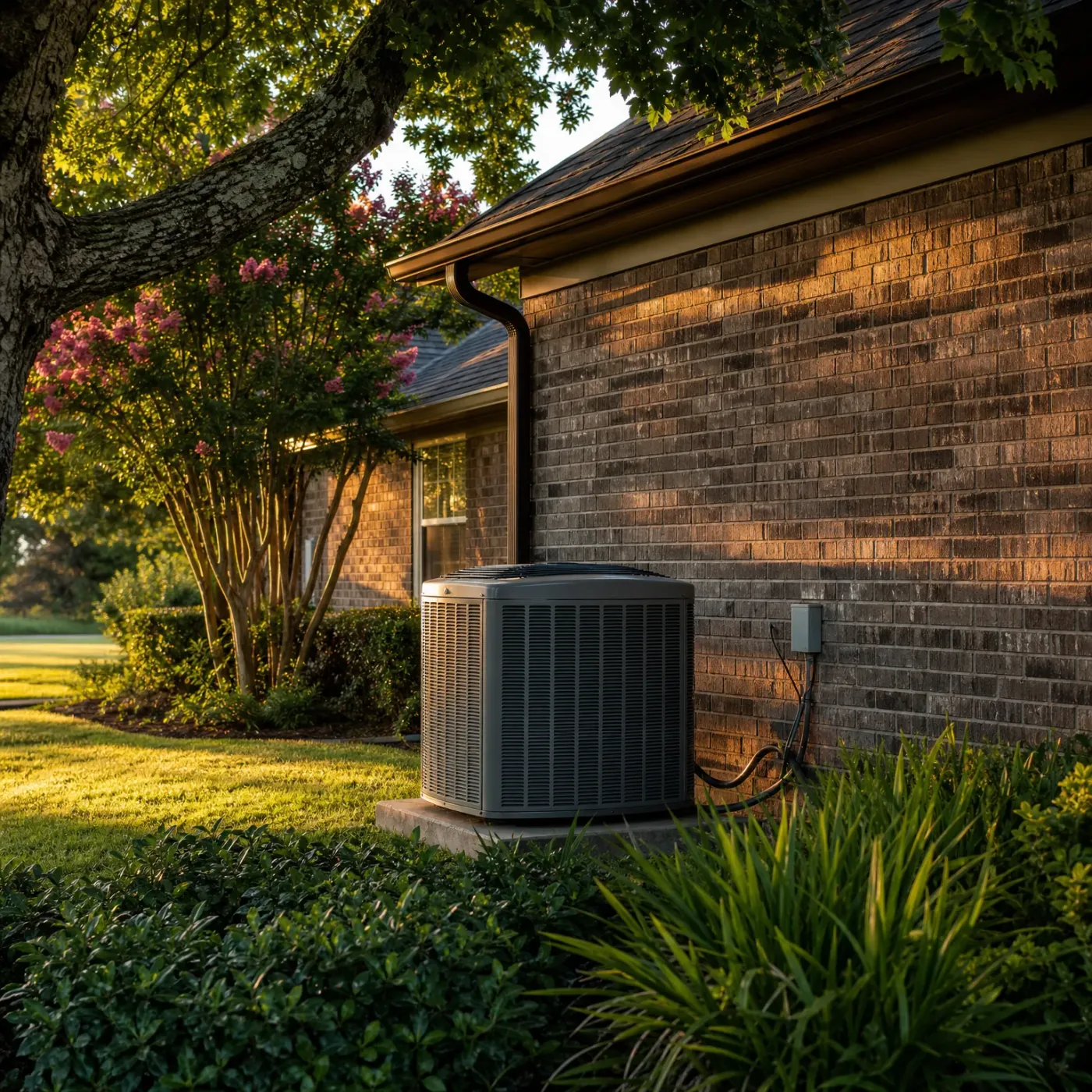
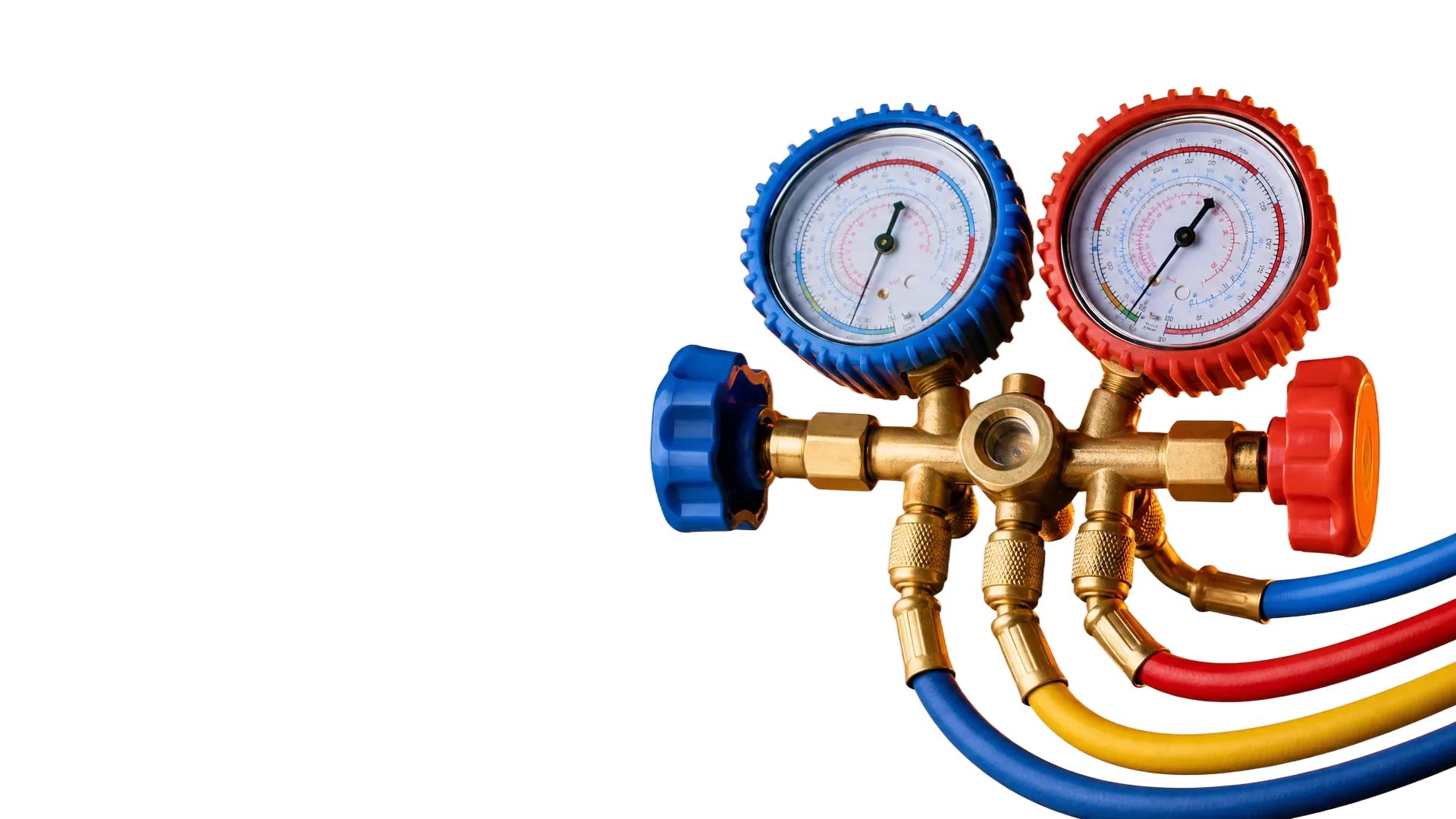
Most AC failures start small and get ignored. A capacitor weakens over several seasons until it can no longer give the compressor or fan motor the jolt it needs to start, and the unit hums or clicks instead of running. A contactor pits and sticks from years of making and breaking the circuit, and one day it just doesn't close. Refrigerant doesn't get used up, so a low charge almost always means a leak somewhere in the coil or line set, slow enough that you only notice when the air stops getting cold. Fan motors wear out their bearings and seize, or run slow enough to stress the compressor behind them. None of this is something a homeowner can see coming from inside the house. A tech can catch most of it early with a gauge set and a multimeter, before a weak part takes the compressor down with it.
Arkansas splits along a north-south line. Homes across the southern counties need about 23% more cooling over a year than homes up north. The gap gets sharper county to county. Chicot County needs about 82% more cooling over a year than Newton County, where the state's cooling need is lowest. A system in Chicot is carrying a very different load than one in Newton, even though both sit in the same state.
Summer afternoon heat follows the same pattern. Miller County averages a 92°F high across June, July and August. Newton County averages 86°F. A few degrees on paper means a compressor that cycles on more often and stays on longer each time it runs.
Homes here run cooling from May through September, longer than in most other states. That's five months of runtime for a capacitor to weaken, a contactor to pit, or a slow refrigerant leak to finally show itself. In the hotter southern counties, that wear shows up sooner. If your AC came with a house in Chicot or Miller County, expect it to be further along than the same age unit would be up in Newton County or elsewhere in the north.
Summers here push an AC harder Five months of it, May to September
- Southern counties need about 23% more cooling than northern ones
- Summer afternoons average 90°F where people live
- Cooling runs May through September
- 2,017 hail events from 2015 to 2024
- 3,423 damaging wind events from 2015 to 2024
- 24% of homes lost power a day or more in 2024


Half of Arkansas homes are older, not harder on your AC
What a failing AC actually sounds and looks like
Warm air blowing instead of cold is usually the first thing people notice. Sometimes the compressor outside has quit. Sometimes the airflow is just blocked and the coil behind the filter has iced over instead. Short cycling is another one worth paying attention to. The system kicks on, runs a couple minutes, shuts off, then starts again a few minutes later. That pattern often points to a capacitor that can't hold the motor steady anymore. Listen for sounds too. A hum with no fan movement points to a seized motor or a bad capacitor. A hard click followed by nothing means the contactor isn't closing. Grinding or squealing from the outdoor unit usually means a bearing is going. Water pooling around the indoor unit means the condensate line is clogged and backing up, not a sign of a refrigerant problem. If the air runs but never quite gets cold, or takes longer each week to get there, that's usually a slow leak rather than anything sudden. None of these clear up on their own, and a system left to run this way puts more strain on the compressor, the one part nobody wants to replace.
Age alone doesn't tell you much. What matters is which part failed and what it's connected to. A bad capacitor or a dirty condenser coil is a small, cheap fix on a system of any age, and worth doing every time. A compressor failure is a different question. The compressor is the heart of the system, sealed inside the outdoor unit, and replacing it costs a large share of what a whole new system costs. On an older unit, a tech will usually tell you straight that putting a new compressor into a cabinet with an aging coil and an old fan motor just means something else behind it fails next.
Refrigerant is the other thing to weigh carefully. If your system uses an older refrigerant that's being phased out, a leak repair gets more expensive every year as the refrigerant itself gets harder to find. A leak in the coil on that kind of system is often the point where replacement starts making more sense than repair, even if the compressor itself is fine. Ask whoever comes out to look at it what exactly failed and what else in the system is old enough to be next. A tech who's honest about that will tell you when a repair is a real fix and when it's just buying a few more months before something else goes.
Five months of summer cooling wears an Arkansas system down faster than in most of the country.
Tell us about the job
Takes about a minute. No obligation.
Fill out the form once and a licensed Arkansas contractor will reach out to look at your AC.