


Overhead view of an outdoor AC condenser unit on a concrete pad next to a house with a dark shingle roof.

AC Repair in Camden, AR

Tell us about the job

Takes about a minute. No obligation.

RepairCentral ACOuachita County, AR
Step 1 of 2

What ZIP code is the job in?

Cooling runs about five months a year here, May through September, with afternoon highs averaging 91°F through June, July and August. That is a long stretch of heavy load on a compressor and condenser fan that don't get much of a break in between. A unit sized for this climate is still working against that heat every afternoon it runs. When something starts acting up, that steady strain is usually part of why. A proper diagnosis finds the actual part giving out, not just the symptom you noticed.

5 months
May through September, your air conditioner is on duty
91°F
the average summer afternoon it cools against
18 hail events
in ten years, and hail bends the fins on outdoor coils
30 wind events
in ten years, and wind drives debris into outdoor units
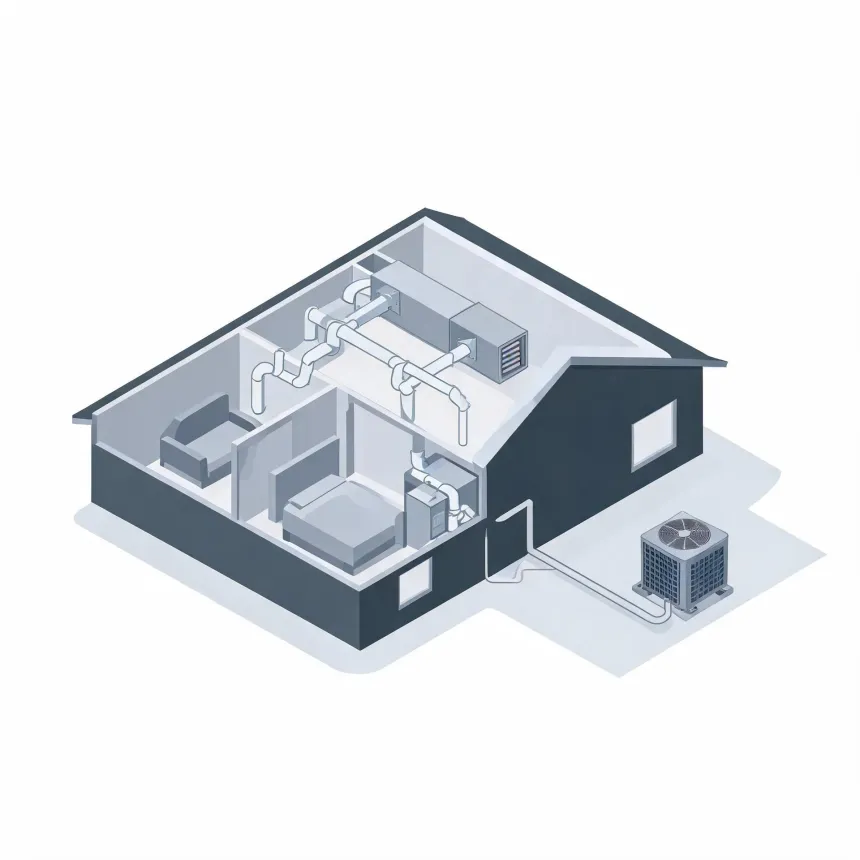
Isometric cutaway illustration of a house showing interior ductwork, an air handler and furnace unit, and an outdoor condenser connected by lines outside the wall.
Your air conditioner works hardest from June through September.

NOAA nClimDiv, 1991–2020 normals

Half the homes in Camden were built in 1974 or earlier.

An AC that old has almost certainly been swapped out since, but the ductwork it ties into is usually what came with the house.

Camden, AR AC RepairArkansas homes paid 12.32 cents per kilowatt-hour for electricity in 2024

April is worth paying attention to here. The system has sat idle since September, and the first hot days in May are when a weak capacitor or a tired contactor finally gives out. Whatever was already marginal tends to show up right when the load hits it. Getting a unit checked in April, before it has to run every day, means a repair happens on your schedule instead of during the first stretch of real heat. Wait and you may end up fixing it the same week you need it most.

Get the real cause found, not just the symptom

That kind of daily strain is hard to see from outside the unit. Getting it diagnosed means finding the part that's actually failing, not just patching the symptom.

Find a contractor
A gray residential air conditioning condenser unit mounted on a concrete pad outdoors, surrounded by green grass under a partly cloudy blue sky.

What to check before you call

Before anyone comes out, a few things are worth a look. Check the thermostat first. New batteries, set to cool, set a few degrees below room temperature, and give it a minute to respond. Go outside and look at the condenser fan on top of the outdoor unit. If it isn't spinning at all, or it's straining and making noise, that's worth mentioning when you call. Check the breaker box too. A tripped breaker can shut the whole system down and flipping it back once is a reasonable thing to try. Inside, look at the filter. If it's gray and packed with dust, swap it. A blocked filter starves the system of airflow and makes everything behind it work harder than it should. Last, check the outdoor unit for anything physically blocking it, leaves, grass clippings, a fallen branch. None of this fixes a failing capacitor or a low charge, but it rules out the simple stuff before anyone has to climb a ladder.

The capacitor takes the hit first

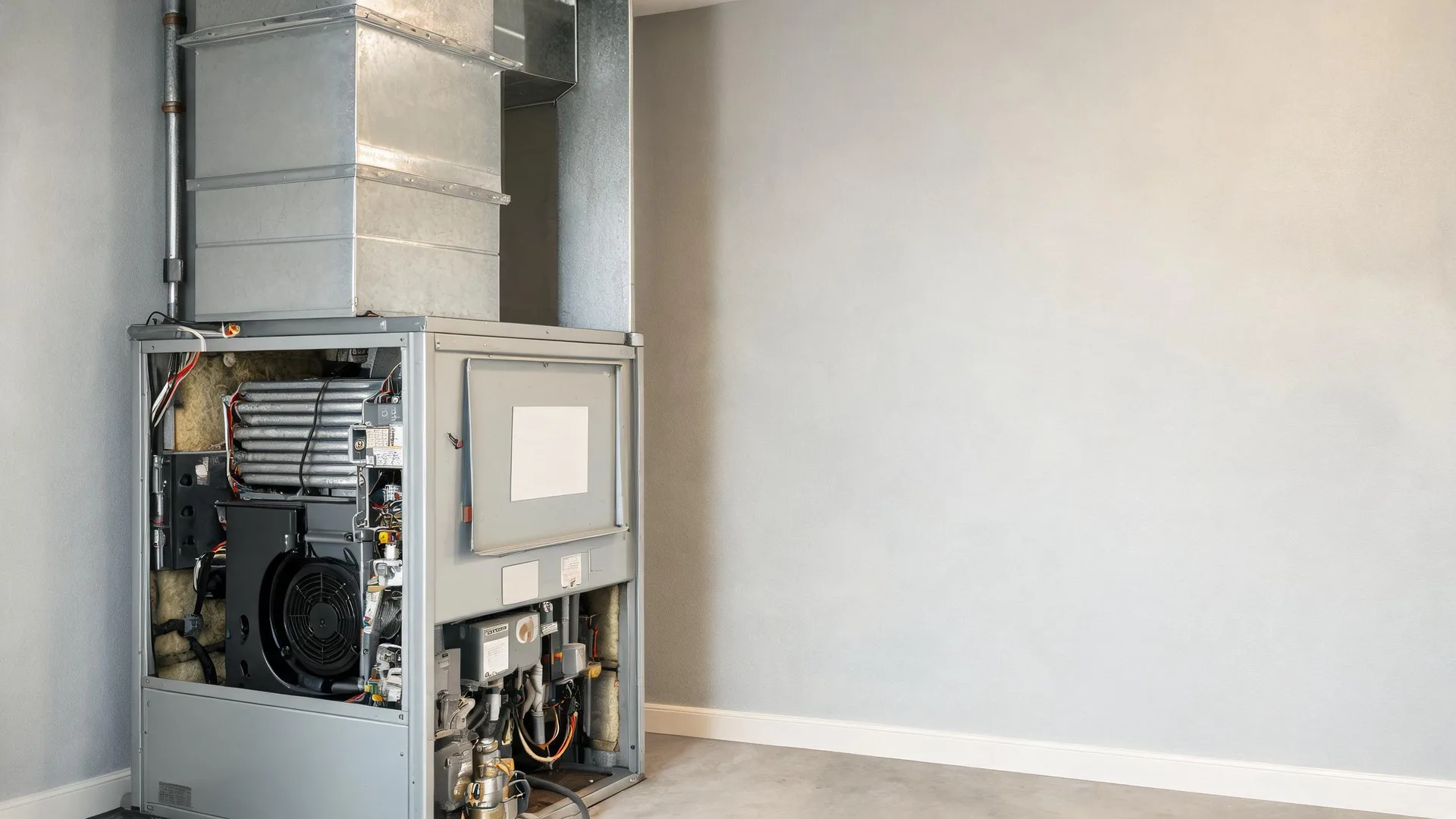
The capacitor gives the compressor and fan motor the jolt they need to start. Every start and stop wears on it a little, and after enough cycles it weakens until the motor can't get going at all. A failing capacitor is one of the most common reasons a condenser hums but the fan doesn't spin.

A slow refrigerant leak hides until it doesn't

A small leak at a fitting or coil doesn't announce itself. The system keeps running, just with less refrigerant each week, until cooling drops off and ice starts forming on the coil. By the time it's obvious, the compressor has often been running low on charge for a while, which shortens its life too.

Aerial view of a gray central air conditioning condenser unit on a concrete pad next to a house with vinyl siding.

A new air conditioner would cut about $50 a year off cooling for a typical Ouachita County home.

  • A new one at the federal minimum, 14.3 SEER2$360 a year
  • An older air conditioner$410 a year

Estimates for a typical Ouachita County home, compared with an older unit built to the previous federal minimum, from EIA household energy data, Arkansas fuel prices and NOAA climate normals. Your home will differ.

Repair makes sense when a part like a capacitor or contactor has failed.

Replacement makes sense when the compressor has failed or the system uses R-22 refrigerant, which is no longer made.

A diagnostic visit starts outside at the condenser, checking that the fan spins freely and the compressor kicks on without hesitating. Next comes a check of the refrigerant charge and pressures, since both low charge and a stuck contactor can look like the same dead unit from the thermostat. Inside, the evaporator coil gets a look for ice or dirt, and the return air gets checked so a weak signal isn't mistaken for a bad part. Electrical readings on the capacitor and contactor come next, since those wear out before the compressor itself usually does. The point of all this is to find the one part actually causing the problem, not to start swapping parts and see what helps.