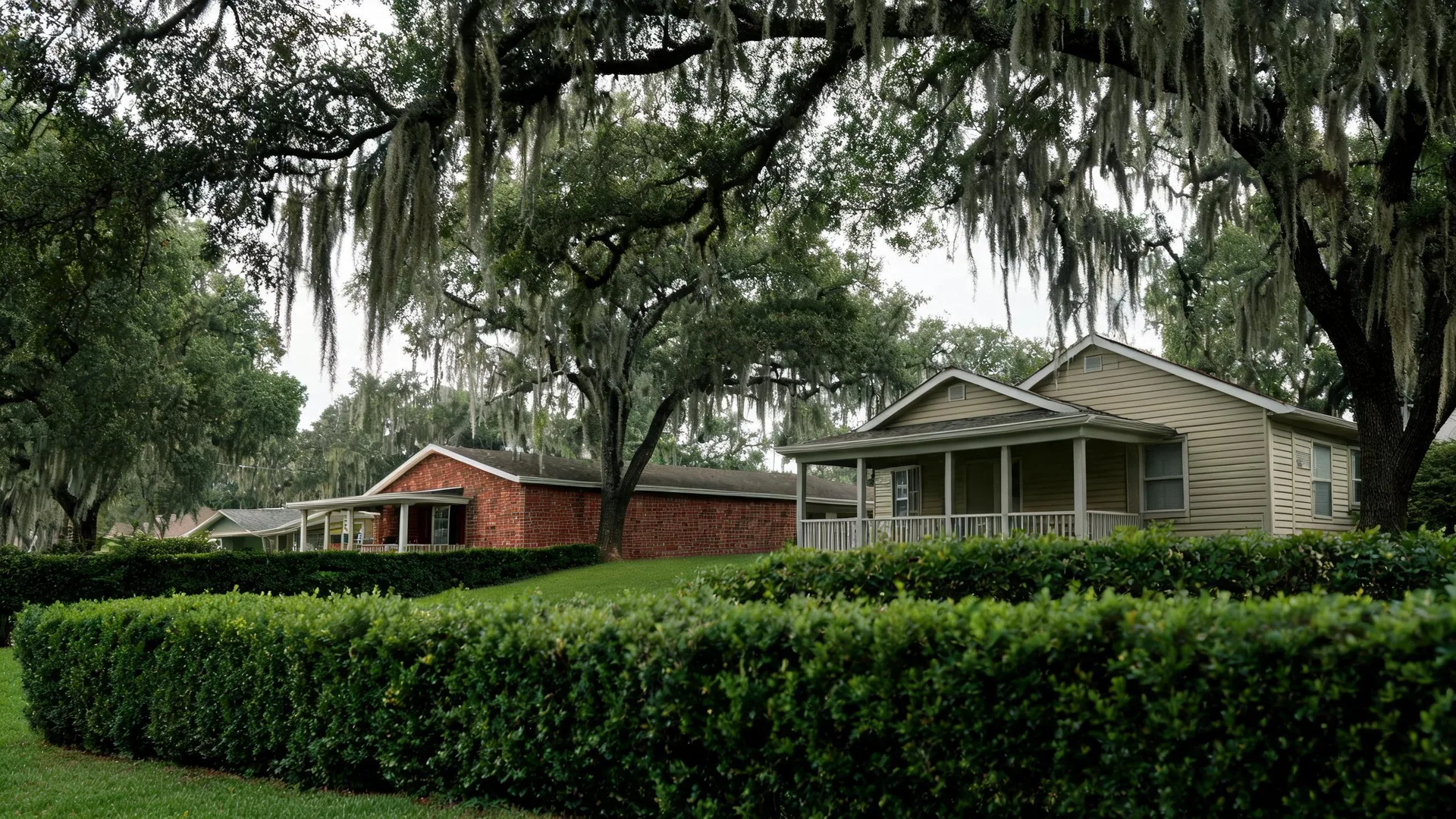







Single-story houses with a covered porch and a brick building behind a trimmed hedge and lawn, under large oak trees draped with Spanish moss.

AC Repair in Harrison, AR

Tell us about the job

Takes about a minute. No obligation.

RepairCentral ACBoone County, AR
Step 1 of 2

What ZIP code is the job in?

May is when it's worth getting your AC looked at in Harrison, before cooling starts up in June. A system that's been sitting idle all winter doesn't show its weak spots until it has to run hard, and that first hot stretch is when a tired capacitor or a low charge finally gives out. Homes here run cooling about four months, June through September, so there's no long season to hide a problem once it starts. Catching it in May means a repair now instead of a breakdown once the heat sets in.

4 months
June through September, your air conditioner is on duty
87°F
the average summer afternoon it cools against
43 hail events
in ten years, and hail bends the fins on outdoor coils
37 wind events
in ten years, and wind drives debris into outdoor units
Isometric line illustration of a cutaway single-story house showing interior rooms, ducted air handler, ceiling ductwork, and an outdoor condenser unit connected by refrigerant lines.
Your air conditioner works hardest from June through August.

NOAA nClimDiv, 1991–2020 normals

Four months of cooling a year is not a hard season for a Harrison AC to get through.

So when one breaks down here, it is usually a worn part failing, not the climate wearing it out.

Half the homes in Boone County date from 1985 or later

Half the homes here were built by 1985
Cooling runs June through September
Summer afternoons average 87°F
Boone County weather isn't the problem43 hail events between 2015 and 2024. Your AC still breaks down the ordinary way.

If your AC came with the house and the house is newer, the system itself is probably not old enough to be the problem. That points to repair over replacement. A capacitor, a contactor, a low charge from a slow leak, these fail in units of any age and get fixed the same way. Worth asking whoever comes out how old the unit actually is before any talk of replacing it. Mobile homes are a small share of the housing here, so most of these are central systems with ductwork a technician can get into and troubleshoot part by part.

Get it looked at early

Problems tend to show up in the first weeks of the season, when the load hits a part that was already weak.

Find a contractor
A man in a dark cap, dark T-shirt and brown work pants, seen from behind, carries a canvas tool bag up concrete steps toward a green front door.
An outdoor air conditioning condenser unit mounted on a concrete pad beside a house, with electrical conduit running to a wall-mounted disconnect box.

Running it through a problem doesn't fix the problem

A struggling AC doesn't fail all at once. It gives off signs first, like short cycling, warm air between cycles, ice on the line. Keep running it through those signs and a small problem turns into a bigger one. A compressor working against a low charge runs hotter than it should on every cycle. That heat breaks down the oil that's supposed to protect it. A capacitor that's weakening makes the compressor and fan motor pull harder to start, and that strain shortens what's left of their life. A dirty coil left alone makes the whole system run longer to do the same job, and that puts hours on parts that were only built for so many. None of this fixes itself by running more. It just moves the failure from a part a technician can replace on its own to one that takes the compressor down with it.

Most failures are the same few parts

A capacitor loses its charge over time and can't give the compressor or fan motor the kick they need to start. A contactor's contacts pit and burn from switching on and off so many times. A dirty coil can't shed heat the way it should, so the compressor runs under strain it wasn't built for. These are wear parts. They don't fail because a system is old, they fail because they've done their job so many times they're worn out.

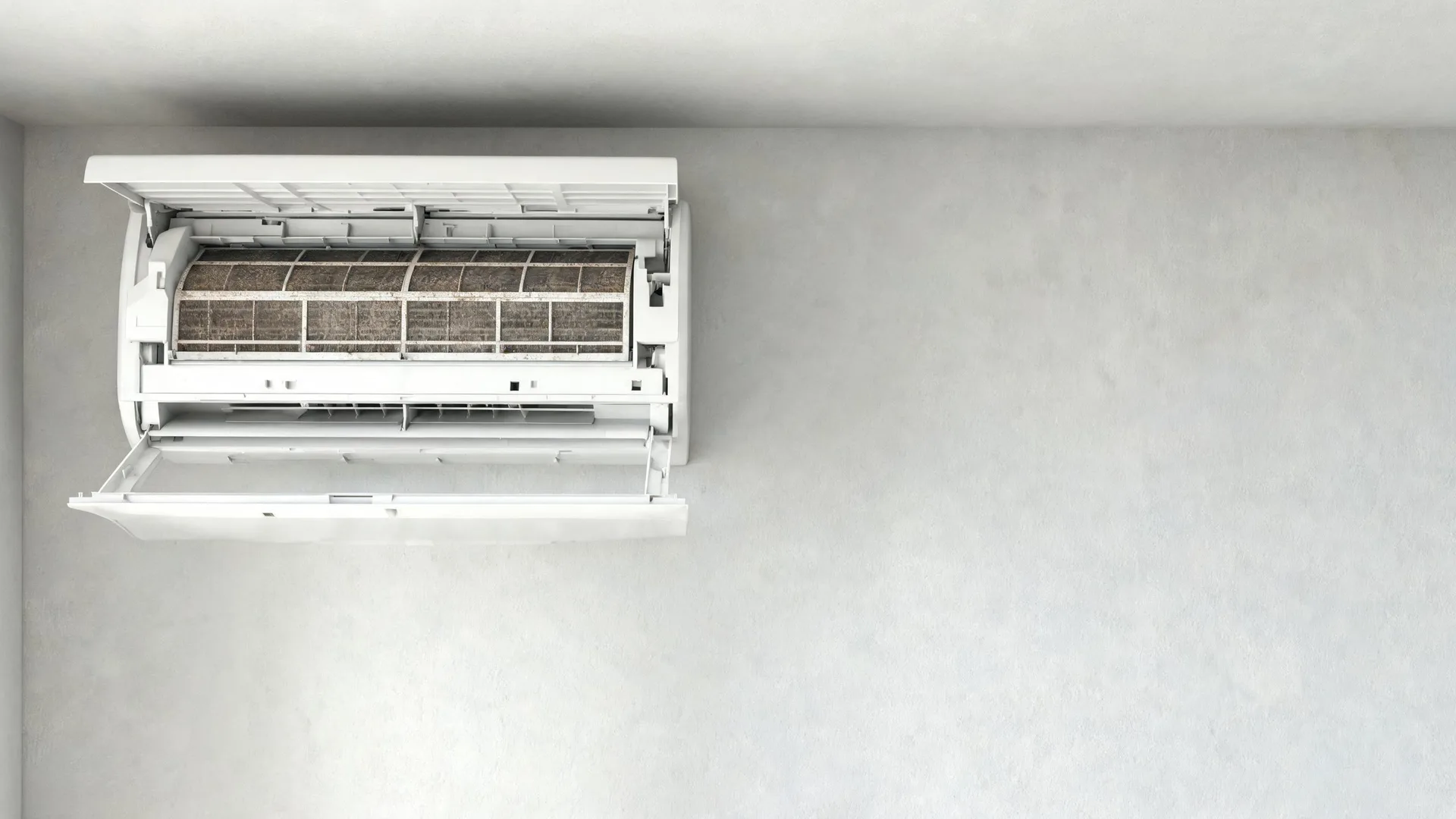
A refrigerant leak is different

Low refrigerant isn't the system using it up. It means there's a leak somewhere in the line set or coil, and it can take a while before it shows up as warm air or ice on the line. Topping it off without finding the leak just means the same call again later. Finding the leak is the part that takes a technician's time.

An outdoor central air conditioning unit mounted on a concrete pad beside a blue-sided house at sunset.

A new air conditioner would cut about $40 a year off cooling for a typical Boone County home.

  • A new one at the federal minimum, 14.3 SEER2$230 a year
  • An older air conditioner$270 a year

Estimates for a typical Boone County home, compared with an older unit built to the previous federal minimum, from EIA household energy data, Arkansas fuel prices and NOAA climate normals. Your home will differ.

Repair makes sense when a part like a capacitor or contactor has failed.

Replacement makes sense when the compressor has failed or the system uses R-22 refrigerant, which is no longer made.

A repair makes sense when the part that failed is a part on its own, something a technician can pull and replace without touching anything else. A capacitor, a contactor, a fan motor, these go bad one at a time and the rest of the system keeps running fine once they're swapped. Replacement starts to make more sense when the compressor itself is failing, because that's the part that moves the refrigerant and there's no working around it. Age matters less than what's actually broken. A unit that's been sitting fine for years can still throw a single bad part, and fixing that part is no different than fixing it on a newer system. What changes the math is a pattern, several different parts failing over a short stretch, because that usually means the whole system is wearing out at once rather than one piece giving out early.