





A tall red brick wall with a row of shrubs runs along the left side of a mown lawn, with a single-story light-colored house and tall pine trees in the background under an overcast sky.

AC Repair in Sheridan, AR

Tell us about the job

Takes about a minute. No obligation.

RepairCentral ACGrant County, AR
Step 1 of 2

What ZIP code is the job in?

Five months of cooling a year in Grant County, May through September, with afternoon highs averaging 91°F through June, July and August. Your AC doesn't get much of a break in that stretch. It runs long hours just to hold the house steady, and that kind of steady work is hard on a compressor, a capacitor, a fan motor. Whatever is acting up right now probably didn't start today. It's been building under all that load, and it's worth having someone look at the actual cause rather than just the symptom.

5 months
May through September, your air conditioner is on duty
91°F
the average summer afternoon it cools against
18 hail events
in ten years, and hail bends the fins on outdoor coils
34 wind events
in ten years, and wind drives debris into outdoor units
Isometric illustration of a cutaway single-story house showing interior rooms, ductwork running from an indoor air handler, and an outdoor condenser unit on a pad beside the building.
Your air conditioner works hardest from June through September.

NOAA nClimDiv, 1991–2020 normals

Cooling starts up in May in Grant County.

April is the time to get a weak AC looked at, before that first May heat wave finds whatever part is already going.

Grant County sees its share of wind and storms, but that's not what's wearing out your AC

67 severe weather events from 2015 to 2024
24% of homes statewide lost power a day or more in 2024
34 damaging wind events from 2015 to 2024
What a tired AC costs you in SheridanArkansas homes paid 12.32 cents per kilowatt-hour in 2024, and a struggling AC spends more of them

Half the homes in Grant County were built in 1991 or later. If yours is one of them, the system behind that broken capacitor or weak fan motor probably still has years of life in it. The hard running Grant County summers put on an AC wears parts out early, but it doesn't put the whole unit near the end of its life. That's a different problem, and it usually means repair is the right call, not replacement. Worth having someone confirm which part failed before anyone talks about swapping the whole unit.

Find out what's actually wrong before summer asks more of it

Get the actual part diagnosed now, not just the symptom. A compressor or capacitor that's been straining since May won't fix itself sitting through the winter.

Find a contractor
An outdoor air conditioning condenser unit mounted on a concrete pad surrounded by gravel, photographed against a partly cloudy blue sky.

One more thing worth mentioning when you call

That math changes if yours is a mobile home. Mobile homes make up close to a quarter of the housing in Grant County, and the AC in one wears differently than in a site built house, with the unit often more exposed and the ductwork harder to get to. Worth telling the contractor what kind of home it is before they come out, so they bring what the job actually needs.

Check the thermostat and the breaker first

Make sure it's set to cool and the setpoint is actually below room temperature. Then check the breaker panel for the outdoor unit and the furnace or air handler. A tripped breaker or a thermostat bumped to the wrong setting looks exactly like a dead AC, and both are worth ruling out before anything else.

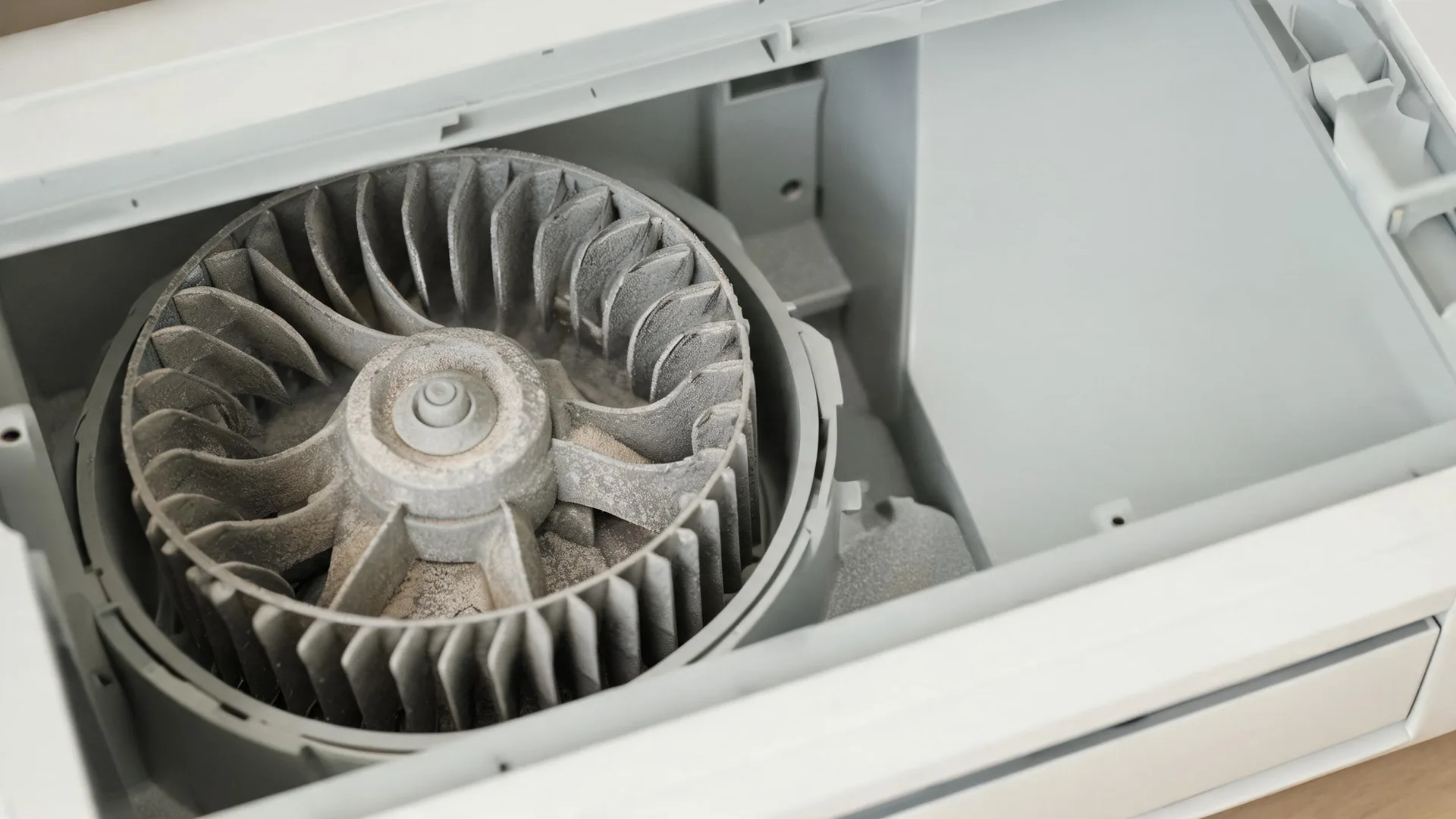
Look at the filter and the outdoor unit, then stop there

Pull the filter and hold it up to light. If you can't see through it, swap it. A clogged filter can starve the system enough to ice up the coil. Walk outside and clear leaves or grass clippings away from the condenser so air can move through it. Past that, leave the panels closed. Refrigerant, the capacitor and anything inside the cabinet is a job for someone who does this for a living.

Aerial view of a gray central air conditioning condenser unit on a concrete pad next to a house with vinyl siding.

A new air conditioner would cut about $50 a year off cooling for a typical Grant County home.

  • A new one at the federal minimum, 14.3 SEER2$350 a year
  • An older air conditioner$400 a year

Estimates for a typical Grant County home, compared with an older unit built to the previous federal minimum, from EIA household energy data, Arkansas fuel prices and NOAA climate normals. Your home will differ.

Repair makes sense when a part like a capacitor or contactor has failed.

Replacement makes sense when the compressor has failed or the system uses R-22 refrigerant, which is no longer made.

A repair makes sense when one part failed and the rest of the system is still holding its charge and airflow the way it should. A capacitor, a contactor, a fan motor, these wear out on their own schedule and swapping one doesn't say anything bad about the compressor or the coil next to it. Replacement starts to make more sense when the compressor itself is the problem, since that's the part that does the actual work of cooling and it's not something anyone patches. It also matters how the rest of the system has been acting. A unit that's been running fine and just had one thing quit on it is a different situation than one that's needed a visit every season for a while now. Age alone doesn't decide it. What's actually failed does.