






Three white clapboard houses with wraparound porches glow with warm interior and landscape lighting beneath Spanish moss-draped oak trees at dusk.

AC Repair in Bull Shoals, AR

Tell us about the job

Takes about a minute. No obligation.

RepairCentral ACMarion County, AR
Step 1 of 2

What ZIP code is the job in?

Your AC runs about five months a year here, May through September, with afternoon highs around 88 in June, July and August. That's a normal cooling load, not a harsh one. If your system is struggling to keep up or short cycling, the cause is probably the same thing a tech would find anywhere. A weak capacitor. A low refrigerant charge. A dirty coil, or a clogged filter choking airflow. None of that is specific to this area. The fix is finding which part failed and repairing that, not rebuilding the whole system.

5 months
May through September, your air conditioner is on duty
88°F
the average summer afternoon it cools against
25 hail events
in ten years, and hail bends the fins on outdoor coils
26 wind events
in ten years, and wind drives debris into outdoor units
Isometric cutaway illustration of a single-story house showing interior rooms, ceiling ductwork connected to an indoor air handler, and an outdoor condenser unit beside the exterior wall.
Your air conditioner works hardest from June through August.

NOAA nClimDiv, 1991–2020 normals

AC season in Bull Shoals starts in May.

If a part was already weak, the first hot stretch is when it gives out.

Marion County sees its share of storms, but that's not why your AC quit

67 severe weather events from 2015 to 2024
24% of homes statewide lost power a day or more in 2024
26 damaging wind events from 2015 to 2024

Half the homes in Marion County were built in 1986 or later. If yours is one of them, the AC in it hasn't had decades of wear to work through. A capacitor or contactor failing on a system that age usually means one part gave out, not that the unit is done. Worth knowing before you assume the whole system needs to go.

A newer system is usually worth repairing

Get the part that failed fixed instead of pricing out a replacement you probably don't need.

Find a contractor
A man in a dark cap, navy long-sleeve shirt and tan work pants walks up porch steps toward a green front door, carrying a worn canvas tool bag in his right hand.
A gray residential air conditioning condenser unit mounted on a concrete pad outdoors, surrounded by green grass under a partly cloudy blue sky.

What to listen for before it stops cooling altogether

Most of what tells you something's wrong is the air coming out of the vents, not the unit itself. It stops feeling cold, or it never quite gets there even though the system runs longer than it used to. Some units start cycling on and off faster than before, and that short cycling is hard on the compressor every time it happens. Listen for anything new. A hum that won't turn into a start. A click that repeats without the fan kicking on. A rattle that wasn't there last season. Water pooling near the indoor unit usually means a clogged condensate line rather than a refrigerant problem, but either way it won't clear on its own. These signs don't all point to the same repair. They do all mean something has already failed. Running the system while ignoring them tends to take other parts down with the one that failed first.

Check these before you call

Go to the thermostat first and make sure it's set to cool and the set point is below room temperature. Look at the outdoor unit and see if the fan is turning. Check the breaker box for a tripped switch. Pull the filter and hold it up to a light. If you can't see light through it, that alone can choke airflow enough to look like a bigger failure.

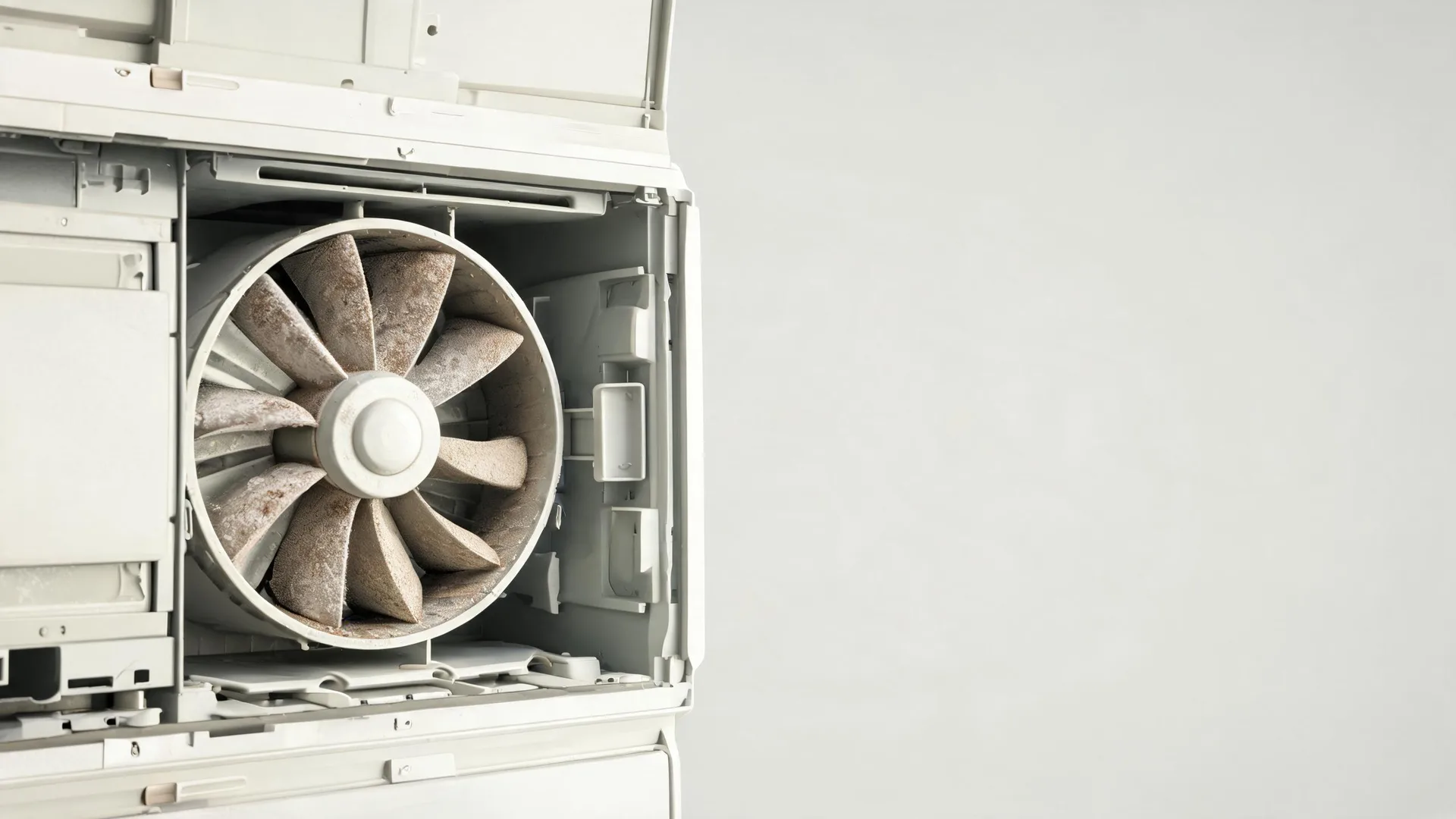
What these checks rule out

None of this fixes a bad capacitor or a low charge. But it tells a tech whether they're walking into a tripped breaker and a filter nobody's changed, or something that actually needs parts. A clogged filter also strains the system in a way that can take down a capacitor early, so clearing it protects whatever part turns out to be the real problem.

An outdoor air conditioning condenser unit on a concrete pad next to the gray vinyl siding of a residential home.

A new air conditioner would cut about $40 a year off cooling for a typical Marion County home.

  • A new one at the federal minimum, 14.3 SEER2$240 a year
  • An older air conditioner$280 a year

Estimates for a typical Marion County home, compared with an older unit built to the previous federal minimum, from EIA household energy data, Arkansas fuel prices and NOAA climate normals. Your home will differ.

Repair makes sense when a part like a capacitor or contactor has failed.

Replacement makes sense when the compressor has failed or the system uses R-22 refrigerant, which is no longer made.

A diagnostic visit starts before anyone touches the unit. A tech will ask what the system was doing, when it started, and what you've already checked. Then they test rather than guess. Gauges go on to check refrigerant pressure. A meter checks the capacitor's output against what it's rated for, since a capacitor can read fine sitting still and still fail under load. They'll check the contactor for pitting, pull the blower access panel, and look at the coil for ice or buildup. Amp draw on the compressor tells them if it's working harder than it should. The goal is to find the one part that's actually out of spec, not to swap parts until something works.