




An overhead view of a residential air conditioning condenser unit mounted on a concrete pad next to a house with vinyl siding.

AC Repair in Benton, AR

Tell us about the job

Takes about a minute. No obligation.

RepairCentral ACSaline County, AR
Step 1 of 2

What ZIP code is the job in?

A weak capacitor is one of the most common reasons an AC quits. It gives the compressor and fan motor the kick they need to start spinning, and once it wears out the system hesitates to start or won't start at all. A dirty condenser coil causes a different kind of trouble. It makes the system work harder to push heat outside, which strains the compressor and drives up pressure in the lines over time. A refrigerant leak shows up as ice on the copper lines or air that never gets cold, and since the system is sealed, it won't refill or fix itself. A clogged drain line can also shut the whole system down, because the float switch trips to stop water from backing up into the house. Sometimes the fan outside is spinning fine and the compressor still won't engage, which usually points to a failing relay rather than the compressor itself.

5 months
May through September, your air conditioner is on duty
90°F
the average summer afternoon it cools against
67 hail events
in ten years, and hail bends the fins on outdoor coils
70 wind events
in ten years, and wind drives debris into outdoor units
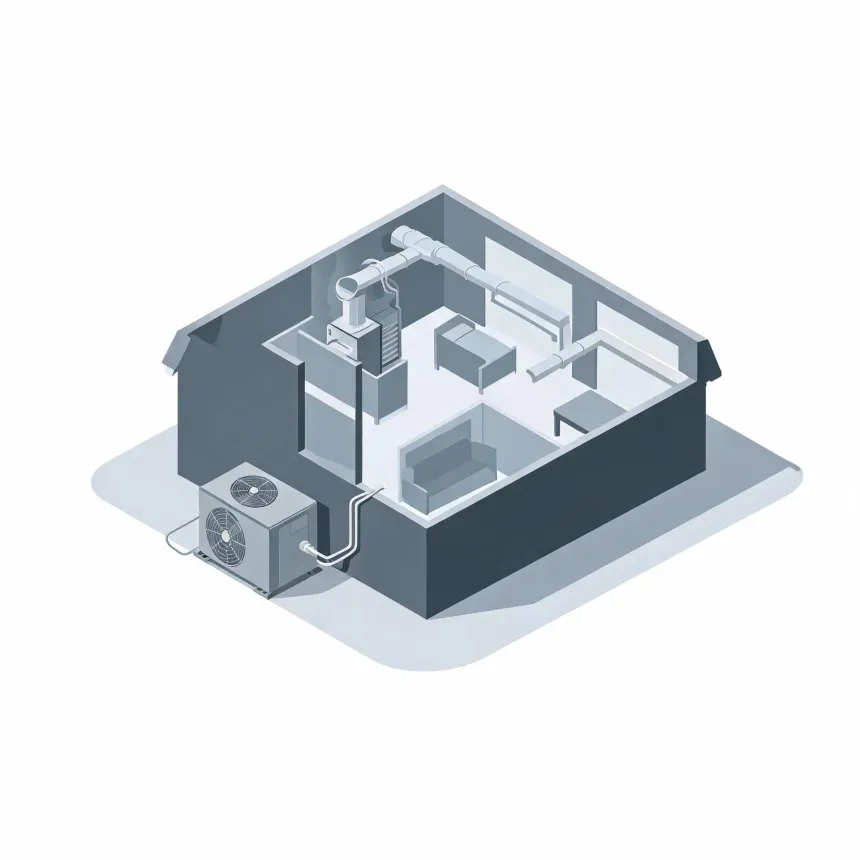
Isometric grayscale illustration of a cutaway house interior showing a furnace with ductwork, interior rooms with furniture, and an outdoor condenser unit connected by lines at the exterior wall.
Your air conditioner works hardest from June through September.

NOAA nClimDiv, 1991–2020 normals

Benton's AC runs on the same kind of system found everywhere in the country.

Most repairs here come down to a weak capacitor, a dirty coil, or a low charge, not anything particular to this area.

May turns the first hot afternoon into a test every weak part fails

Cooling runs May through September
Summer afternoons average 90°F
67 hail events from 2015 to 2024

A system that's struggling still runs, and that's what makes it easy to ignore. If the compressor is low on charge, letting it keep cycling means it runs hotter than it should, and that heat breaks down the oil that's supposed to protect it. A dirty coil left alone doesn't stay the same kind of dirty. The compressor keeps pushing against the extra strain, and reduced cooling can turn into a burned-out compressor if it goes on long enough. Ice on the lines is another one people wait out. Once ice forms, it blocks airflow across the coil, so the system pulls in warm air and makes more ice, and running it this way can push liquid refrigerant back into the compressor where it doesn't belong. Catching any of this early usually means a small repair. Waiting usually means a bigger one.

A newer system is worth repairing

Half the homes in Saline County were built in 1997 or later. If that's your house, the system is still well inside the range where a repair makes sense. Fix the capacitor, clean the coil, or recharge the line and move on.

Find a contractor
A gray cylindrical air conditioning condenser unit mounted on a concrete pad next to a light-colored vinyl-sided house exterior.

Five months of afternoons at 90°F

Cooling runs here from May through September, five months straight. Through June, July and August the afternoon high averages 90°F, so the system is cycling on and off most of the day for that whole stretch. That's a lot of hours on the capacitor and the compressor with little downtime between cycles. A weak capacitor or a borderline low charge gets found out fast under that kind of load. The parts and the failures are the same ones you'd see anywhere. This area just gives them more hours to show up in.

What you'll actually notice first

The system runs longer than it used to, or it cycles on and off instead of holding a steady stretch. Air comes out of the vents but it's not as cold as it should be. Sometimes there's a smell when it kicks on, or a rattle, hum, or click that wasn't there before. None of these stop the system from running, so it's easy to notice and keep ignoring.

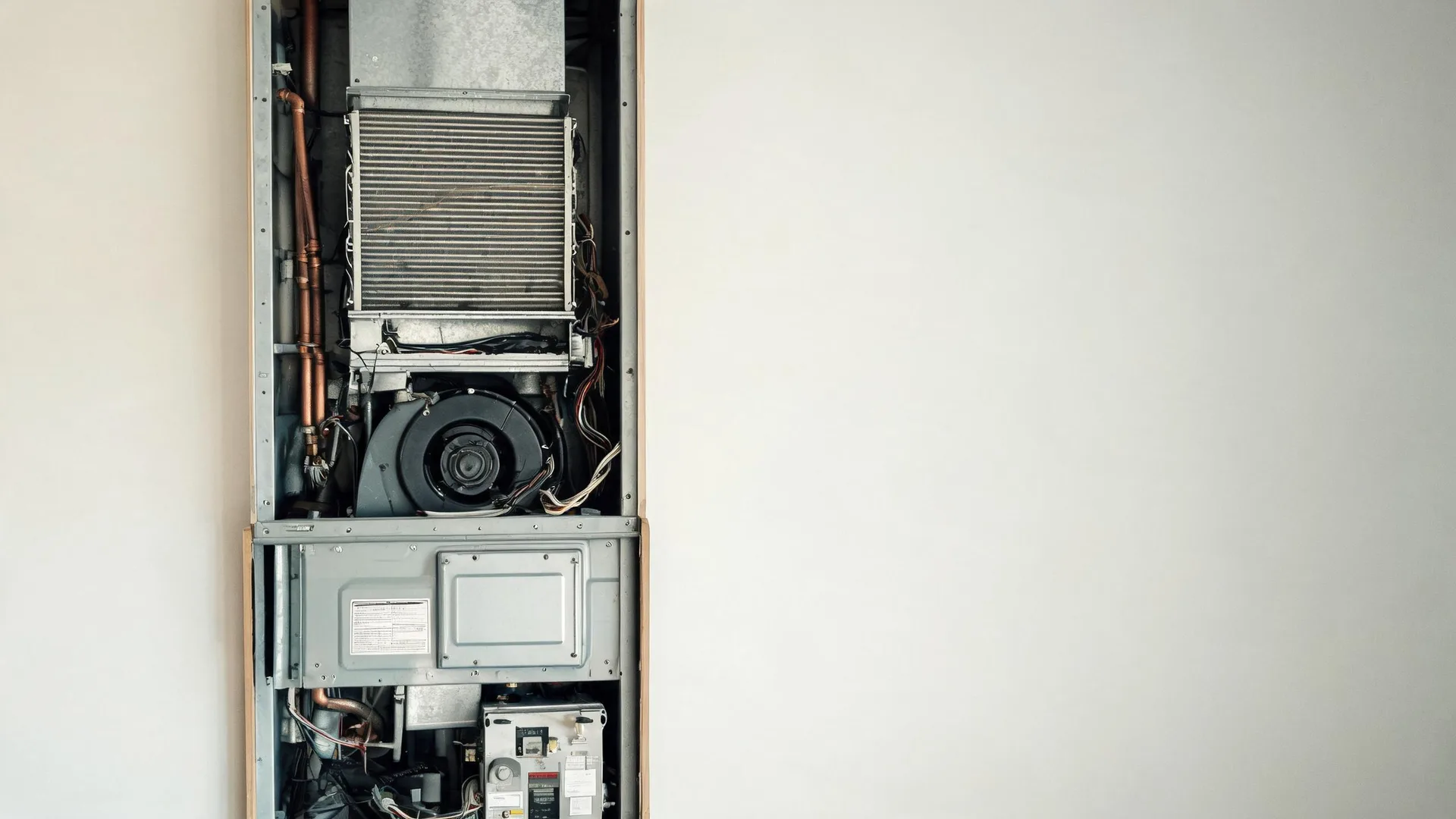
What the sound or smell is telling you

A hum with no startup means the motor isn't getting what it needs to spin. A click that repeats without the compressor engaging usually means a relay or capacitor is failing. A musty smell points to water sitting where it shouldn't, often near the drain pan. A burning smell is different from all of these and means power is reaching a part that's breaking down. Each sound or smell points to a different part, not just a system that's getting old.

Aerial view of a residential air conditioning condenser unit mounted on a concrete pad next to a house with vinyl siding and a sliding glass door.

A new air conditioner would cut about $50 a year off cooling for a typical Saline County home.

  • A new one at the federal minimum, 14.3 SEER2$330 a year
  • An older air conditioner$380 a year

Estimates for a typical Saline County home, compared with an older unit built to the previous federal minimum, from EIA household energy data, Arkansas fuel prices and NOAA climate normals. Your home will differ.

Repair makes sense when a part like a capacitor or contactor has failed.

Replacement makes sense when the compressor has failed or the system uses R-22 refrigerant, which is no longer made.

At some point every failing system raises the same question. Fix it or replace it. Age matters less than people think. What matters more is what's actually wrong and whether it's a part or the compressor. A capacitor, a relay, a clogged drain line. These are cheap parts that fail on their own and don't say anything about the rest of the system. The compressor is different. It's the most expensive part to replace, and swapping it often costs more than the system is worth. If a system needs a capacitor or a cleaning, fix it without a second thought. If the compressor itself has failed, that's the point to ask whether a new system makes more sense than rebuilding the one you have.