




Single-story brick house with a dark shingled roof set behind a lawn and tall pine and moss-draped trees, photographed low to the ground with pine straw in the foreground.

AC Repair in Magnolia, AR

Tell us about the job

Takes about a minute. No obligation.

RepairCentral ACColumbia County, AR
Step 1 of 2

What ZIP code is the job in?

Five months of cooling a year here, May through September, with afternoon highs averaging 91°F through June, July and August. Your AC holds that line every one of those days. A system working that hard wears differently than one that only runs in mild weather. The capacitor, the contactor, the coil, all of it ages faster under that kind of load. So when something starts acting up, it's rarely random. Get it looked at properly and the fix holds.

5 months
May through September, your air conditioner is on duty
91°F
the average summer afternoon it cools against
16 hail events
in ten years, and hail bends the fins on outdoor coils
48 wind events
in ten years, and wind drives debris into outdoor units
Isometric cutaway illustration of a small house showing interior rooms with furniture, ceiling ductwork and an air handler, plus an outdoor condenser unit connected by refrigerant lines beside the building.
Your air conditioner works hardest from June through September.

NOAA nClimDiv, 1991–2020 normals

A compressor straining against a low charge draws more current every minute it keeps running.

Left running that way, the compressor overheats and can burn out for good, turning a repair into a replacement.

What breaks here is what breaks anywhere, just sooner

Power costs 12.32 cents a kWh statewide
Cooling runs May through September
Summer afternoons average 91°F

April is worth a call before May gets here. Your AC has sat idle since fall, and the first hot stretch is when a weak capacitor or a part that was already failing finally gives out. Get it checked before the season starts and a contractor can catch that kind of thing on their schedule, not yours, in the middle of a heat wave with the house already warm. Once May hits and the system is running every day, a small problem does not get the chance to sit quietly. It shows up fast, usually on the worst possible day.

Get it diagnosed properly

Your air conditioner works hard here, and that's usually what's behind the problem. Have it diagnosed properly so the fix lasts.

Find a contractor
An outdoor air conditioning condenser unit mounted on a concrete pad surrounded by gravel, photographed against a partly cloudy blue sky.

Five months of running, and no slow days in it

Five months of running against afternoon highs near 91 means the system logs a lot of hours before the season's even over. That's why a proper diagnosis is worth more than a guess here. A tech checking the charge, the contactor and the capacitor against what they're supposed to read will find the actual cause. Swapping the usual part skips that step, and the same problem can come back before September.

The capacitor and contactor wear out first

The capacitor gives the compressor and fan motor the kick they need to start, and it loses its charge slowly over years until one day it can't do the job. The contactor's job is simpler, just closing a circuit, but the constant arcing pits the contacts until they stick or stop making contact at all. Both tend to fail without much warning beforehand.

Low refrigerant means a leak, not normal use

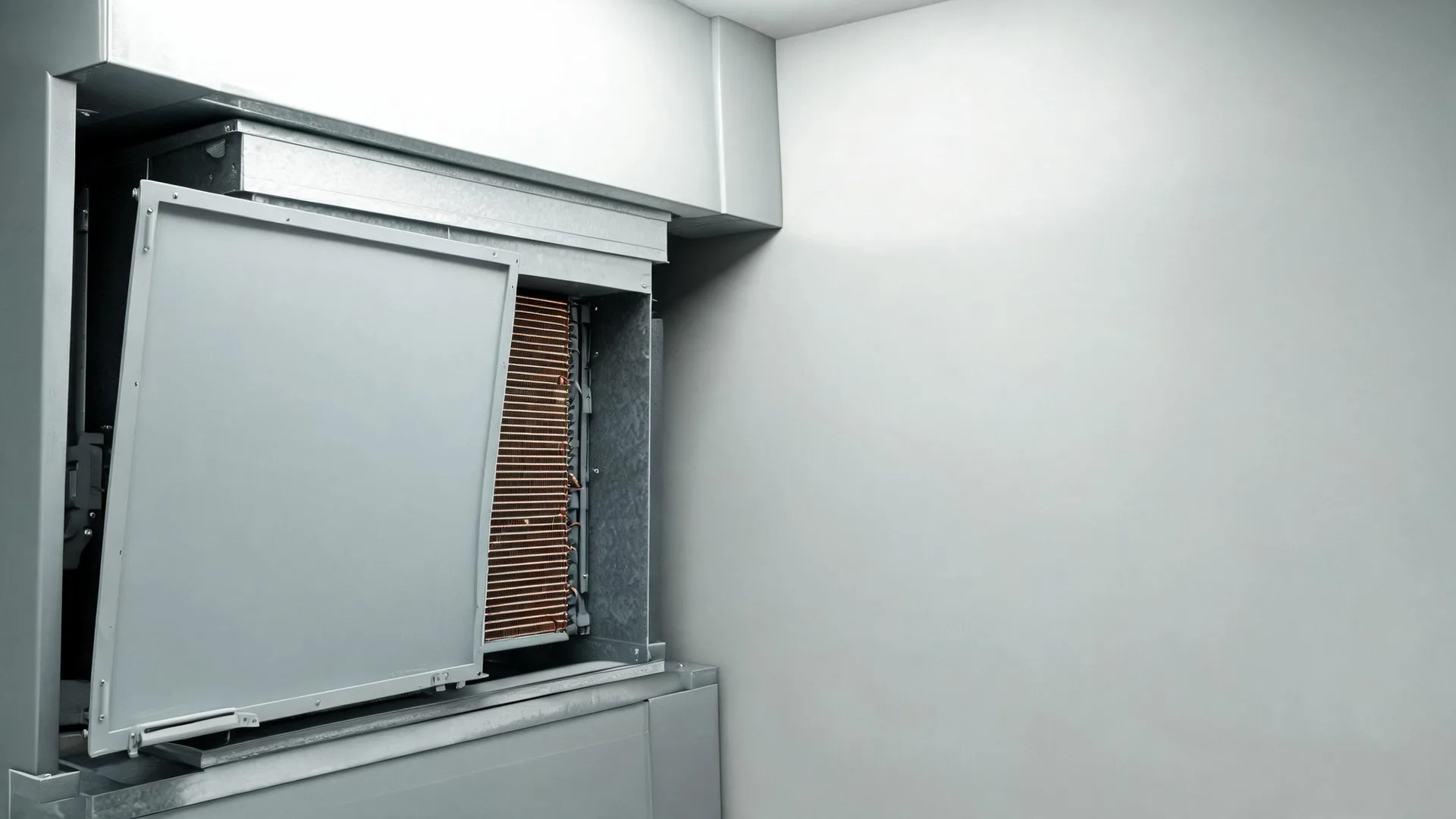
Refrigerant is sealed in a closed loop and doesn't get consumed the way fuel does. If a system is low, it's leaking out somewhere, usually at a coil or a fitting that's corroded or worked loose. Adding refrigerant without finding that leak just delays the same problem, and a compressor running low on charge is working harder than it should.

Overhead view of an air conditioning condenser unit on a concrete pad next to a house with asphalt shingle roofing and vinyl siding.

A new air conditioner would cut about $50 a year off cooling for a typical Columbia County home.

  • A new one at the federal minimum, 14.3 SEER2$370 a year
  • An older air conditioner$420 a year

Estimates for a typical Columbia County home, compared with an older unit built to the previous federal minimum, from EIA household energy data, Arkansas fuel prices and NOAA climate normals. Your home will differ.

Repair makes sense when a part like a capacitor or contactor has failed.

Replacement makes sense when the compressor has failed or the system uses R-22 refrigerant, which is no longer made.

A repair makes sense when the failure is one part doing one job, like a capacitor or a contactor, and the rest of the system is sound. Replacing that part gets you back to where you were before it failed. Replacement starts to make more sense when the compressor itself is the problem. The compressor is the one part that isn't practical to swap on its own, and a system that's lost its compressor is close to the end of its life either way. Age matters less than what's actually failing. A unit that's been reliable for years and throws one bad part is usually worth fixing. One that keeps coming back for different reasons, a capacitor one year and a coil leak the next, is telling you the whole system is wearing out at the same time, not that it's unlucky.