Five months of real work
Air conditioners in Mena run from May through September. That's the full stretch a system here needs to hold up without a break.
Takes about a minute. No obligation.
Air conditioners in Mena run from May through September. That's the full stretch a system here needs to hold up without a break.
Afternoon highs average 89°F in June, July and August. That's warm, steady work for an AC, not the kind of heat that points to some unusual cause. Whatever's wrong is likely the same problem a tech sees in any home running cooling that hard.

NOAA nClimDiv, 1991–2020 normals
May is when AC use starts in Mena.
If a system has a weak part, the first hot week in May is when it shows.



Before calling anyone, check the thermostat first. Make sure it's set to cool and set below room temperature, and check the batteries if it uses them. Walk outside and look at the condenser. If the fan isn't turning at all, check the breaker box, since a tripped breaker is something you can reset yourself. Pull the air filter and hold it up to a light. If light doesn't pass through it, that's restricting airflow badly enough to cause the problem on its own. Look at the indoor coil or the line set outside if you can get to it. Ice on either one means shutting the system off and letting it thaw before anyone touches it, since running it iced up can damage the compressor.
Most AC systems around Mena are still well within their working life. If yours came with the house, a repair is the more likely outcome than a replacement. Get the actual problem diagnosed before you assume otherwise.
Find a contractorWarm air coming out of the vents while the thermostat is calling for cool points to a refrigerant leak or a failing compressor. Short cycling, where the system shuts off a few minutes after it starts, often traces back to a dirty coil or a sensor reading wrong. Water pooling near the indoor unit usually means a clogged drain line or a cracked drain pan. A new sound is worth paying attention to. A hard click before startup, a hum with no fan movement, a rattle that wasn't there last week, that's a motor or capacitor on its way out. Running the system less doesn't make any of this better. The part that's struggling keeps working until it takes another part down with it, and a simple fix turns into a bigger one.
The run capacitor holds a charge that gets the compressor and fan motors started and keeps them turning. Heat wears it down over time, and when it weakens, the compressor struggles to start or the fan turns slow. It's a small part, but the whole system stalls without it.
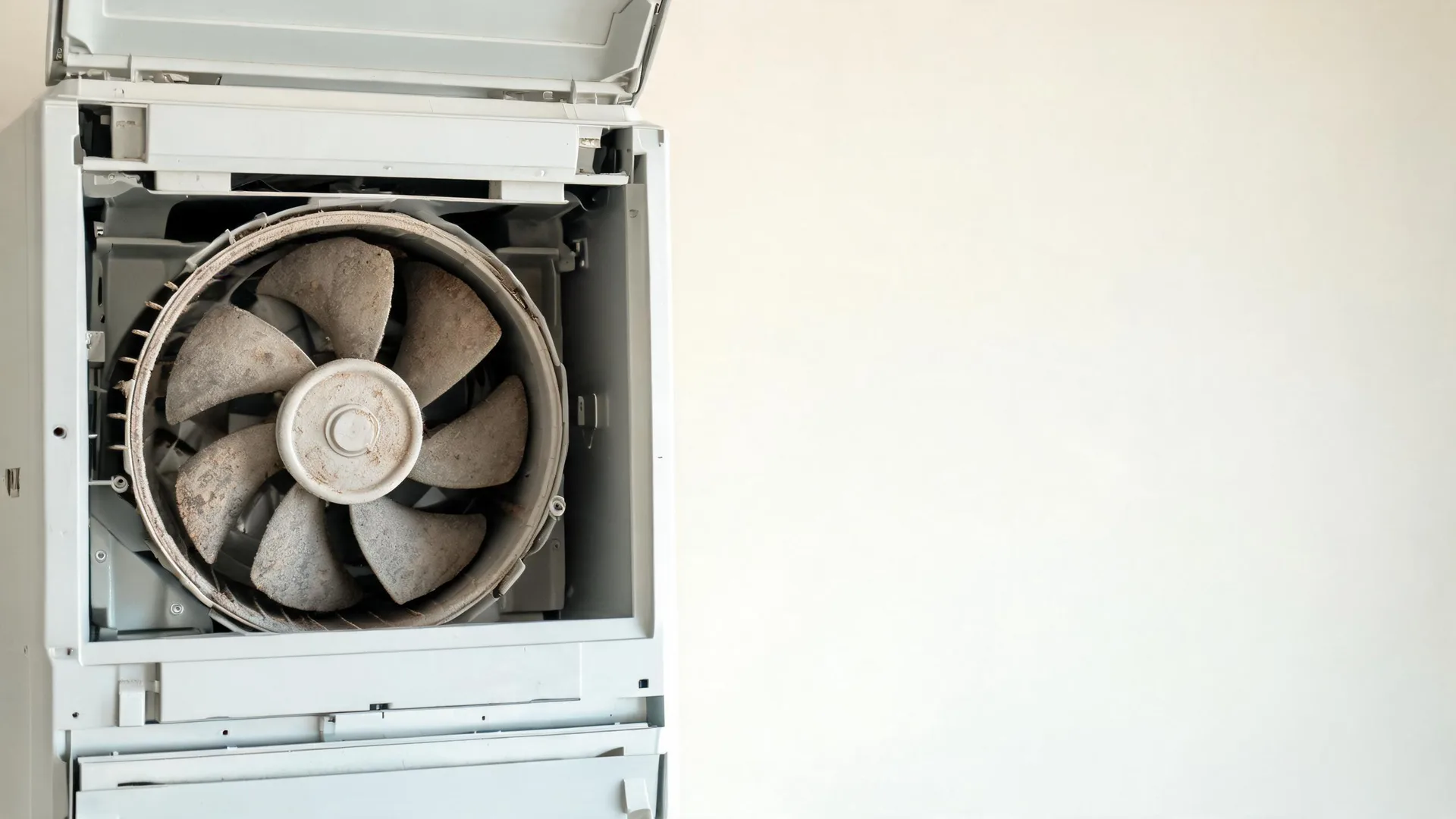
The outdoor coil needs airflow through it to shed heat, and the indoor coil needs airflow across it to pick heat up. Debris on one or dust on the other blocks that airflow, so the system has to run longer to do the same job. That longer runtime wears down the compressor and the motors faster than normal use would, which is why it's often missed until something else gives out.
Estimates for a typical Polk County home, compared with an older unit built to the previous federal minimum, from EIA household energy data, Arkansas fuel prices and NOAA climate normals. Your home will differ.
Repair makes sense when a part like a capacitor or contactor has failed.
Replacement makes sense when the compressor has failed or the system uses R-22 refrigerant, which is no longer made.
A diagnostic visit starts before any panel comes off. A tech asks what the system is doing, when it started, and whether anything changed right before. Then comes a look at the thermostat settings, the breaker and the air filter, the same things worth checking beforehand, just confirmed rather than assumed. After that comes a set of readings. Pressures on the refrigerant lines. Voltage at the capacitor. Amp draw on the compressor and fan motors. Those numbers point to a specific failing part rather than a guess. The system usually runs during this, since a problem that shows up under load often hides when the unit is sitting off.