





Two illuminated white Southern-style houses with wraparound porches and staircases, framed by a Spanish moss-draped tree on a quiet street at night.

AC Repair in Fayetteville, AR

Tell us about the job

Takes about a minute. No obligation.

RepairCentral ACWashington County, AR
Step 1 of 2

What ZIP code is the job in?

Washington County saw 123 hail events between 2015 and 2024, more than one a month on average. Hail dents the fins on an outdoor condenser and can bend them closed, which chokes off the airflow the system needs to cool the refrigerant. Damaging wind came through just as often, enough to throw branches and debris into the unit from the top. A condenser can take a hit like that and keep running for weeks before the strain shows up as a bigger repair. If a storm has come through since the unit last ran fine, it is worth having someone look at the coil and fins even when the air coming out still feels cool.

4 months
June through September, your air conditioner is on duty
87°F
the average summer afternoon it cools against
123 hail events
in ten years, and hail bends the fins on outdoor coils
99 wind events
in ten years, and wind drives debris into outdoor units
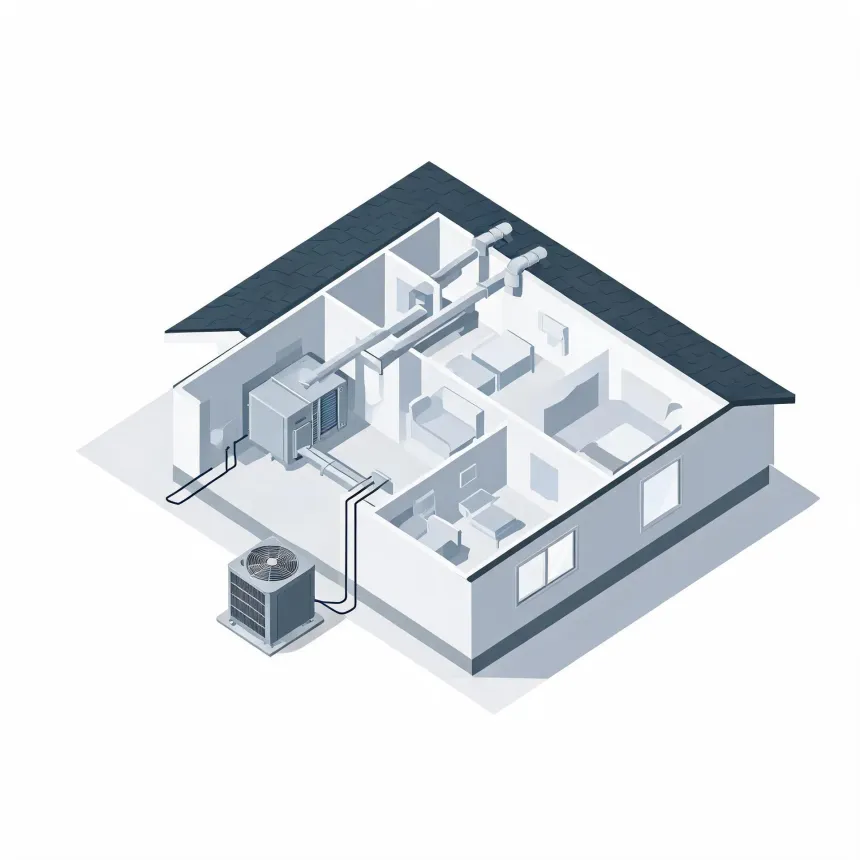
Isometric cutaway illustration of a single-story house showing interior rooms, ceiling ductwork, an indoor air handler, and an outdoor condenser unit connected by lines, in gray and white tones on a white background.
Your air conditioner works hardest from June through August.

NOAA nClimDiv, 1991–2020 normals

A weak capacitor makes the compressor pull harder every time it starts.

Let that keep up and the compressor burns out, turning a small part into a full replacement.

June is when a weak AC shows what it couldn't carry through winter

Cooling runs June through September
Summer afternoons average 87°F
99 damaging wind events from 2015 to 2024
Fayetteville's AC units are younger than mostHalf the homes in Washington County were built in 1995 or later.

After a storm, a quick look at the outdoor unit is worth more than waiting to see if a problem shows up. Pull back any branches or leaves sitting against the cabinet so air can move through it the way it's supposed to. Check the fins for anything bent flat, hail does that even when the dent itself is small. None of this tells you what's happening inside the unit, only a contractor can do that, but it rules out the easy problem before anyone touches a gauge. Arkansas households losing power for a day or more isn't rare, almost a quarter did last year, so when the power comes back on after an outage, give the system a few minutes before it's running at full load again.

A newer system is a repair, not a replacement

A unit built with a newer house still has most of its working life ahead of it. That's reason enough to get a repair looked at rather than guess your way toward a replacement.

Find a contractor
A gray metal air conditioning condenser unit mounted on a concrete pad in a flat grassy field under a partly cloudy sky.

Most of what fails has been wearing out for years before it quits

Most AC failures trace back to the same handful of parts. The capacitor is usually first. It kicks the compressor and fan motor into motion every time the system starts, and that jolt wears it down a little more each cycle until it can't deliver the push anymore. The contactor goes a similar way. Its contacts pit and burn from years of making and breaking contact under load, until one day they stick or stop closing at all. Refrigerant doesn't get used up like fuel, but a slow leak at a fitting or coil will drain the charge over seasons, and the system ends up cooling less while working harder to do it. The condenser fan motor and the coil wear down too, bearings loosen, coils corrode from years of weather sitting on them. None of this fails because of one bad day. It fails because the part has been doing the same job over and over, and a unit that runs more each year asks more of every part doing that job.

What you can check at the thermostat

Set it a few degrees below room temperature and listen for the outdoor unit to kick on. If the indoor fan runs but the air isn't cold, or nothing outside starts at all, that narrows the problem before anyone shows up. Swap the batteries first if the screen is blank or acting strange, it's the cheapest guess you can rule out.

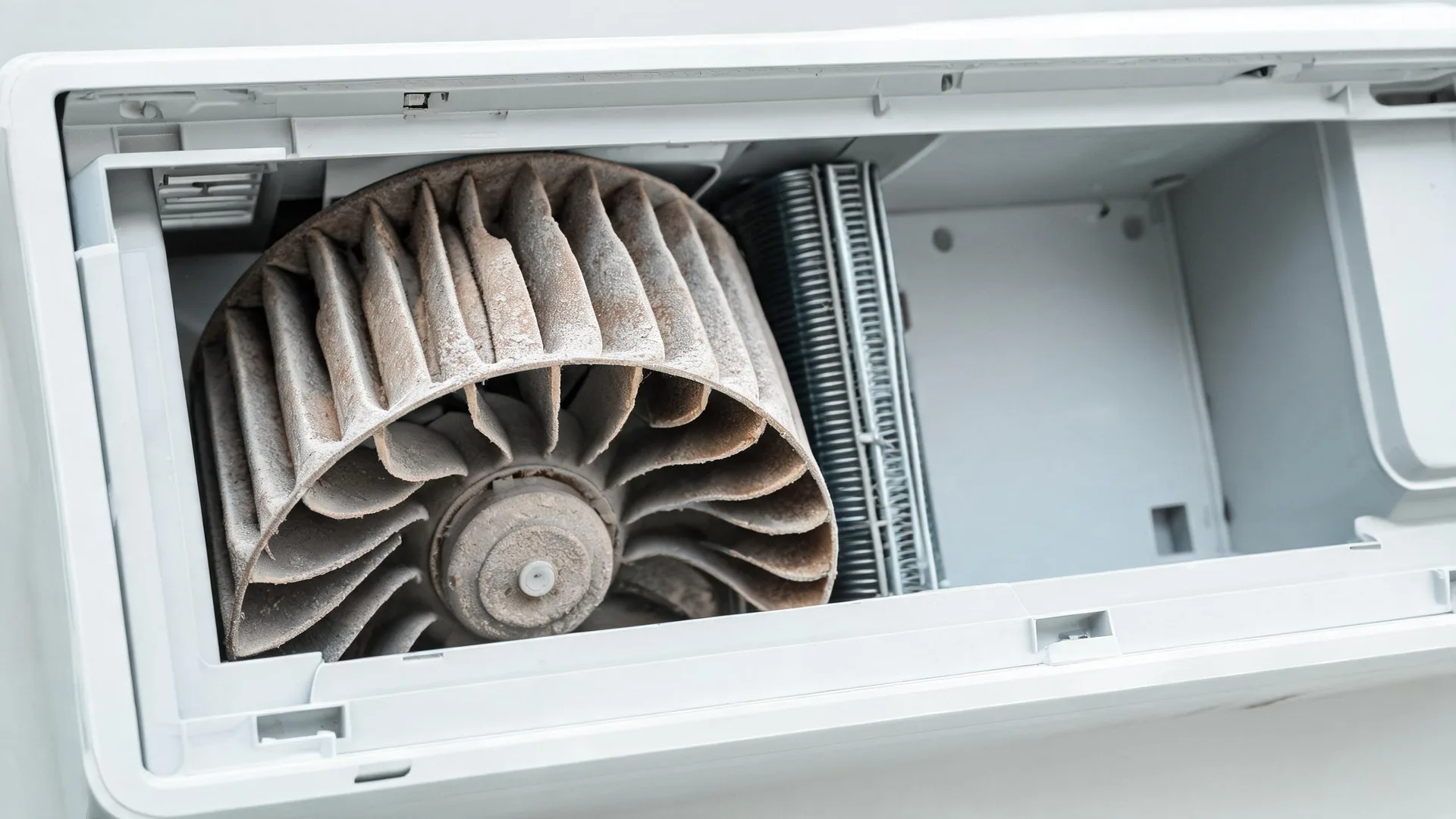
What you can check at the filter and vents

Pull the filter and hold it up to a light. If you can't see through it, it's choking the airflow the whole system depends on, and that alone can cause warm air, short cycling, or ice on the line. Walk the house and make sure furniture or curtains aren't blocking vents, and that the supply and return vents are open.

Aerial view of a gray central air conditioning condenser unit on a concrete pad next to a house with vinyl siding.

A new air conditioner would cut about $40 a year off cooling for a typical Washington County home.

  • A new one at the federal minimum, 14.3 SEER2$240 a year
  • An older air conditioner$280 a year

Estimates for a typical Washington County home, compared with an older unit built to the previous federal minimum, from EIA household energy data, Arkansas fuel prices and NOAA climate normals. Your home will differ.

Repair makes sense when a part like a capacitor or contactor has failed.

Replacement makes sense when the compressor has failed or the system uses R-22 refrigerant, which is no longer made.

Age isn't the only thing worth weighing. A compressor that's starting to fail makes the whole decision for you, since replacing just that part often costs close to a new system anyway. A bad capacitor, a stuck contactor, a low refrigerant charge from a slow leak, those are repairs that fix the unit and leave the compressor alone. The question worth asking a contractor isn't just how old the unit is but what's actually broken. A system that's needed a repair every season is wearing down in ways a single fix won't solve. One that's run fine for years and just hit its first real problem is usually worth fixing and leaving alone.