



Low-angle view across a lawn and pine-needle mulch toward a single-story brick house with a dark hipped roof and covered porch, framed by pines and a moss-draped oak branch.

AC Repair in Clinton, AR

Tell us about the job

Takes about a minute. No obligation.

RepairCentral ACVan Buren County, AR
Step 1 of 2

What ZIP code is the job in?

Clinton runs its air conditioning from May through September, with afternoon highs averaging 88 degrees through June, July and August. That's a normal summer workload for a home AC system, nothing unusual. Most repair calls here come down to the same causes you'd find anywhere. A weak capacitor. A low refrigerant charge. A dirty coil. A clogged drain line. Van Buren County has seen 28 hail events over the years, and a storm like that can dent a condenser's fins or crack a fan blade. Outside of that, there's no reason to think the problem is anything other than what it looks like.

5 months
May through September, your air conditioner is on duty
88°F
the average summer afternoon it cools against
28 hail events
in ten years, and hail bends the fins on outdoor coils
40 wind events
in ten years, and wind drives debris into outdoor units
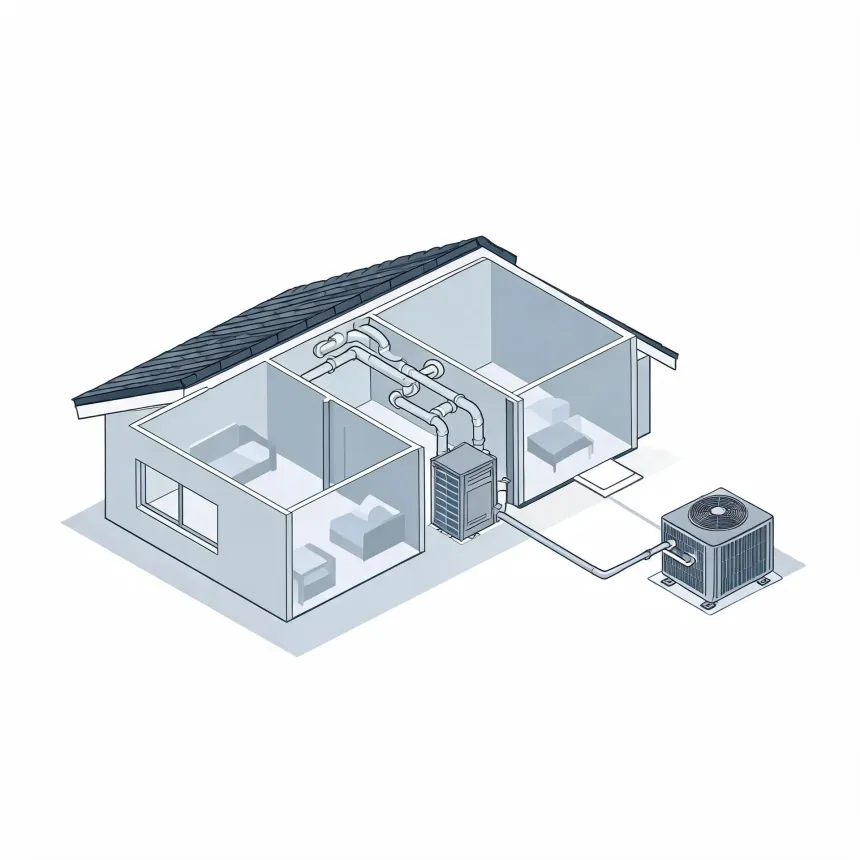
Isometric line illustration of a cutaway single-story house showing interior rooms, ductwork, an indoor air handler or furnace, and a refrigerant line running to an outdoor condenser unit on a pad.
Your air conditioner works hardest from June through August.

NOAA nClimDiv, 1991–2020 normals

April is the last quiet month before cooling starts in May.

Whatever was wrong with your AC in September has sat untouched since then, and it won't have fixed itself.

An old house or a new one, the same problems show up

Half the homes here were built by 1986
Climate zone 3A
Power costs 12.32 cents a kWh statewide

Van Buren County has logged 40 damaging wind events and a single tornado between 2015 and 2024. That's weather, not a reason to suspect your AC is wearing out faster than it should. A condenser is built to sit outside and take wind. What a storm can do is knock debris into the cabinet or rock the unit enough to loosen a wire or a line, and either of those will stop a system that was running fine the day before. Power is the other piece. Close to a quarter of Arkansas households lost power for a full day or more last year, and an AC that cuts out hard and comes back on right away can trip a breaker or strain a start capacitor that was already near the end of its life. None of this points to anything exotic. It still comes back to a part that failed, not a system that was doomed from the start.

Get the usual fix

Nothing about this area is especially hard on it. It's most likely the usual problem with the usual fix.

Find a contractor
A gray cylindrical air conditioning condenser unit mounted on a concrete pad next to a light-colored vinyl-sided house exterior.

Running it doesn't buy you time

A capacitor that's starting to go still gets the compressor running, just with a harder kick each time. Leave it alone and it pulls more amps on every start, and that wear doesn't reverse itself. A system low on refrigerant will still blow air, so it keeps running to chase a temperature it can't reach, and the compressor runs hotter than it was built to run. A dirty coil makes the same system work harder to move the same heat, and that extra load falls on the compressor every hour the unit runs. None of these fix themselves by running more. They just move the failure from a small part to the compressor itself.

Warm air out of the vents

If the air coming out doesn't feel noticeably cold, that's usually a refrigerant leak or a compressor that's struggling. It won't get better by itself, and running it longer just adds hours of strain to a compressor that's already working against the problem.

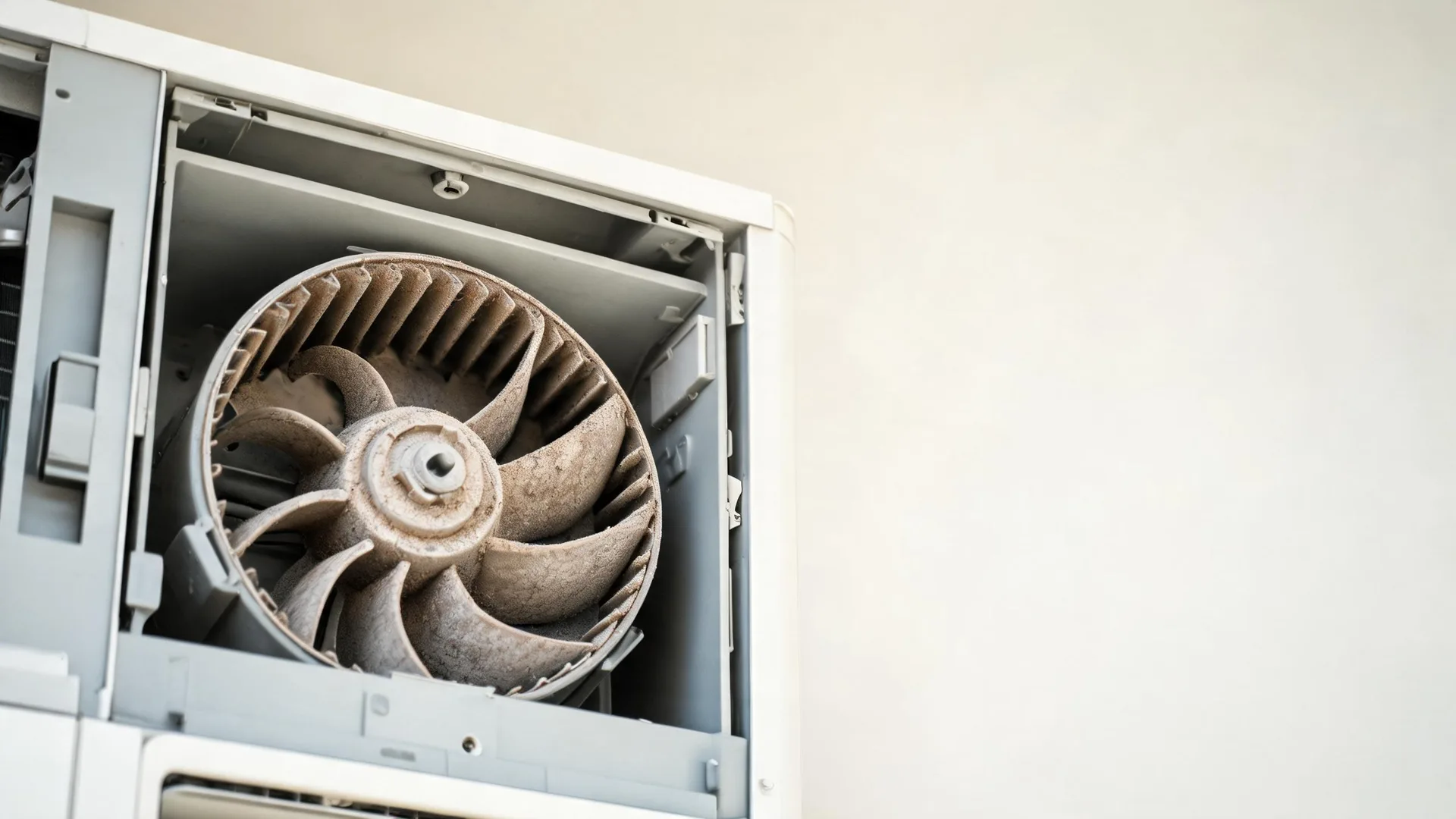
Short cycling or won't stay on

An AC that shuts off a few minutes after starting, then kicks back on, is often tripping on its own high pressure or overheating. That pattern points to a failing capacitor or a dirty coil forcing the system to work harder than it should just to keep running.

An outdoor air conditioning condenser unit positioned beside a blue-sided house at sunset.

A new air conditioner would cut about $40 a year off cooling for a typical Van Buren County home.

  • A new one at the federal minimum, 14.3 SEER2$260 a year
  • An older air conditioner$300 a year

Estimates for a typical Van Buren County home, compared with an older unit built to the previous federal minimum, from EIA household energy data, Arkansas fuel prices and NOAA climate normals. Your home will differ.

Repair makes sense when a part like a capacitor or contactor has failed.

Replacement makes sense when the compressor has failed or the system uses R-22 refrigerant, which is no longer made.

A diagnostic call starts outside at the condenser. The tech checks that the fan spins freely and looks at the coil for caked dirt or grass clippings. Then comes the electrical side. That means testing the capacitor, checking the contactor, and looking at wire connections that vibration can work loose over time. Gauges go on next to check refrigerant pressure, since that reading tells a tech whether the charge is right or whether there's a leak to chase down. Inside, the coil and blower get checked, along with the drain line, to make sure condensation is actually draining instead of backing up. A tech will also let the system run a full cycle instead of just looking at it sitting still, because some problems only show up once the compressor has been working for a few minutes. The goal by the end is a specific answer, the part that failed, not just a confirmation that something's wrong.