A normal five-month season
AC in Clarksville runs May through September, with afternoon highs averaging 88°F in June, July and August. That is a regular cooling load, not an extreme one.
Takes about a minute. No obligation.
AC in Clarksville runs May through September, with afternoon highs averaging 88°F in June, July and August. That is a regular cooling load, not an extreme one.
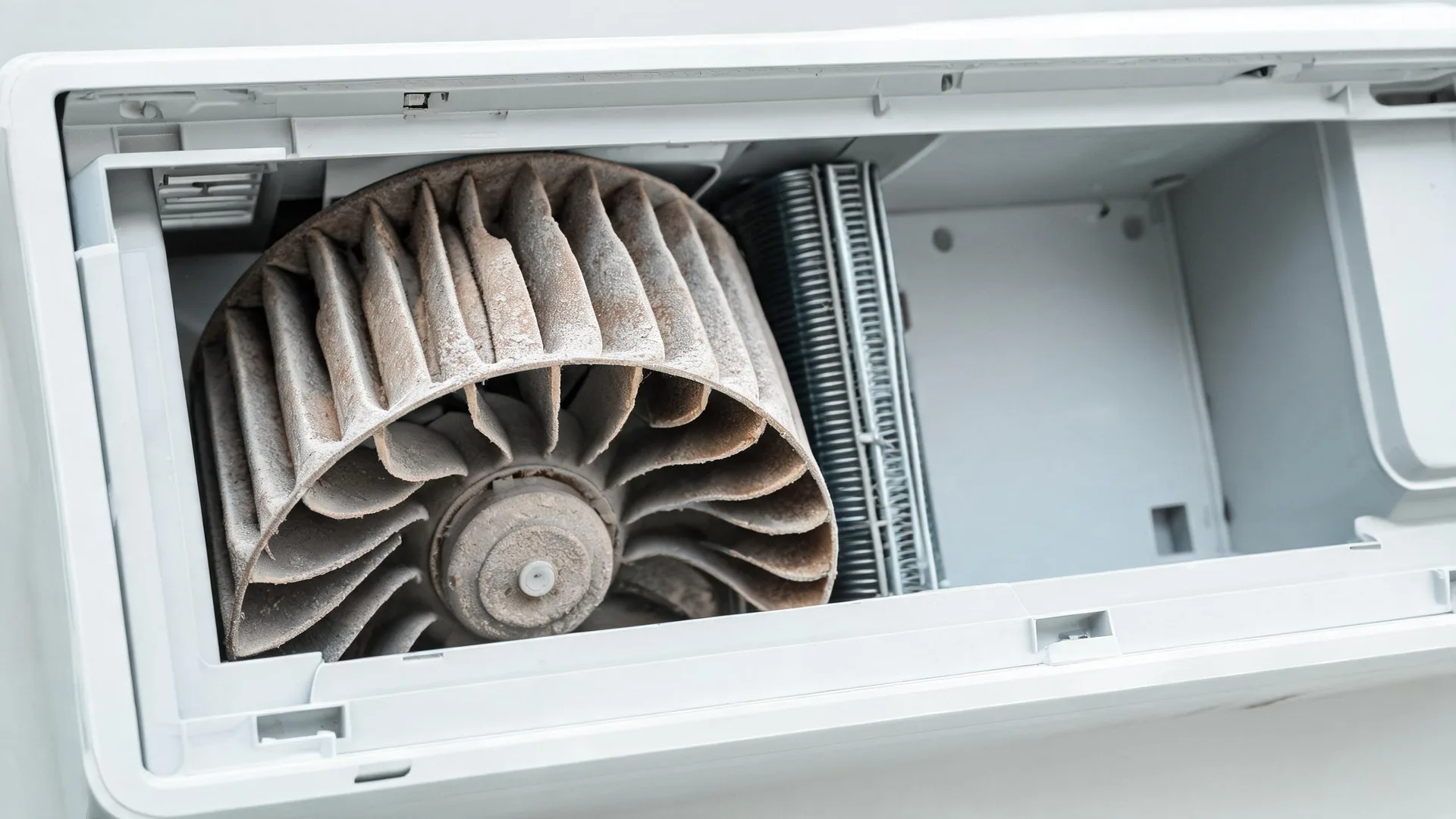
A system that breaks down in a five-month season like this one is most likely dealing with a worn capacitor, a low refrigerant charge, or a dirty coil, the kind of wear any AC sees over time. Finding which one it is points straight to the fix.

NOAA nClimDiv, 1991–2020 normals
AC in Clarksville starts its work in May.
A part that got weak over the winter is the one that gives out first when May heat hits it.
Before you call anyone, check the thermostat is set to cool and the temperature is actually below room temperature. Sounds obvious, but a setting bumped by accident wastes a service call. Next, go look at the outdoor unit. If the fan isn't spinning at all, or it's spinning but the air coming off it isn't warm, that's worth telling the tech. Check the air filter too. A filter packed with dust chokes airflow across the indoor coil, and that alone can make a system blow warm or freeze up. If you can see ice on the indoor coil or the refrigerant lines, turn the system off and let it thaw before anyone works on it. Last, check the breaker panel. A tripped breaker is a quick thing to rule out, and it tells the tech something if it keeps tripping again.
Half the homes in Johnson County were built in 1986 or later. If yours is one of them, the AC likely still has plenty of working life left in it. A capacitor, a low charge, a dirty coil, these are the kind of thing worth fixing, not a sign the system is done.
Find a contractorA struggling system does not just sit there running poorly. It keeps leaning on parts that are already going bad, and that makes them go bad faster. A weak capacitor still kicks the compressor on, but each hard start heats the windings a little more than the last one did. Keep running it that way and a bad capacitor can take the compressor down with it. Low refrigerant works on the same pattern. The compressor has to run longer to move the same heat, and the coil runs colder than it should. That coil can ice over. Once ice builds up, airflow drops, and the coil gets colder still, so the ice builds faster. A dirty coil follows the same path at a slower pace. Restricted airflow makes the system work past what it was built for, and that wear adds up the longer it keeps running that way.
Every time the compressor starts, the capacitor gives it the jolt to get moving. That happens on every single cycle, all season. Heat and that constant demand wear down the capacitor's ability to hold a charge, and it weakens gradually rather than failing all at once. A compressor that hums but won't start, or a fan that needs a push to get going, usually means the capacitor is close to done.
Refrigerant doesn't get used up the way fuel does. If the charge is low, it's because it's leaking out somewhere, usually at a fitting, a coil, or a joint in the line. Topping it off without finding the leak just buys a little time before it's low again. The leak point has to be found and sealed, or the same problem shows up again a few months later.
Estimates for a typical Johnson County home, compared with an older unit built to the previous federal minimum, from EIA household energy data, Arkansas fuel prices and NOAA climate normals. Your home will differ.
Repair makes sense when a part like a capacitor or contactor has failed.
Replacement makes sense when the compressor has failed or the system uses R-22 refrigerant, which is no longer made.
So how do you tell a repair from a system that's done. Age is part of it, but so is pattern. A unit that's needed a new capacitor once in its life is just a unit that needed a new capacitor. A unit that's had the coil cleaned, then a capacitor, then a leak patched, all in a short span, is wearing down as a whole, not failing one part at a time. The compressor is the other thing worth weighing. Almost everything else on an AC can be replaced on its own without touching the rest of the system. The compressor is different. If a tech says the compressor itself is failing, that's usually where repair stops making sense, because replacing it alone costs close to what a new outdoor unit costs. Worn parts get fixed. A failing compressor means the system has reached the end of its working life.