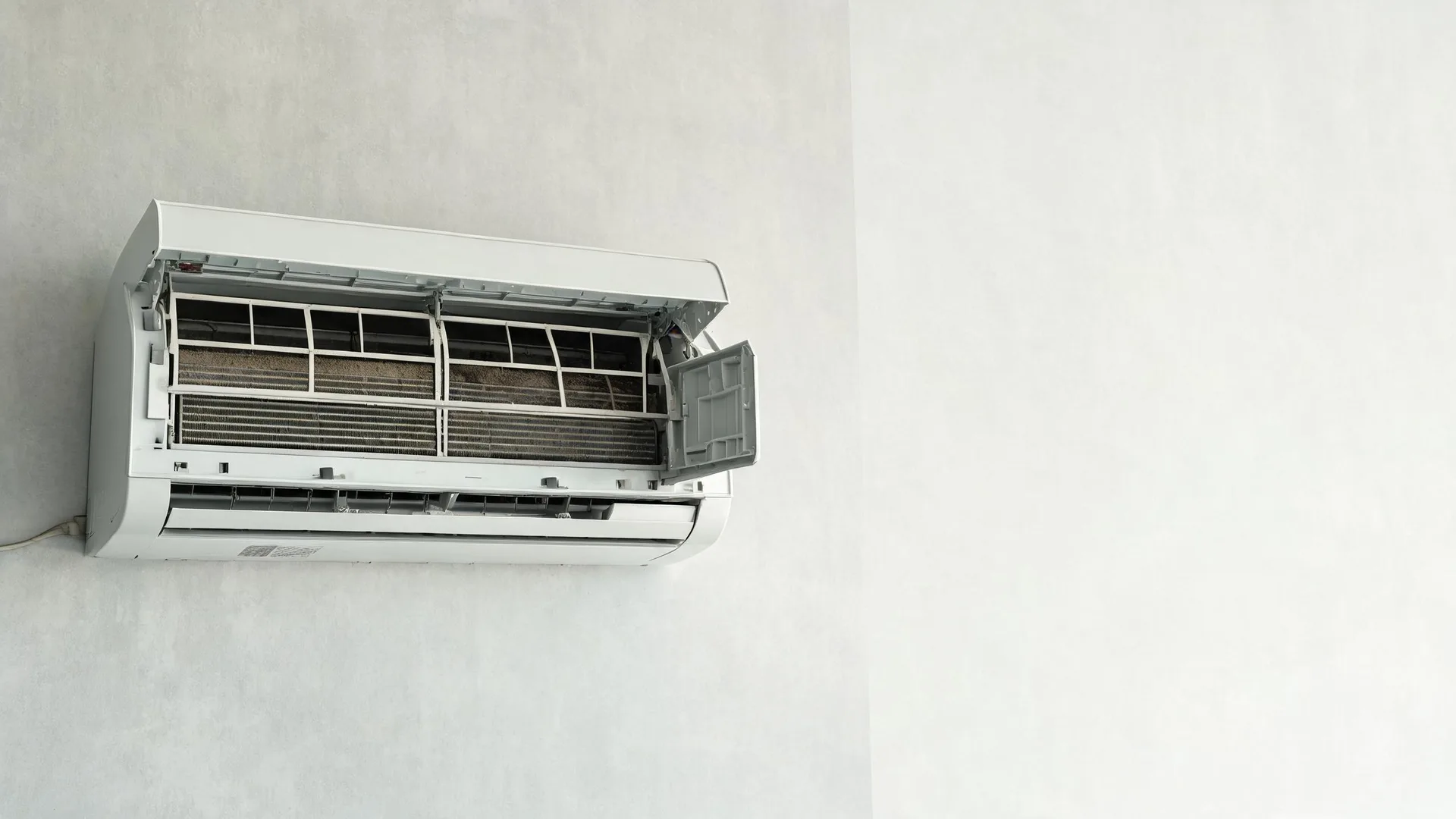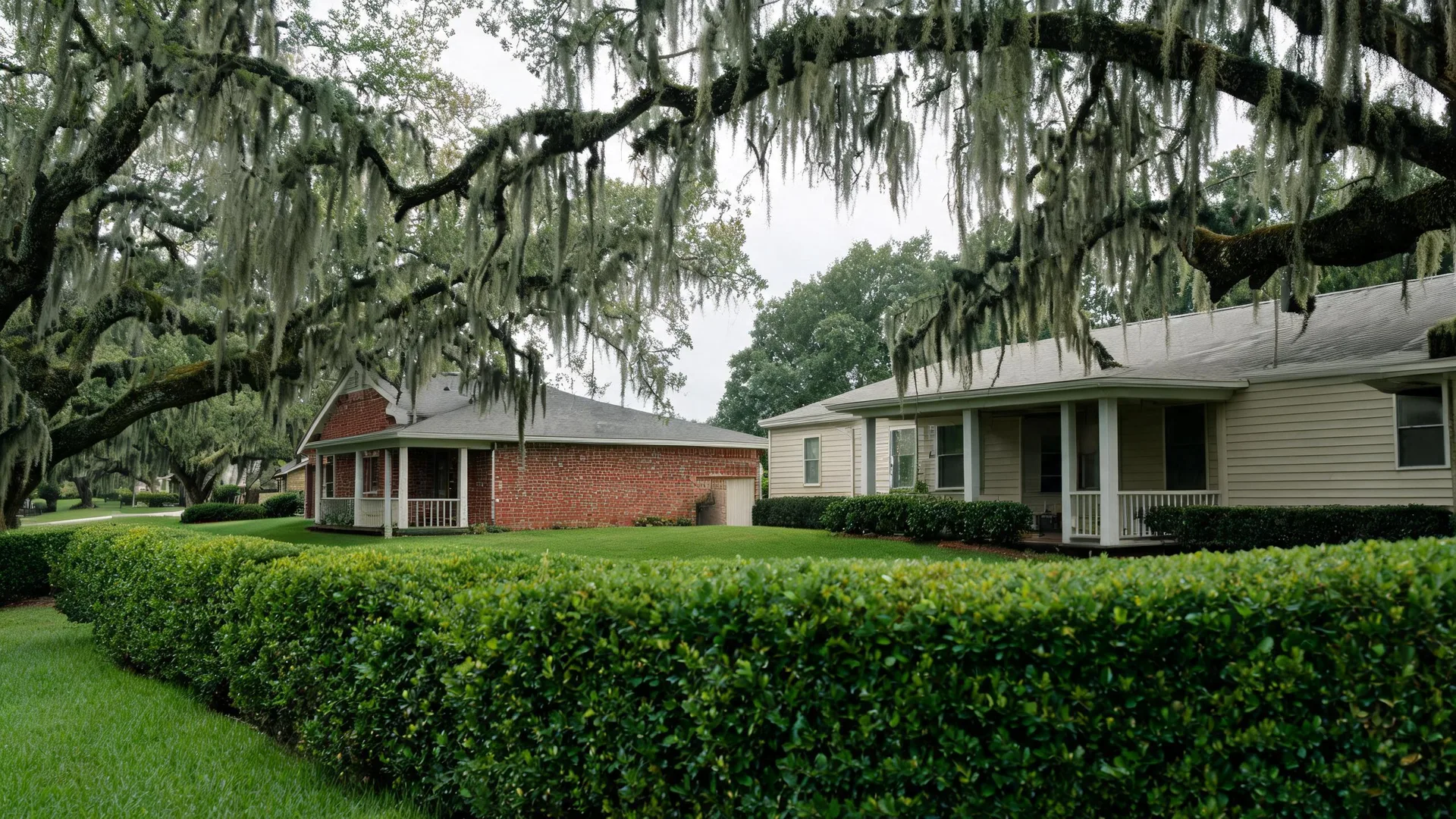
Two single-story houses, one brick with a covered porch and one with pale siding, seen across a mown lawn and a trimmed hedge, beneath large oak branches draped with Spanish moss.

AC Repair in Heber Springs, AR

Tell us about the job

Takes about a minute. No obligation.

RepairCentral ACCleburne County, AR
Step 1 of 2

What ZIP code is the job in?

The tech checks before touching anything

A tech starts by running the system and watching what it actually does, not guessing from what you describe. That means checking the refrigerant charge, looking at the condenser fan and compressor, and reading the temperature split between the air going into the system and the air coming out. Low airflow, a weak capacitor, or a refrigerant leak all show different symptoms, and the tech narrows it down before opening anything up.


What you find out at the end

Once the tech knows what's wrong, you get a straight answer on whether it's worth repairing or not. An aging compressor or a coil that's corroded through is a different conversation than a bad capacitor or a clogged drain line. You should walk away knowing what failed, why, and what your options are, not just that something needs replacing.

5 months
May through September, your air conditioner is on duty
89°F
the average summer afternoon it cools against
11 hail events
in ten years, and hail bends the fins on outdoor coils
24 wind events
in ten years, and wind drives debris into outdoor units
Isometric cutaway illustration of a single-story house showing interior rooms with furniture, overhead ductwork, an indoor air handler unit, and an outdoor condenser unit connected by lines at the side of the building.
Your air conditioner works hardest from June through August.

NOAA nClimDiv, 1991–2020 normals

A capacitor weakens slowly, then the compressor just won't start one hot afternoon.

A no-cool call is rarely about the whole system, usually one failed part.

May turns the first weak part into a no-cool call

Cooling runs May through September
Summer afternoons average 89°F
Power costs 12.32 cents a kWh statewide
Five months of cooling a year, same as anywhere elseAfternoon highs average 89°F in June, July and August.

Half the homes in Cleburne County were built in 1989 or later. If your house falls on that side, your AC isn't fighting decades-old ductwork or a system nobody's touched since the Clinton administration. A newer install usually means the repair is a single failed part, not a system limping toward the end. Worth asking the tech straight out whether what failed is a known weak point or just bad luck, because that answer should change how you think about the next one. Mobile homes make up a fifth of the housing here too, and those systems have their own quirks worth mentioning to whoever comes out.

Get it looked at early

Problems tend to show up in the first weeks of the season, when the load hits a part that was already weak.

Find a contractor
An outdoor air conditioning condenser unit mounted on a concrete pad surrounded by gravel, photographed against a partly cloudy blue sky.

The system tells you before it quits

Every part in the system wears at its own rate, and most of them give some kind of warning before they quit. A capacitor that's going weak makes the outdoor fan slow to start, or the unit hums for a second before it catches. A failing contactor can make the condenser cycle on and off on its own. A dirty coil or a weak charge shows up as air that's blowing but not cold, or ice forming on the line where there shouldn't be any. The signs are usually small and easy to explain away on their own. Taken together, over the stretch of a season, they're the system telling you a part is on its way out before it takes anything else down with it.

What you can check first

Start at the thermostat. Make sure it's set to cool and the setting is actually below room temperature. Replace the batteries if it's gone blank or looks sluggish. Then check the air filter. A filter clogged with dust chokes airflow across the coil, and that alone can make a system blow warm or freeze up. Outside, look at the condenser unit and clear away any grass clippings, leaves, or anything blocking the fins. Make sure the breaker for the outdoor unit hasn't tripped.

What to leave alone

Don't open the condenser cabinet or touch anything inside it. The capacitor in there holds a charge even with the power off. Don't add refrigerant yourself, it's not sold for that and handling it wrong is dangerous. If you see ice on the indoor coil or lines, turn the system off and let it thaw before anyone touches it. Running it iced over just strains the compressor for no reason.

Aerial view of a gray outdoor air conditioning condenser unit mounted on a concrete pad next to a house with vinyl siding.

A new air conditioner would cut about $40 a year off cooling for a typical Cleburne County home.

  • A new one at the federal minimum, 14.3 SEER2$280 a year
  • An older air conditioner$320 a year

Estimates for a typical Cleburne County home, compared with an older unit built to the previous federal minimum, from EIA household energy data, Arkansas fuel prices and NOAA climate normals. Your home will differ.

Repair makes sense when a part like a capacitor or contactor has failed.

Replacement makes sense when the compressor has failed or the system uses R-22 refrigerant, which is no longer made.

A tech weighing repair against replacement is really asking how much of the system is still good. A failed capacitor or a bad contactor doesn't say anything about the compressor or the coils, so swapping that one part brings the system back to where it was. A compressor that's failed, or a coil that's corroded through and leaking refrigerant, is a different question, because now you're paying to replace the part that everything else depends on. Age matters less than which part gave out. A unit that's run fine for years can have one weak component fail while the rest of it is sound, and that's a repair, not a reason to start over. The harder case is a system that keeps coming back with a new problem every season. At some point you're not fixing a machine, you're funding its retirement one part at a time.