




A lit antebellum-style two-story house with white columns and a wraparound porch at night, framed by live oak trees draped in Spanish moss.

Heat Pump Repair in Russellville, AR

Tell us about the job

Takes about a minute. No obligation.

RepairHeat PumpPope County, AR
Step 1 of 2

What ZIP code is the job in?

A heat pump works year round, so it rarely fails from a single hard winter the way a furnace can. More often it's one part wearing out while the rest of the system is fine. A failing capacitor, a low refrigerant charge, a reversing valve stuck in one position. These are worth fixing, especially if the unit has been reliable up to now. What changes the math is the compressor. That's the part that does the real work, and replacing it on its own often costs close to what a new system would run. If a technician tells you the compressor is going, that's the point to ask about replacement instead of repair. Age matters too, but less than how the unit has been maintained. A heat pump that's had its coils cleaned and refrigerant checked regularly can outlast one that hasn't, even if they're the same age.

7 months
October through April, your system heats
5 months
May through September, it cools
30°F
the average winter night it heats against
89°F
the average summer afternoon it cools against
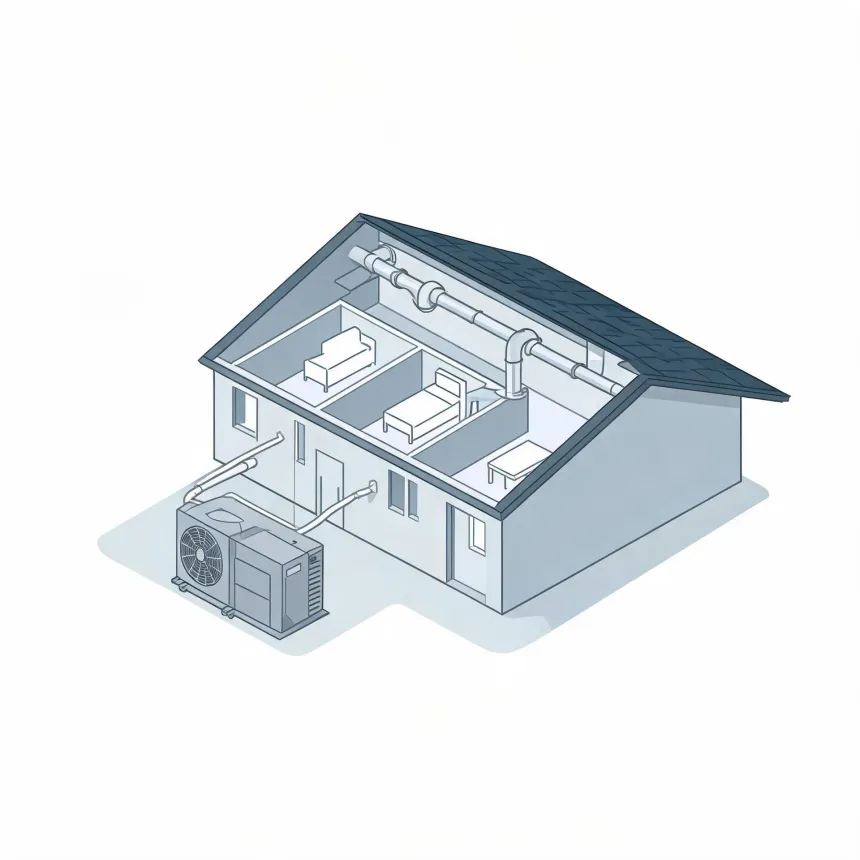
Isometric line illustration of a cutaway single-story house showing interior rooms with furniture and attic ductwork connected to an outdoor condenser unit beside the building.
Your system heats October through April and cools May through September.

NOAA nClimDiv, 1991–2020 normals

Russellville heat pumps switch over to heat in October and back to cooling in May.

A part that limped through last season tends to give out in the first cold snap or the first hot week, right when the system switches over.

Nothing unusual here. Just a part that wore out.

80 damaging wind events from 2015 to 2024
35 hail events from 2015 to 2024
Power costs 12.32 cents a kWh statewide

Half the homes in Pope County were built in 1988 or later. If that's your house, the heat pump inside it hasn't necessarily been through decades of wear, even if it's acting up right now. A reversing valve or capacitor can fail early in an otherwise sound system, and on a newer one that's usually worth fixing rather than replacing. Mobile homes make up a share of the housing here too, and the same logic holds for those units. The fix depends on which part failed, not how old the home around it is.

Get it looked at early

Problems tend to show up in the first weeks of the season, when the load hits a part that was already weak.

Find a contractor
A gray outdoor HVAC unit mounted on a concrete pad beside a house with gray lap siding and a stone foundation.

Less wear, fewer reasons to replace it

A heat pump in a newer home has had less time to put hours on its compressor. That's the part that decides whether a repair makes sense. If yours is still under the system's original parts, ask the technician to confirm what's failed before you let anyone talk replacement.

What you can check yourself

Look at the outdoor unit and see if the fan is spinning and the coil is free of leaves or ice. Check your thermostat is set to the right mode and the batteries aren't dead. Go to the breaker panel and see if anything's tripped. Look at your indoor filter and swap it if it's gray or clogged. None of this takes tools, and it rules out the simple stuff before anyone comes out.
What to leave alone

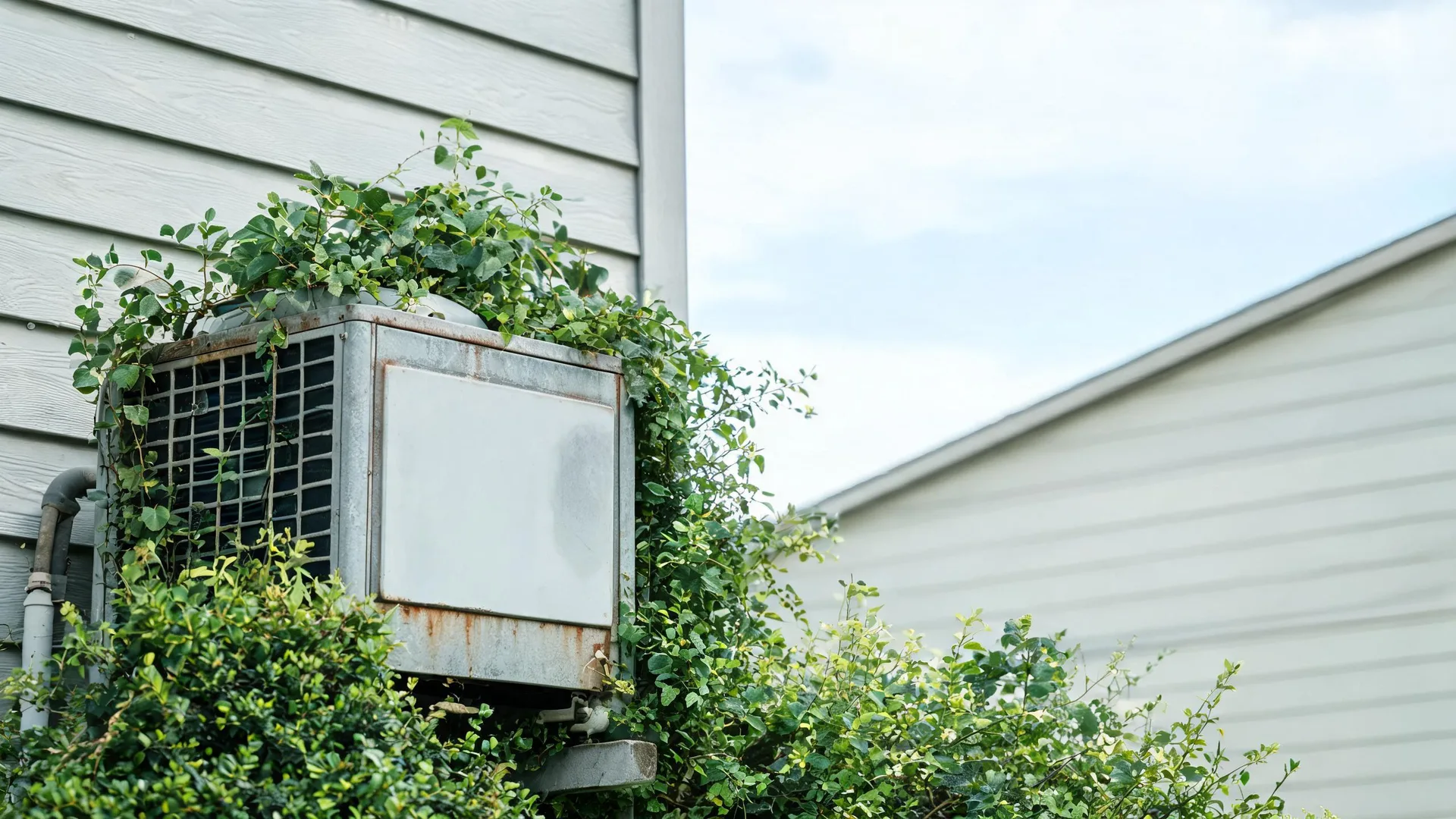
Don't pull the access panel off the outdoor unit or touch anything inside it. Don't try to add refrigerant or chase a wiring issue yourself. If the outdoor coil is coated in ice, don't chip at it. Switch the system to fan only or shut it off and let it thaw on its own. Those checks aren't about saving a call, they're about not turning a part failure into a bigger repair.

A heat pump that's struggling still tries to meet the thermostat setting, and that's what causes the damage. A low refrigerant charge is the clearest case. The compressor keeps running, trying to move a charge that isn't there, and it overheats doing it. Compressors don't come back from that. A failing capacitor causes something similar. The motor it's supposed to support starts pulling harder to compensate, and that wear adds up fast. Ice on the outdoor coil is the same story. A unit that keeps running with a frozen coil is pushing air across a block of ice instead of a coil, so it works harder for less heat and the ice only builds. In most of these cases the unit runs louder or weaker before it quits outright. That stretch between acting up and failing is the window where a repair is still just a repair.

A diagnostic visit starts outside, at the unit itself. A technician checks the refrigerant charge, the pressures on both sides of the system, and whether the compressor is pulling the amps it should. Inside, they'll check the air handler, the filter, and the temperature split between the air going in and the air coming out. Electrical parts get tested directly rather than guessed at. A capacitor either holds its rating or it doesn't, and a meter settles it in seconds. A reversing valve gets checked by watching whether it actually switches when it's told to, not just whether it hums. The goal is to find the one part that's actually failing, not to replace things until the problem goes away.