Heat pump not heating in Little Rock, AR

Your request goes to a Pulaski County pro who takes heat pump jobs.

Get matched

A heat pump that runs but blows cool or lukewarm air in cold weather is usually stuck in defrost or losing the fight against ice on the outdoor coil. Little Rock winters bring enough cold, wet stretches for frost to build up on that coil, and the unit has to pause heating and run its defrost cycle to clear it. If the defrost board, the sensor that tells it ice is there, or the reversing valve that switches it between heating and defrost has failed, the system can get stuck blowing cold air or stop warming the house at all. A low refrigerant charge does the same thing, making the coil run colder than it should and ice over faster than it can clear. Since most homes here use gas furnaces as backup or primary heat, a heat pump that's not working often means the house drops straight to whatever the furnace or auxiliary heat can cover, so the fix matters for keeping the whole house warm, not just the heat pump itself.

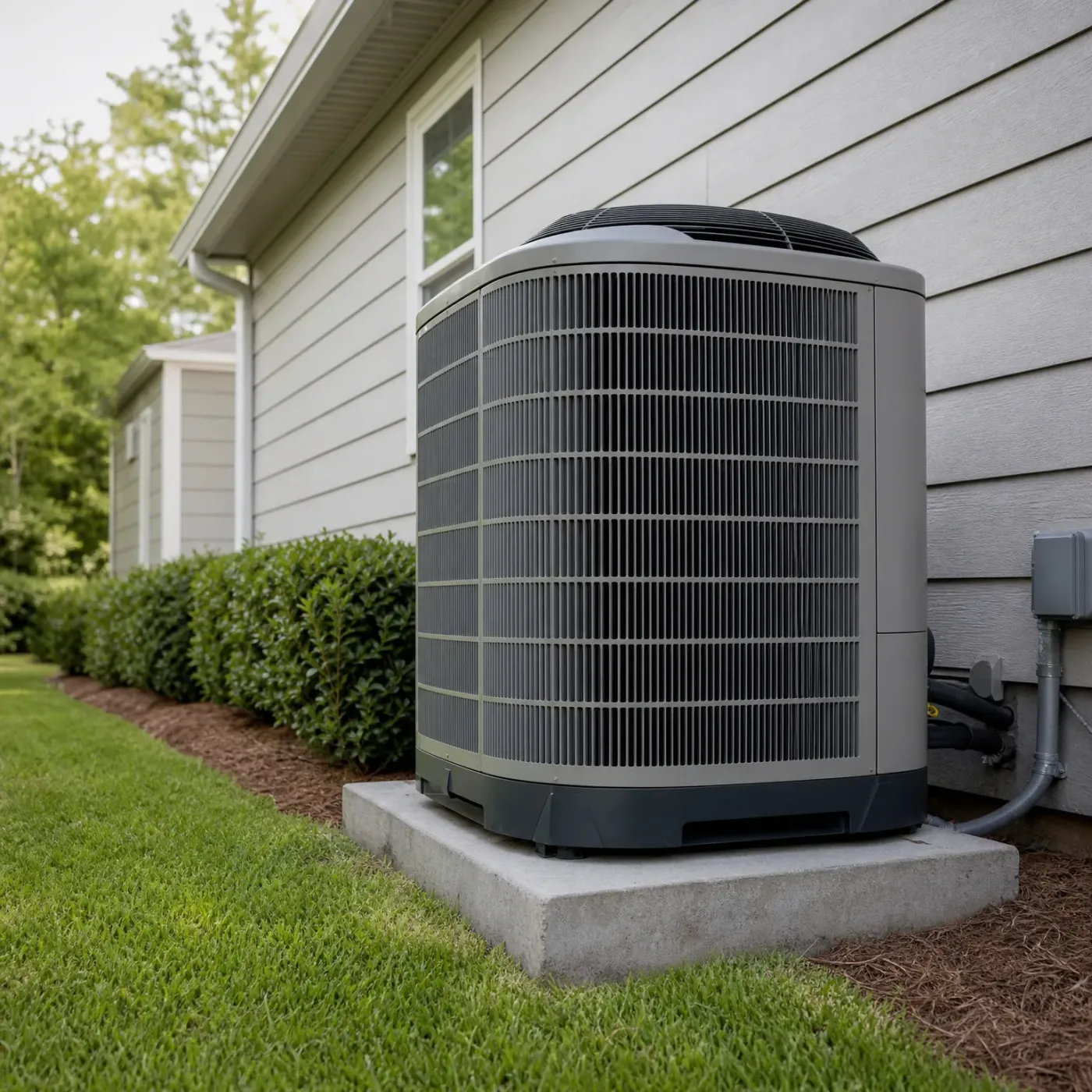
A gray outdoor condenser unit on a raised pad beside a house with horizontal lap siding, with refrigerant lines, conduit and an electrical disconnect box on the wall, and shrubs on a mulch bed to the left.

Running clean

The outdoor coil is clear and the fan moves air through it without strain. Frost doesn't build up on cold mornings because the defrost cycle can do its job. Warm air keeps coming out of the vents, and the unit cycles the way it was designed to.

An outdoor air conditioner condenser unit on a gray composite pad beside a house with horizontal lap siding, with refrigerant lines and a conduit running to a wall-mounted disconnect box, and a shrub at left.

Iced up and struggling

Grime coats the fins and the coil can't shed frost the way it should on a cold, wet night. The unit may still run, fan spinning, but the air coming out stays cool or lukewarm. Left alone, the ice just keeps building until the system can't keep up at all.

Why does your heat pump struggle on the coldest nights?

  • Winter nights average 33°F

    Winter nights average 33°F here, and that's the range where frost forms fastest on the outdoor coil, forcing defrost cycles to kick in more.

  • Heat runs November through March

    Heat runs November through March, so a heat pump that can't shed ice reliably leaves you without warm air for a good stretch of the year.

  • Cooling runs May through September

    Cooling runs May through September, meaning the same unit switches modes twice a year, and each switch is a chance for something to fail.

NOAA nClimDiv 1991-2020

What defrost mode is doing

Every heat pump switches into defrost mode on its own when frost builds on the outdoor coil. The unit reverses itself for a few minutes, sending warm refrigerant through that outdoor coil to melt the ice, and the indoor air handler keeps blowing while this happens. That air coming through the vents will feel cool, sometimes close to room temperature, because the system isn't heating during those minutes, it's thawing. A short defrost cycle that ends and goes back to normal heat is the system working as it should. One that runs long, runs often, or never seems to end is not.

When the backup heat should carry it

Most heat pumps have a second heat source built in for nights too cold for the outdoor unit to keep up alone, usually electric strip heat inside the air handler. That backup should kick in on its own when the outdoor temperature drops far enough, or when the thermostat calls for more heat than the heat pump can deliver by itself. If the house is cold and that backup never seems to engage, the thermostat's call for it, the strip heat elements, or the relay that switches them on can all be the reason, and any of those is worth a contractor's look.

A weathered outdoor condenser unit on a concrete pad beside a house with white horizontal vinyl siding, with refrigerant lines and conduit running to a wall-mounted electrical box.
Before you get your heat pump repair
A gray outdoor heat pump unit with a large fan grille sits on a concrete pad beside a house with horizontal lap siding, next to a green shrub, mulch bed, and lawn.
After you get your heat pump repair
An outdoor condenser unit on a concrete pad beside a light-colored lap-sided house, with a trimmed hedge, mulch bed and mowed lawn nearby and an electrical box and conduit on the wall.

A pro who works on heat pumps

Send it once and finding someone is no longer on you.

Get matched with someone who does this kind of work in Pulaski County.

Let a pro reach out

Sending the form costs nothing.

Is your house just not getting warm?

You probably noticed it at the vents first. Air that should feel warm comes out barely above room temperature, or you catch the outdoor unit running with a layer of ice across the coil instead of clearing it off. Some rooms feel colder than others, and the thermostat shows the house falling short of the set temperature even though the system never stops running. You might hear it cycling more than usual, or notice the backup heat kicking on and your bill climbing with it. Left alone through a cold stretch, the house won't warm past a certain point no matter how long the system runs, and anyone sensitive to the cold will feel it before you do.

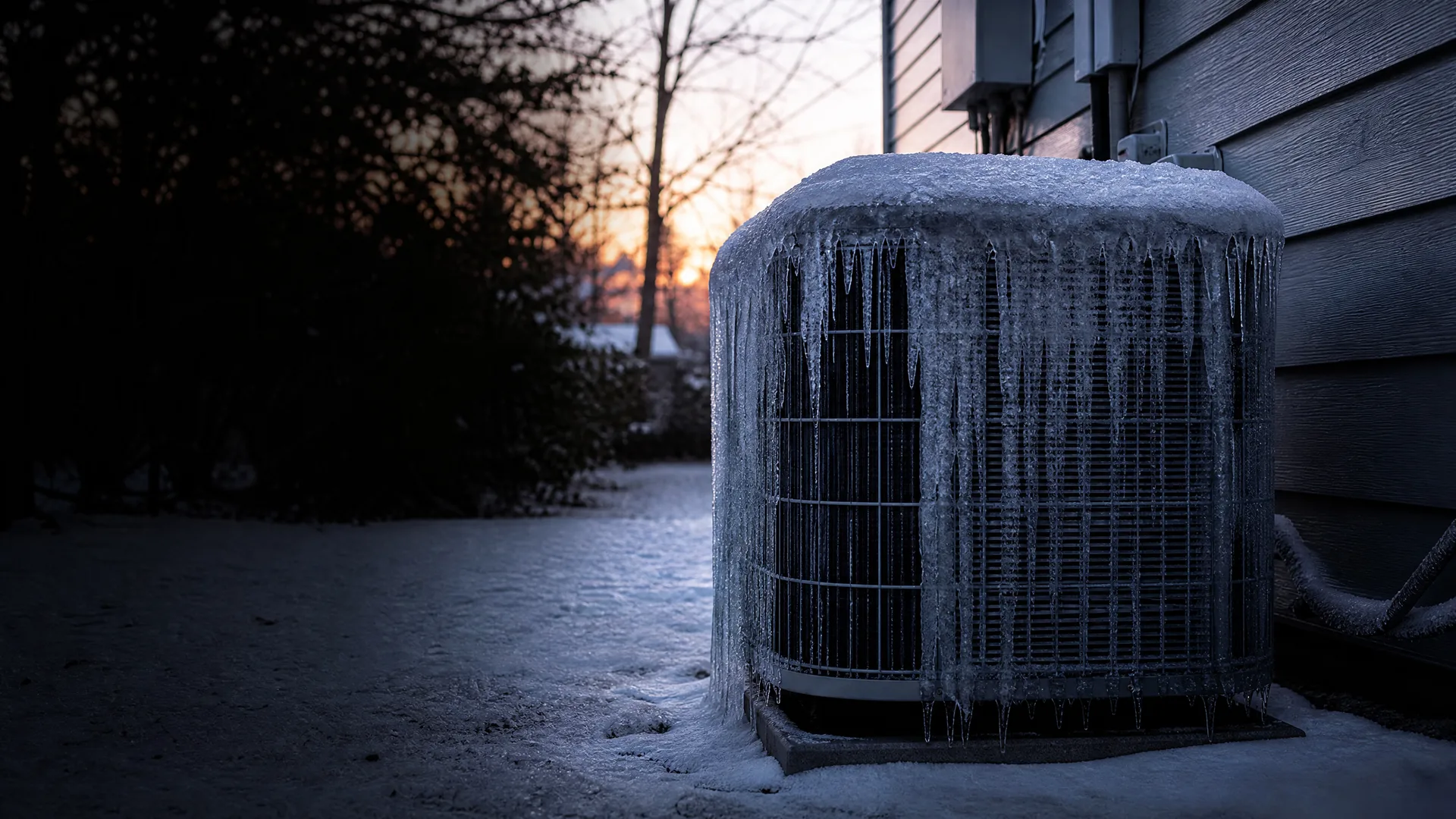
An outdoor condenser unit beside a horizontally sided house, encased in thick ice with hanging icicles, on snow-covered ground at dusk with bare trees and a sunset behind.

You go out for the paper a little after six, dark still holding on, and the outdoor unit is sitting there under a crust of ice. Not a light frost. A thick shell, thick enough to cover the coil fins completely, and the fan isn't turning. Your breath fogs in the side yard and the air feels like it's in the low thirties, the kind of morning Pulaski County gets a few times most winters. Inside, the vents are pushing air that's barely warm. You crouch down and look closer at the coil, half expecting it to be dripping and clearing itself the way it's supposed to. It isn't. It's just sitting there, iced solid, while the house slowly loses the couple of degrees it had.


Heat Pump Alone or With Backup Heat

Heat pump alone

  • Backup heat strips or a gas furnace only kick in when the heat pump can't keep up, so most of the load stays on the outdoor unit.
  • A frosted or dirty coil forces longer and more frequent defrost cycles, and each one pulls warm air away from your vents for a few minutes.
  • If the refrigerant charge is low, the heat pump has to run longer to reach the same temperature, and in a hard freeze it may not get there at all.
  • A failed reversing valve can leave the system stuck in cooling mode even though the thermostat is calling for heat.
  • Supplemental heat usually isn't sized to carry the whole house on its own for long stretches below freezing.

With backup heat working

  • When outdoor temperatures drop low enough, the system switches over and backup heat strips or a furnace carry more of the load automatically.
  • A gas furnace paired with a heat pump recovers heat faster after defrost mode than the heat pump alone would.
  • Backup heat keeps the house warm even if the outdoor coil ices over badly or the heat pump itself needs repair.
  • Most Little Rock homes already heat with gas, so a dual system means the heat pump isn't the only thing standing between the house and a cold night.
  • If backup heat isn't kicking on when it should, that's usually a thermostat setting or a control board issue rather than a problem with the heat pump itself.
A gray outdoor condenser unit on a concrete pad beside a white horizontal-siding house, with refrigerant lines and conduit running to a wall-mounted disconnect box, bare soil in front and a green shrub at left.

Clear fins, warm air

The coil behind the grille stays clean, and air passes through it without resistance. Frost doesn't get a foothold on cold mornings because the defrost cycle has an easy job to do. The vents keep putting out warm air, cycle after cycle.

An outdoor air conditioning condenser unit on a concrete pad beside a house with light horizontal siding and a concrete block foundation, with bare soil and small green plants around it.

Dust caked on the coil

Grime like this across the fins blocks airflow before cold weather even becomes a factor. The unit has to work harder to move the same amount of air, and once frost joins the dust, defrost mode can't keep up. That's when the air coming inside turns cool instead of warm.

A woman with wavy blonde hair wearing a grey knit cardigan over a green top sits on a sofa in a living room, looking off to the side.
A woman with long brown hair in a cream knit sweater sits on a light sofa in a living room, looking toward a window with sunlight on her face.
A woman in a gray sweater sits in a chair in a living room with a dark sofa, wooden coffee table with a potted plant, and a staircase behind her, looking toward a window.
A smiling woman with dark hair in an updo, wearing a gray ribbed turtleneck sweater, sits on a light sofa in a living room and looks off to the side.
  1. The thermostat calls for heat and the compressor starts up.

  2. A sensor on the outdoor coil tracks the coil's temperature.

  3. Frost forms on the coil as heat is pulled from cold air.

  4. The control board switches the reversing valve into defrost mode.

Power here costs 13.15 cents per kilowatt-hour

At 13.15 cents per kilowatt-hour, running the heat pump itself isn't what strains your bill. It's whatever kicks in when the coil ices over and the unit can't keep up: backup strips or extra runtime working harder than they should. A heat pump that defrosts properly keeps that cost where it belongs.

EIA-861 2025

A man with a duffel bag walks up a concrete path toward a white board-and-batten house where a woman stands in the open wooden front door, flanked by potted plants and black lanterns.

A heat pump that won't warm the house has a reason behind it

A coil caked in ice, a defrost cycle that runs too long or not enough, a reversing valve that won't switch back. Whatever the cause, the pattern is the same: the outdoor unit struggles, and the air coming out of your vents stays cool when it should be warm. That's not something to wait out through a cold snap in Little Rock.

Once you request service, the work of finding the right person for the job is off your plate. You'll be matched with a contractor who takes on heat pump problems like yours and who will reach out to look at your system directly. You'll know where things stand instead of guessing at what's wrong under that coil.

A shallow dark wooden bowl and a stack of books rest on a wooden table in front of a beige sofa with linen and green cushions, with a tall ceramic vase of thin branches beside a window in the background.
A gray outdoor heat pump unit mounted on a concrete pad beside a dark horizontal-slat clad house wall, with gravel ground and shrubs nearby.

Get your heat pump to the right pro

RepairHeat PumpPulaski County, AR
Step 1 of 2

What ZIP code is the job in?