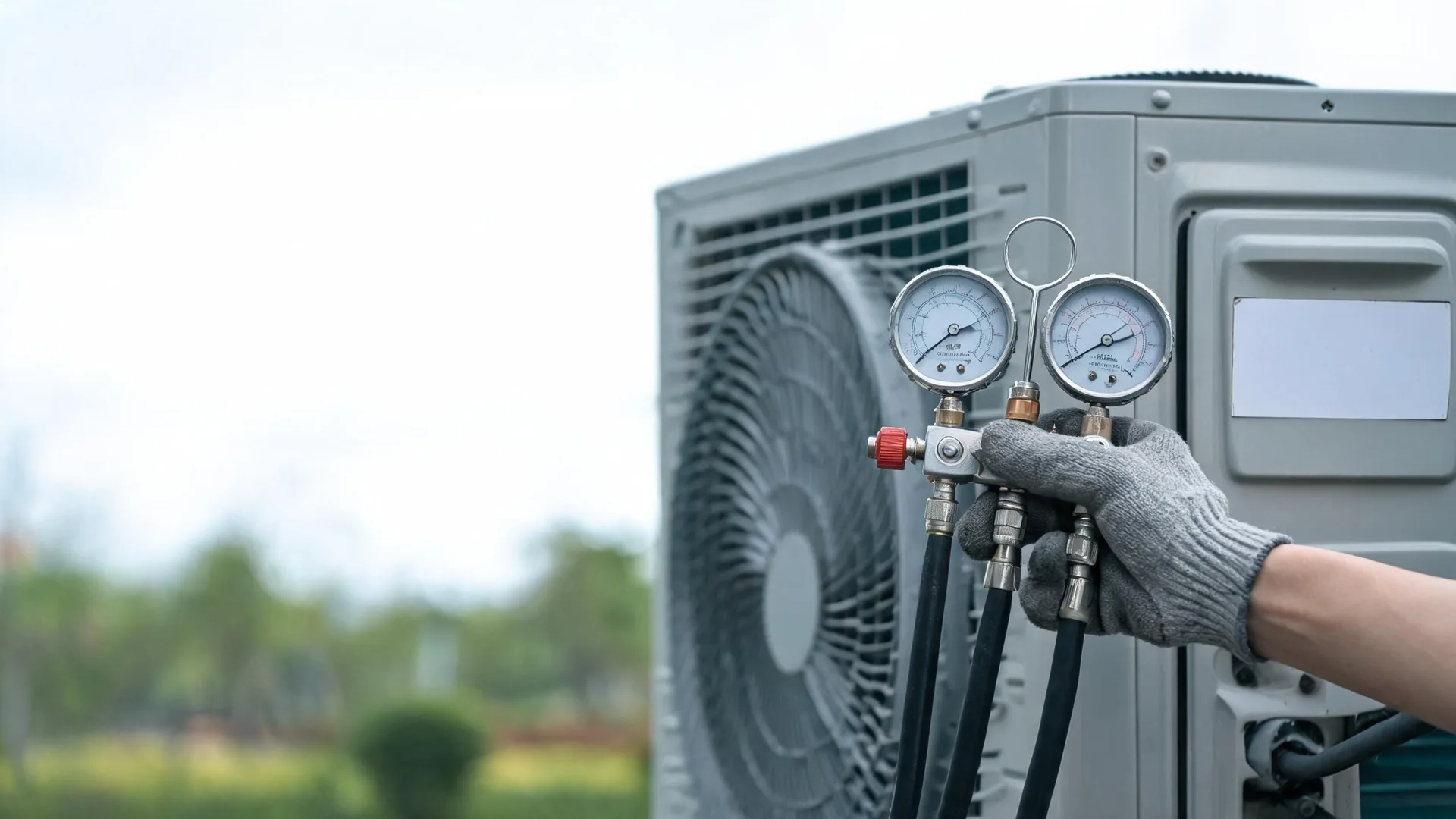
Hail is the main local risk
Greene County logged 35 hail events between 2015 and 2024. A heat pump's outdoor unit sits outside year round, and hail can bend the fins on the coil or dent the cabinet around it.
Takes about a minute. No obligation.
Greene County logged 35 hail events between 2015 and 2024. A heat pump's outdoor unit sits outside year round, and hail can bend the fins on the coil or dent the cabinet around it.
Bent fins and dented cabinets are things a contractor sees and fixes all the time. It does not change what the repair involves, just means the outdoor unit is worth a look if something seems off.

NOAA nClimDiv, 1991–2020 normals
Heat pumps in Greene County switch over to heating in October.
A weak part that made it through last winter often fails in the first cold snap, not before.




Get a repair quote before anyone tries to talk you into a new system. Half the homes in Greene County were built in 1991 or later, and if yours is one of them, the heat pump is probably not old enough to be the real problem. A contractor can tell you in one visit whether the failed part is a one-off or a sign the system is wearing out. On a newer system, it's almost always the first.
Nothing about this area is especially hard on it. It's most likely the usual problem with the usual fix.
Find a contractorA heat pump runs in both directions, all year, so the parts that wear are the ones that move every time it switches on. The reversing valve shifts refrigerant flow between heating and cooling, and after enough cycles its coil weakens or the valve sticks partway. The contactor that feeds power to the outdoor unit pits a little more with every start, until one day it doesn't close. The capacitor that gets the compressor and fan motors going loses capacitance over the years, slowly at first, then enough that the motor struggles or hums without starting. The defrost board and sensor that clear ice off the outdoor coil in cold weather see a lot of cycling too, and either can fail in a way that leaves the unit frozen over or short-cycling. None of this comes from one hard season. It's the ordinary result of a part doing its job over and over, and it's why the fix is almost always to replace that one part, not the system.
A heat pump in trouble usually shows it in how it runs, not just whether it runs. Warm air blowing when the house is in heating mode. Weak airflow from the vents. The outdoor unit caked in ice and staying that way instead of clearing on its own. The system running all the time without the house getting any warmer or cooler. Sometimes it's a sound instead, a hum from outside that never turns into the fan actually starting, or a clicking that repeats over and over rather than settling into a steady run.
Each sign points toward a different part before anyone opens the cabinet. Warm air in heating mode usually means the reversing valve isn't shifting the way it should. A unit that hums but won't start points at the capacitor. Ice that won't clear on its own means the defrost board or sensor isn't doing its job. Telling a contractor exactly what's happening, and when it started, gets the right part checked first instead of last.
A heat pump that's losing a step is still better off shut down than left running. Warm air in heating mode usually means the reversing valve isn't fully shifting. The longer the system cycles that way, the more it pushes the compressor to do a job it isn't built for. A unit icing over and not clearing works the same way. Run it long enough in that state and liquid refrigerant can come back to the compressor instead of boiling off like it should, and a compressor doesn't recover from that. A failing capacitor leaves a motor humming and struggling to start, drawing more current than it should, and that heat has to go somewhere. None of these start out as compressor problems. They turn into one if the system keeps running on a part that's already failing.
Deciding whether to fix a heat pump or replace it comes down to one question. Is the part that failed wearing out on its own, or is it the first of several things going at once. A contactor or capacitor going bad on an otherwise healthy system is a straightforward repair. The system runs the same as it did before. It's a different conversation when the compressor itself is failing, or when a contractor opens the cabinet and finds the coil corroded through in more than one spot. Age matters less than how the system has been maintained. A unit that's been serviced regularly can outlast one that hasn't, even if they're the same age. Ask the contractor straight out whether the failed part is wear and tear or a sign of something bigger, and let that answer decide what happens next.