





A row of single-story houses with porches, one brick and others with pale siding, behind a trimmed hedge and lawn, under oak branches draped with Spanish moss.

Heat Pump Repair in Mountain Home, AR

Tell us about the job

Takes about a minute. No obligation.

RepairHeat PumpBaxter County, AR
Step 1 of 2

What ZIP code is the job in?

Baxter County saw 114 severe weather events between 2015 and 2024. Most of that was wind and hail, with a handful of tornadoes and winter storms mixed in. A heat pump's outdoor unit sits right in the path of all of it, exposed to whatever the wind throws at it and whatever the hail drops on it. A bent fin or a cracked panel does not always stop the unit from running, so it can keep working for a while after a storm and still be hiding damage. Power cuts add to the risk. Nearly a quarter of Arkansas households lost power for a day or more in 2024, and a hard restart after an outage is its own strain on the system.

7 months
October through April, your system heats
5 months
May through September, it cools
28°F
the average winter night it heats against
88°F
the average summer afternoon it cools against
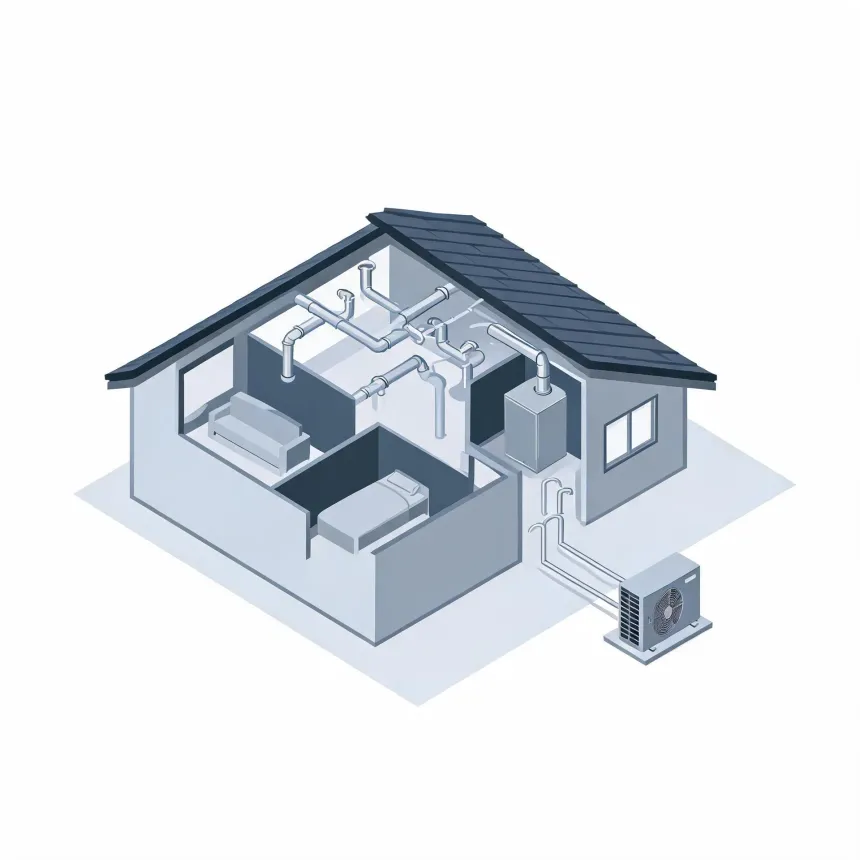
Isometric cutaway illustration of a small house showing ducted air distribution, an indoor air handler, and an outdoor condenser unit connected by lines, with a sofa and bed in the rooms.
Your system heats October through April and cools May through September.

NOAA nClimDiv, 1991–2020 normals

Half the homes in Baxter County were built in 1985 or later.

A heat pump in a newer Baxter County home usually still has years of working life in it, so a repair call makes more sense than a replacement call.

Wind, hail and winter storms here are what any heat pump in zone 4A has to stand up to

51 damaging wind events from 2015 to 2024
46 hail events from 2015 to 2024
13 winter storms from 2015 to 2024

Heat runs here from October through April, so September is worth paying attention to. A heat pump that sat idle all summer gets asked to switch over and carry the full load the first cold night, and that is when a weak part finally gives out. The same thing happens in reverse come May, when cooling starts up after months of not running. If yours is short cycling, blowing air that is not warm enough, or not responding to the thermostat, that is worth a call before the weather settles in and you are relying on it every day.

After a storm, get the outdoor unit looked at even if it still runs

If your heat pump has been through wind or hail, a bent fin or a cracked panel is not always obvious, and the unit can keep running for a while before it fails. A quick check after a storm, or after a power outage that stayed out a while, catches that early.

Find a contractor
A man in a cap, dark shirt and brown work pants, seen from behind, climbs wooden porch steps toward a green front door while carrying a worn canvas bag.
A white mini-split heat pump outdoor unit mounted on a concrete pad beside a gray-sided house, surrounded by gravel and green shrubs.

How old is the house, and how old is the unit

If your heat pump came with the house and the house is newer, that's worth knowing before you decide anything. A repair call makes sense for a system that still has years ahead of it, and most do. Tell the contractor roughly when the house was built if you know it. That's a better guide than the age of the county around it.

What it sounds like when something's wrong

A heat pump in trouble usually tells you before it quits outright. It blows air that feels cool instead of warm, or it runs and runs without the house catching up to the thermostat. The outdoor unit might ice over and stay that way, or you hear it click on and shut off again within a few minutes. Any of those on its own is worth a call. Together, they mean something is already failing, not about to.
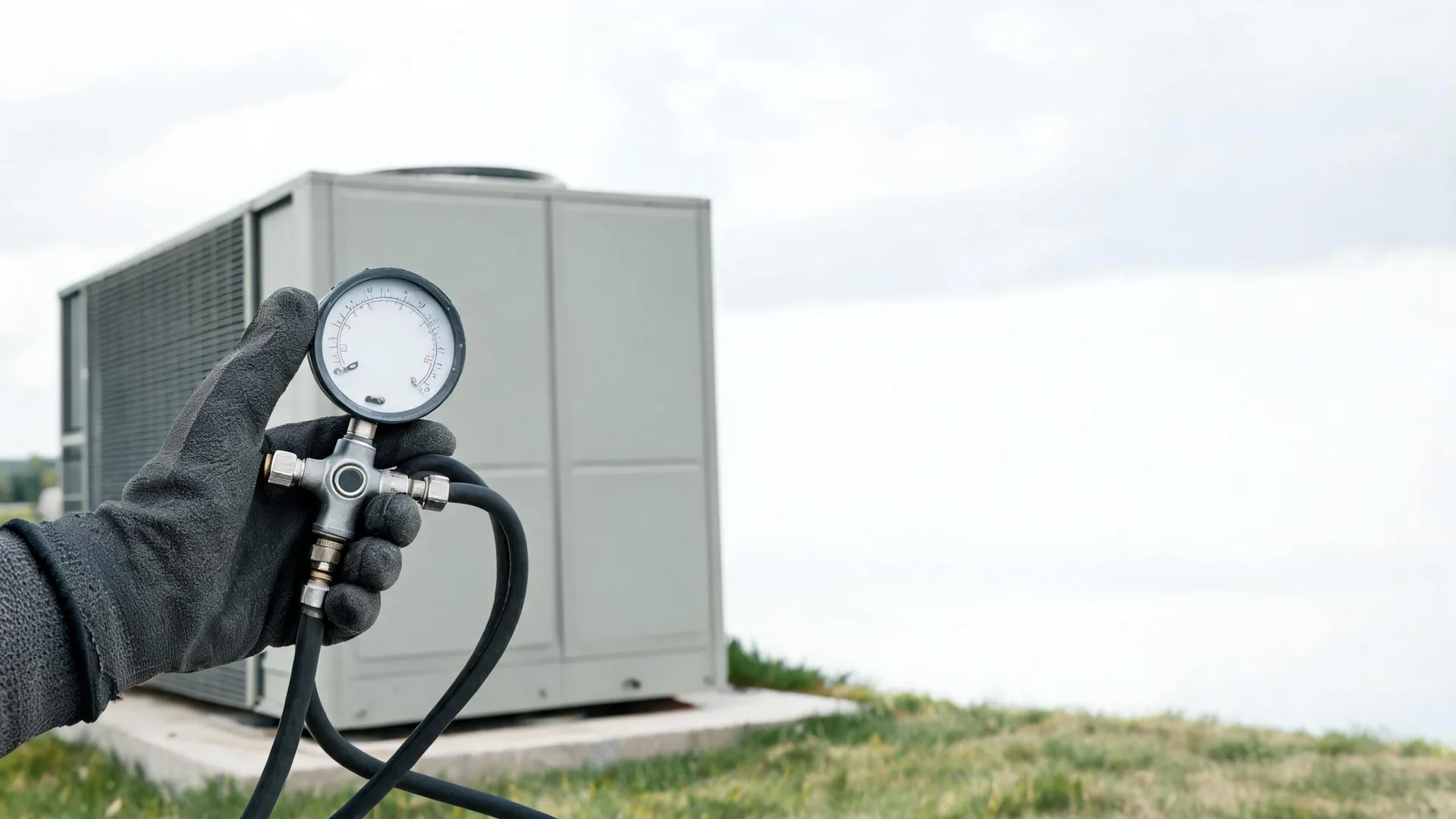
Running is not the same as running right

A heat pump can keep running with a failing part for a while, so don't take the fact that it turns on as a sign it's fine. A weak capacitor can still start the compressor some of the time before it stops starting it at all. A low refrigerant charge lets the system run constantly without ever reaching the temperature you set. Catching either one while the unit is still struggling is easier on the system than waiting for it to stop outright.

A failing part rarely gets better by staying in motion. Take a compressor starting on a weak capacitor. Each hard start heats the windings more than a clean start would, and that heat wears the insulation down a little further, so the next start is harder than the one before it. Low refrigerant works the same way from the other side. A system short on charge runs longer trying to reach the temperature you set, and that extra runtime holds the compressor at oil and pressure levels it was not built to sit at for long stretches. Neither problem fixes itself by running more. The part already struggling is the part doing the most work, which means it is also the part wearing fastest, and the longer that goes on, the closer a repair call drifts toward a replacement call.

A contractor weighing repair against replacement is really asking one question. Is the part that failed an isolated thing, or a sign the system as a whole is tired. A capacitor, a contactor, a fan motor, these fail on their own and get swapped out, and the rest of the system is no worse off once it's done. A compressor is different. It's the expensive part to replace on its own, and when it's the thing failing, a contractor has to weigh that cost against putting it toward a new system instead. A unit that keeps coming back for service calls is telling you something a single breakdown doesn't. The honest version of this conversation looks at what broke, what it costs to fix that one thing, and whether the rest of the system is likely to start failing the same way soon after.