






A red brick single-story house with a covered porch and a nearby cream-colored house with a wraparound porch, seen across a lawn behind a trimmed hedge, framed by large moss-draped oak branches.

Heat Pump Repair in Mena, AR

Tell us about the job

Takes about a minute. No obligation.

RepairHeat PumpPolk County, AR
Step 1 of 2

What ZIP code is the job in?

Half the homes in Polk County were built in 1986 or later. If yours is one of them, your heat pump likely hasn't put in the years that would push a contractor toward replacement. A newer house usually means newer ductwork and electrical to match, so a repair goes in clean rather than having to work around whatever was there decades ago. That's worth knowing before you decide a repair isn't worth it.

7 months
October through April, your system heats
5 months
May through September, it cools
31°F
the average winter night it heats against
89°F
the average summer afternoon it cools against
Isometric cutaway illustration of a gray house showing interior rooms, a central air handler with ducts in the attic, and refrigerant lines running to an outdoor condenser unit beside the building.
Your system heats October through April and cools May through September.

NOAA nClimDiv, 1991–2020 normals

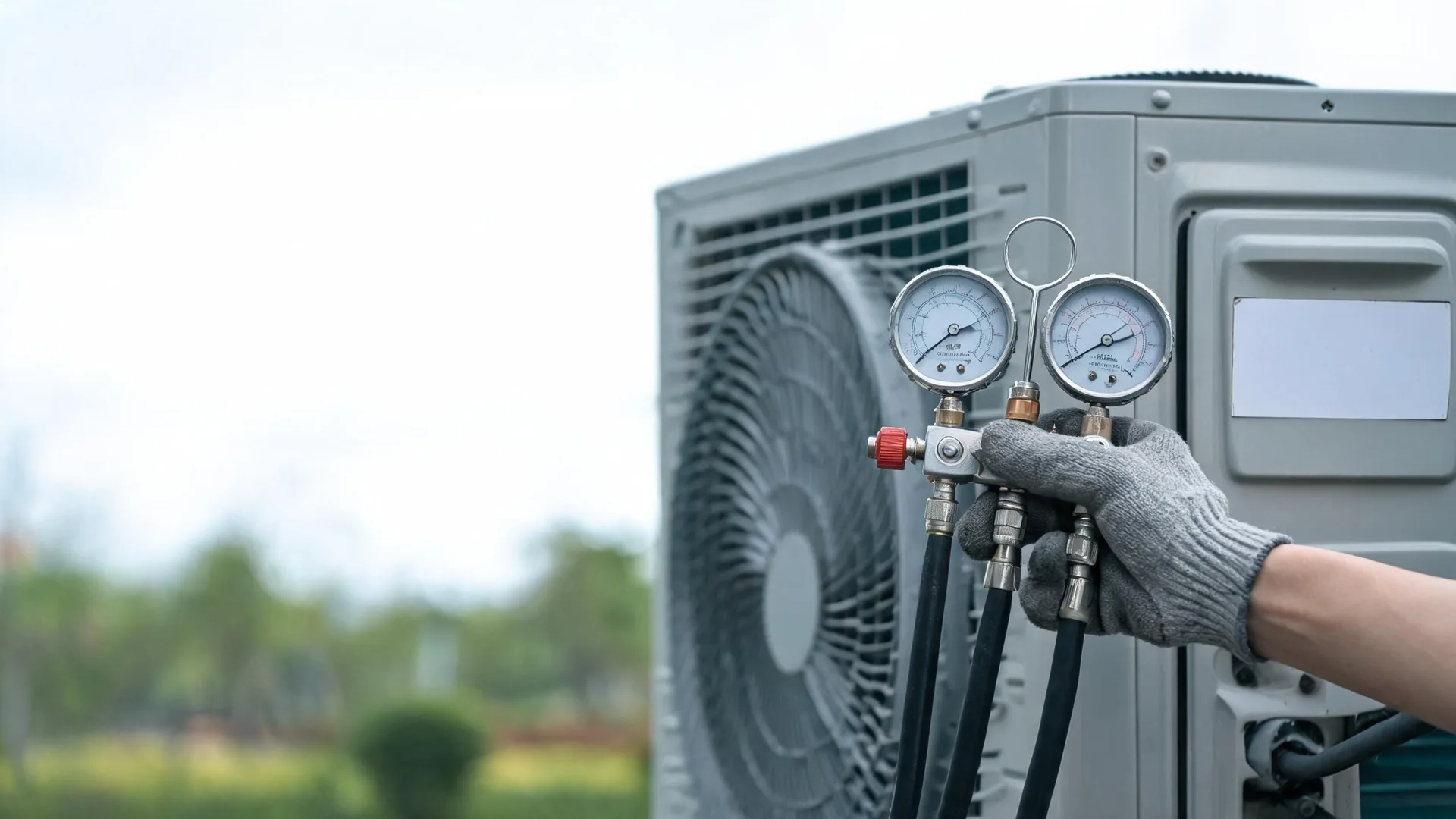
A diagnostic starts at the outdoor unit, checking refrigerant pressures and the compressor before anything inside gets touched.

A bad reading at the outdoor unit can explain a cold house with the air handler working exactly as it should.

Nothing about Polk County's weather asks more of a heat pump than usual

70 severe weather events from 2015 to 2024
24% of homes statewide lost power a day or more in 2024
38 damaging wind events from 2015 to 2024

Your heat pump switches over to heat in October here, and September is when a weak part finally gets found out. A heat pump that struggled along in September's mild days can fail outright the first cold morning it has to work for real. The same thing happens in reverse come May, when cooling starts and a compressor or capacitor that was barely getting by shows its hand. If something's acting up right at the start of one of these stretches, that timing is the clue, not a coincidence. Getting it looked at now means it's fixed before you need it most, not during the first cold snap.

It's usually worth repairing

It has an easier job here than in most places, so your heat pump is often in decent shape. Repair is usually worth it.

Find a contractor
A man in a dark T-shirt and brown work pants carries a canvas tool bag up wooden porch steps toward a green front door, beside a potted shrub.
A gray air-source heat pump mounted on a concrete pad next to a house with gray vinyl siding, surrounded by gravel and flanked by green shrubs and white hydrangea flowers.

The parts that run every month are the parts that fail first

A heat pump runs both sides of the year, so the parts that wear are the ones that never get a season off. The reversing valve is the one part unique to a heat pump. When it sticks, the system blows cold air in heating mode or won't cool at all. The compressor is the part most likely to end a heat pump's life, and most compressor failures trace back to something smaller that went unfixed first. A refrigerant leak left alone too long. A weak capacitor that made the compressor strain on every start. A dirty coil that made it work harder than it needed to. Contactors and capacitors wear out from the sheer number of times they cycle on and off over the years. Outdoors, the coil and fan deal with whatever the weather sends in every month of the year. A coil caked with debris or a fan motor with a failing bearing shows up as weak heating or weak cooling well before either one quits for good.

What you can check yourself

Look at the outdoor unit and clear away leaves, grass clippings or anything stacked against it. Check the air filter and swap it if it's gray with dust. Walk through the house and feel if air is coming out of the vents at all, even if it's not the temperature you want. Check the thermostat batteries and make sure it's set to the mode you think it's in. These take a few minutes and rule out the simplest explanations first.
What to leave alone

Don't open the outdoor unit's cabinet or touch anything inside it. Refrigerant lines and electrical connections in there aren't something to test or adjust without training, and a reversing valve or compressor problem won't show itself from the outside anyway. If the simple checks don't explain what's going on, that's the point where it's a job for someone who can read pressures and test parts directly.

A heat pump in trouble usually says so through the air itself. Air blowing that's cooler than it should be in heating mode often points to the reversing valve stuck partway, or to refrigerant that's low. Short cycling, where the unit kicks on and off every few minutes instead of running a full cycle, points toward a failing capacitor or a thermostat sensing something wrong. Ice building up on the outdoor unit beyond what a normal defrost cycle clears is another one worth acting on, since it usually means airflow or refrigerant trouble rather than just cold weather doing what cold weather does. A hissing or bubbling sound near the lines usually means a refrigerant leak, and that's not something that gets better on its own. Any burning smell or a breaker that trips more than once means stop running it and get it looked at.

A repair is worth doing when the failure is one part acting up and everything else is sound. A replacement starts to make sense when one repair after another turns out to be separate problems rather than the same one, or when the compressor itself is what's failed, since that's the most expensive part in the system and the one most likely to be priced against a new unit instead of repaired. Age matters less than what's actually broken. A heat pump that's been maintained and is now down to a bad capacitor or a stuck valve is a different situation than one where the compressor is going and the coil is already weak too. Ask what exactly failed before asking whether it's worth fixing.