A nighttime street scene featuring a row of lit white colonial-style houses with wrap-around porches, flanked by oak trees draped in Spanish moss.

Heat Pump Repair in Magnolia, AR

Tell us about the job

Takes about a minute. No obligation.

RepairHeat PumpColumbia County, AR
Step 1 of 2

What ZIP code is the job in?

The tech checks the whole system, not just the symptom

A heat pump that won't heat could have a problem at the outdoor unit, the indoor coil, or the reversing valve that switches it between heating and cooling. The tech checks the refrigerant charge, tests the capacitor, listens to the compressor, and watches how the system responds when it switches modes. A thermostat that seems to be reading wrong can actually point to a failing sensor or a control board that isn't sending the right signal.

What they find decides whether it's worth fixing

A failed capacitor, a stuck reversing valve, or a dirty outdoor coil choking airflow are single part problems with a clear fix. A compressor on its way out or a refrigerant leak that keeps coming back are a different kind of problem. The diagnosis tells you which one you are dealing with, and that is what decides whether a repair makes sense or whether the system is due for replacement.

5 months
November through March, your system heats
5 months
May through September, it cools
35°F
the average winter night it heats against
91°F
the average summer afternoon it cools against
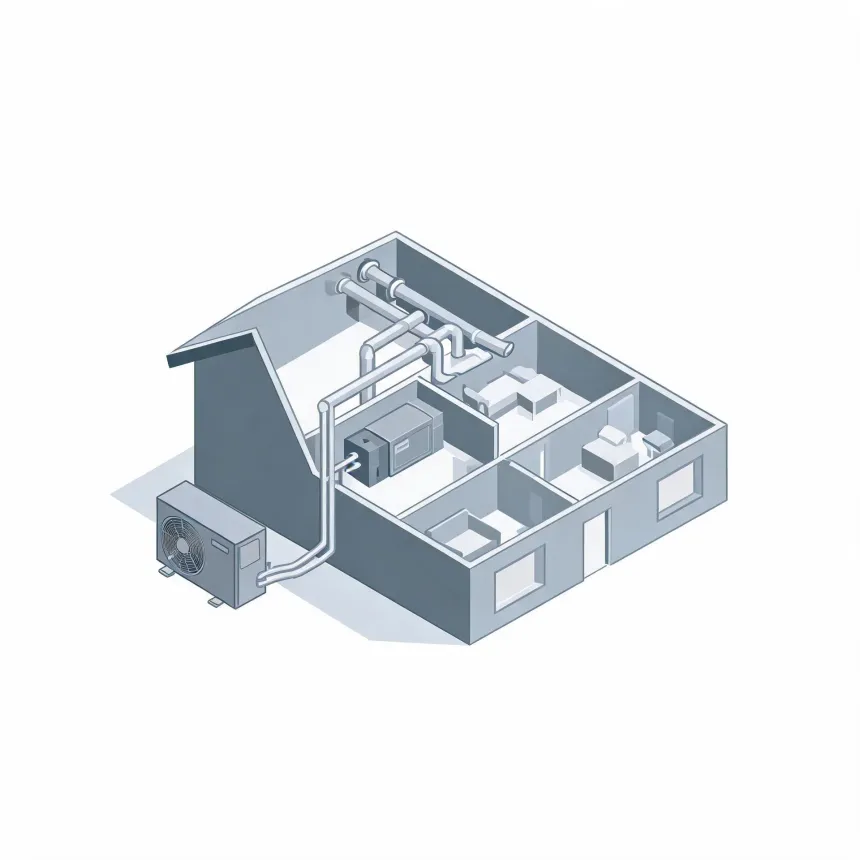
Isometric grayscale illustration of a cutaway house showing interior rooms, ducted air handler and duct runs, connected by pipes to an outdoor condenser unit beside the building.
Your system heats November through March and cools May through September.

NOAA nClimDiv, 1991–2020 normals

Half the homes in Columbia County were built in 1981 or earlier.

A house that age has had at least one heat pump come and go, maybe two.

Columbia County doesn't stand out. Most heat pump trouble here is just a part giving out.

79 severe weather events from 2015 to 2024
24% of homes statewide lost power a day or more in 2024
48 damaging wind events from 2015 to 2024

November is when heat here switches over, and that first cold snap is when a weak part finally gives out. A heat pump that limped through mild fall mornings can fail outright once it has to run flat out, hour after hour, to hold the house at temperature. The same goes for May, when cooling starts and a marginal capacitor or a low charge that was fine in April can't keep up once the heat sets in. If your heat pump is acting up right at the start of one of these stretches, that timing is not a coincidence. It is worth having it looked at before the season settles in and the system has to lean on that weak part for months.

Get the usual fix

Nothing about this area is especially hard on it. It's most likely the usual problem with the usual fix.

Find a contractor
A man in a cap, gray T-shirt and tan work pants carries a canvas tool bag up porch steps toward a green front door of a lap-sided house, with a potted shrub to the right.
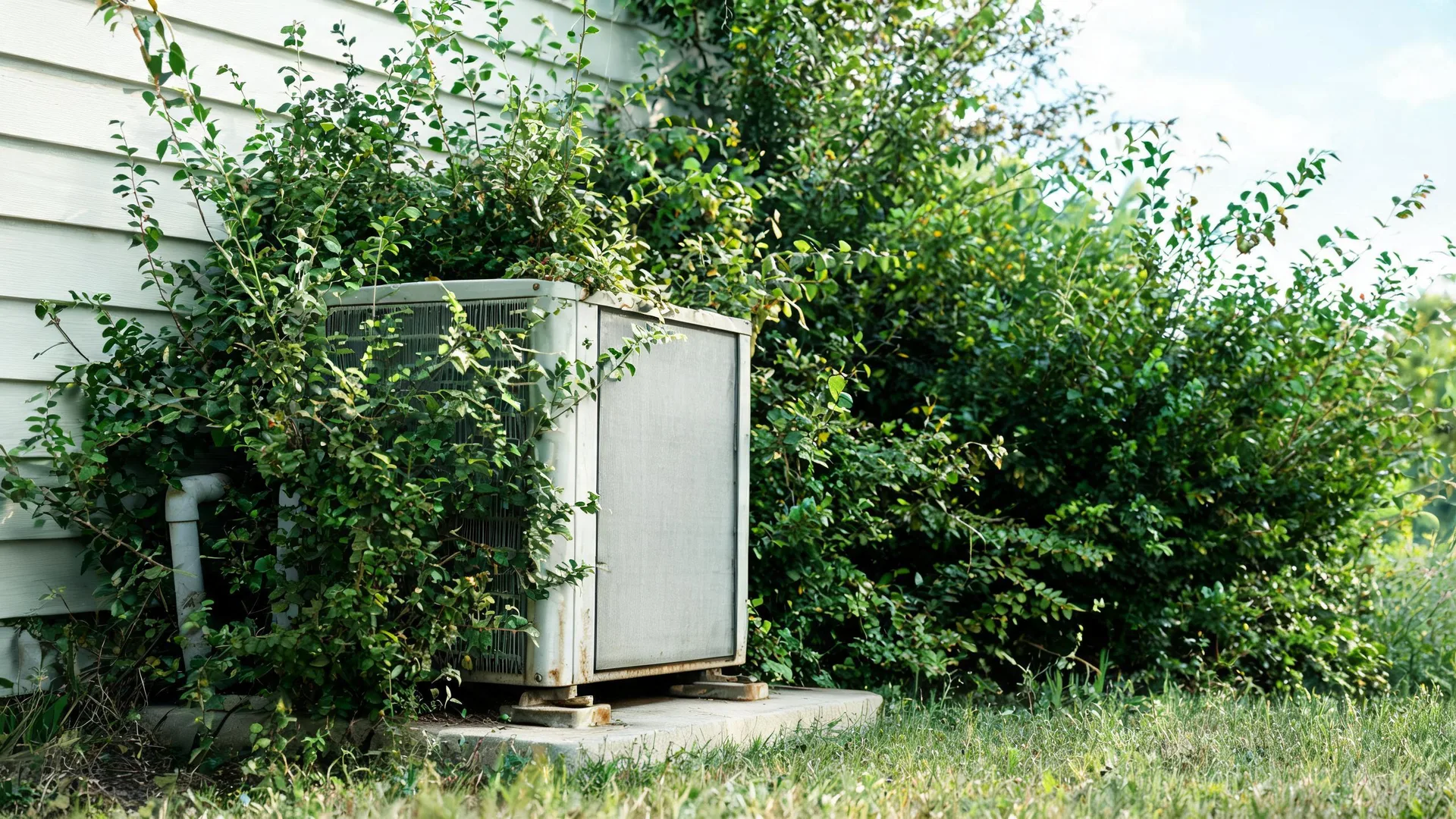
A gray air-source heat pump mounted on a concrete pad next to a house with gray vinyl siding, surrounded by gravel and flanked by green shrubs and white hydrangea flowers.

What to check before you pick up the phone

Before anything else, check the thermostat. Make sure it is set to heat and not accidentally switched to cool, and swap the batteries if it uses them. Next, look at the outdoor unit. If ice is covering the coil or snow is packed around the base, the airflow is blocked and the system cannot pull in the heat it needs. Clear away anything stacked against it, leaves, a cover, patio furniture. Inside, pull the air filter and hold it up to a light. If you cannot see through it, that alone can starve the system of airflow and cause it to run constantly without catching up. Check every supply vent in the house and open any that got closed. Last, go to the breaker panel and look for a tripped breaker on the heat pump circuit. If it trips again after you reset it, stop there and leave it alone. That is a sign of a real electrical fault, not something to keep resetting.

Warm air instead of hot air

A heat pump in heating mode moves heat, it does not generate it the way a furnace does. Air at the vent runs cooler than people expect even when the system works fine. Real trouble looks different. The house slowly loses ground, the system runs long stretches without catching up, or the air at the vent turns flat out cold.

Short cycling or running nonstop

A heat pump that shuts off a few minutes after starting is short cycling. That points to a refrigerant charge that is off or a sensor sending the system bad information. A heat pump that never shuts off and still cannot hold the temperature is usually fighting a bad capacitor, a failing compressor, or a coil too dirty to pull in enough heat. Either pattern means the system can no longer regulate itself.

A heat pump that is struggling does not fail quietly. A reversing valve that is sticking gets worse each time it has to switch between heating and cooling, and every cycle that forces it through a stuck position adds more wear to a part that was already on its way out. A compressor running on a low refrigerant charge is working harder than it should just to move the same amount of heat, and that extra strain is what turns a slow leak into a burned-out compressor. A dirty coil chokes off airflow a little more each week, and a system starved for airflow runs longer to do the same job, which heats up parts that were never meant to run that hot for that long. None of this reverses itself once the unit is shut off and back on. The part that was struggling is still struggling, only now it has more hours on it.

A single failed part is worth fixing on a heat pump of any age. A bad capacitor, a stuck reversing valve, a dirty coil choking off airflow, these have a clear repair and the rest of the system is still sound underneath them. A compressor is a different question. It sits inside a sealed system, so replacing it means opening that seal, and the labor to do that correctly often costs close to what a new outdoor unit costs. It is worth asking why the compressor failed before deciding to replace just that part. If it failed because a dirty coil or a low charge forced it to run harder than it should have for a long time, a new compressor dropped into the same system can end up fighting the same conditions that killed the first one.