





A illuminated white antebellum-style house with a wraparound porch, white columns, and Spanish-moss-draped oak trees, photographed at dusk.

Heat Pump Repair in Little Rock, AR

Tell us about the job

Takes about a minute. No obligation.

RepairHeat PumpPulaski County, AR
Step 1 of 2

What ZIP code is the job in?

A heat pump that's struggling usually tells on itself before it quits outright. Ice building up on the outdoor coil, a reversing valve that hesitates, a compressor that hums but doesn't start. Keep running it in that state and the damage spreads. A compressor working against a low charge runs hotter than it should, and that heat breaks down the oil that's supposed to protect it. A frozen coil blocks airflow, so the compressor strains even harder to do its job. What started as a part a contractor could replace on its own turns into a compressor failure, and the compressor is what keeps the whole system running. If something sounds off, a hard start, short cycling, ice where there shouldn't be any, it's worth having a contractor look before the next cycle runs.

5 months
November through March, your system heats
5 months
May through September, it cools
33°F
the average winter night it heats against
91°F
the average summer afternoon it cools against
Isometric cutaway illustration of a single-story house showing interior rooms with ductwork, an indoor air handler unit, and an outdoor condenser unit connected by lines along the exterior wall.
Your system heats November through March and cools May through September.

NOAA nClimDiv, 1991–2020 normals

Pulaski County logged 97 hail events and 178 damaging wind events in the last ten years.

If your outdoor unit took a hit, have it checked even if it still runs.

Half the homes in Pulaski County were built in 1981 or later, and a heat pump that age is usually worth repairing

Half the homes here were built by 1981
178 damaging wind events from 2015 to 2024
97 hail events from 2015 to 2024

October is the last easy month before heat starts here, and it's when a weak part usually gives out. A heat pump that idled through summer without trouble can still fail the first morning it has to run a full heating cycle. A reversing valve that hesitated last spring or a capacitor that was already weak doesn't get better sitting unused for months. Heat runs November through March here, five months of real demand, and a unit that struggles in week one tends to keep struggling. Having it checked before that first cold snap means finding the weak part while it's still just a part, not a system down on the coldest night.

Your heat pump has earned a proper look before it earns a breakdown

A heat pump in Little Rock runs most of the year, cooling through the summer heat and then switching over to carry the house through winter. That's a long workload, and hail and wind take their toll on top of it. If yours is already acting up, a hard start, a hum with no spin, ice on the coil, get it looked at before it has to run harder.

Find a contractor
A white mini-split heat pump outdoor unit mounted on a concrete pad beside a gray-sided house, surrounded by gravel and green shrubs.

A newer house usually means a repair, not a replacement

If the house was built in 1981 or later, the heat pump isn't necessarily original to it, but a unit that age or close to it still has the parts and the compressor worth paying to fix. Call a contractor out for a repair quote before anyone brings up replacement. If it does turn out to be original equipment from a newer build, ask the contractor straight out whether it's worth repairing. Most of the time here, it is.

The compressor rarely fails on its own

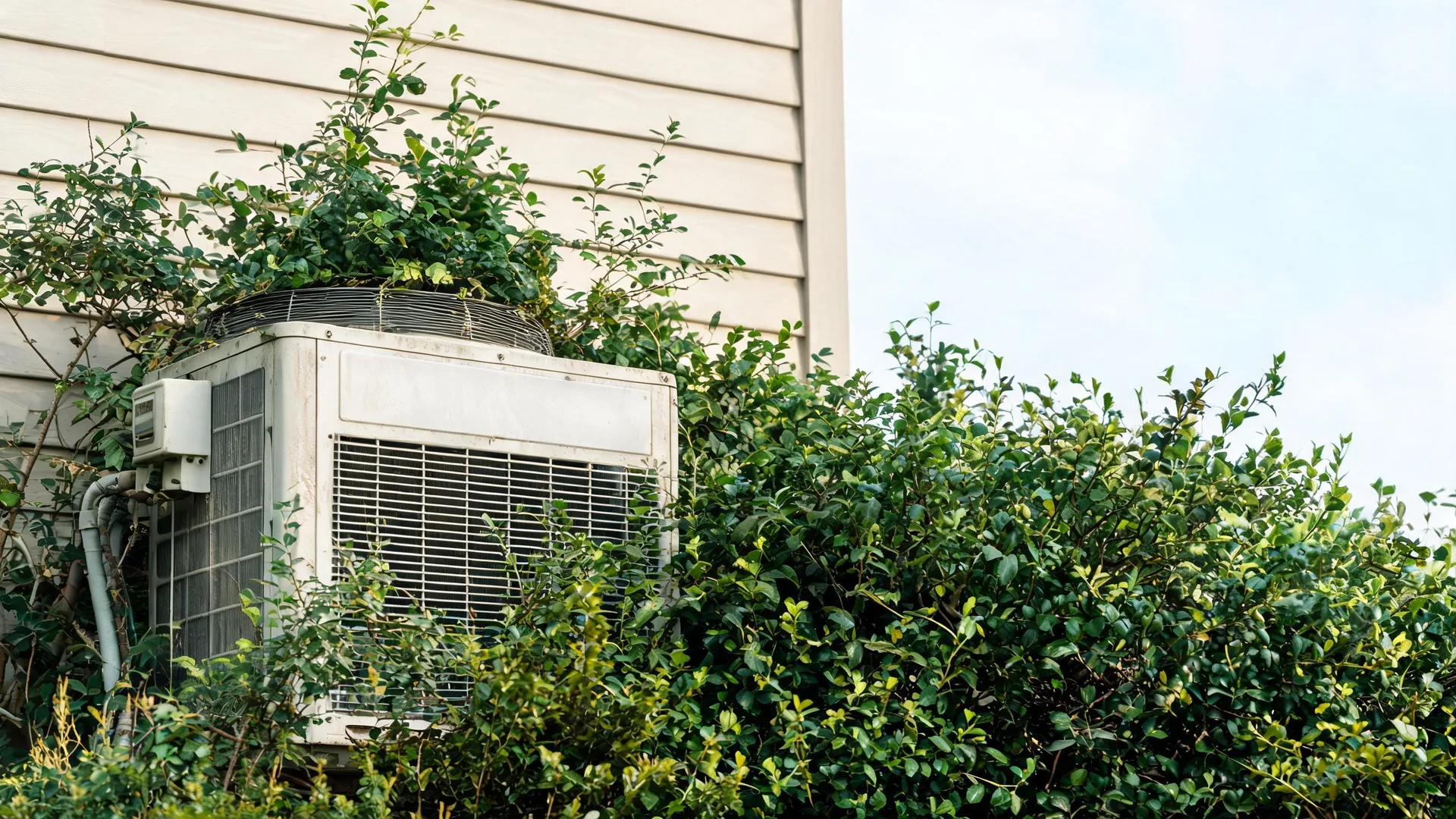
Most compressor failures trace back to something smaller that went unchecked. A refrigerant leak starves it. A failed run capacitor won't let it start. A dirty outdoor coil keeps it from shedding heat. The compressor takes the damage, but something else usually caused it.
Why a contractor checks the small parts first

A contractor looking at a struggling heat pump checks the refrigerant charge, the capacitor, the contactor and the outdoor coil before anything else. Finding the real cause in one of those parts is what keeps a repair a repair instead of a compressor replacement.

Most of what sends someone looking for a repair starts as something you can feel in the house. Warm air blowing when it should be hot, or the system running longer than it used to without catching up to the thermostat. Outside, listen for a unit that clicks and tries to start but doesn't spin, or one that runs constantly without ever shutting off. Ice on the outdoor coil in the middle of a heating cycle isn't normal, and neither is a puddle forming underneath it. A heat pump that switches between heating and cooling on its own, or won't switch at all, usually points to a reversing valve that's stuck. None of these mean the unit is done. They mean something specific inside it needs attention before it takes the rest of the system down with it.

A diagnostic visit starts outside, not with a screwdriver. A contractor reads the system before touching it, checking what the thermostat's calling for against what the unit's actually doing. Gauges go on to check refrigerant charge, since too little or too much explains most of the symptoms that bring someone to a repair call. The capacitor and contactor get tested under power, because both can look fine sitting still and still be the reason the compressor won't start. The outdoor coil gets checked for ice or buildup that's blocking airflow. If the system won't switch between heating and cooling, or won't stay in one mode, the reversing valve gets tested directly rather than guessed at. Only once those checks rule each other out does a contractor point at the compressor, since that's the one part nobody wants to misdiagnose.