

Heat pump tune-up in Little Rock, AR
A heat pump tune-up is a yearly check that keeps the system running right through both ends of a Little Rock year, the muggy summers and the cold spells in winter. A technician checks refrigerant charge, cleans the outdoor coil, tests the defrost cycle, and checks the electrical connections. Heat pumps run nearly year round here, switching between cooling and heating, so the parts wear differently than they would on a system that only runs half the year. A unit low on refrigerant or with a coil caked in grime has to work harder to hit the same temperature, and in winter a defrost cycle that isn't working right can let ice build up on the outdoor unit until it can't pull heat from the air at all. Catching that in a scheduled check costs you a service call, not a morning without heat.






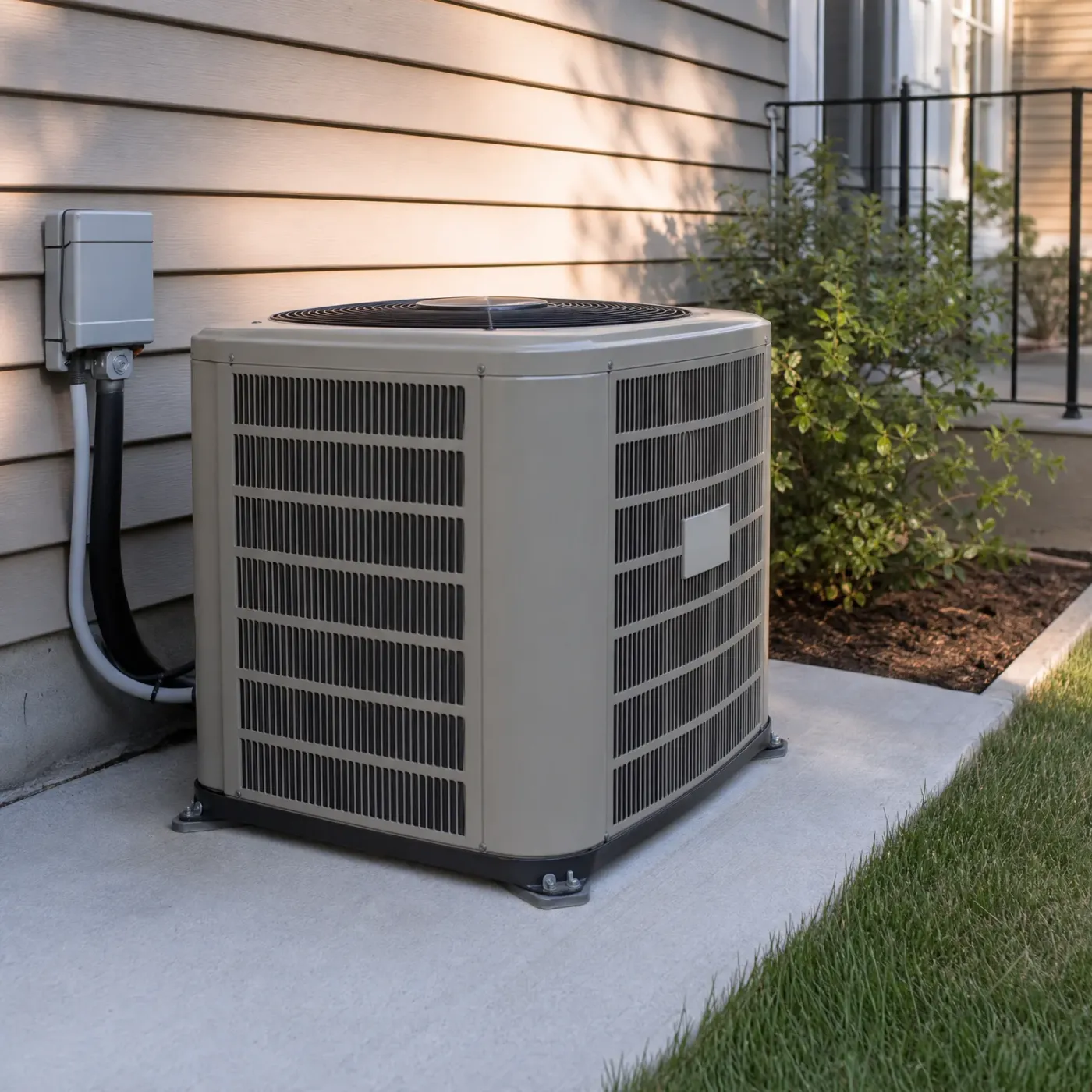
A heat pump works harder than a straight air conditioner because it runs both directions, pulling heat out of the house in summer and pulling it in from outside air during winter. That reversing valve is what switches it between the two jobs, and it has to be tested under load, not just looked at. Refrigerant charge gets checked against the number on the rating plate, because a heat pump that's low or overcharged loses capacity in both seasons, not just one. Outside, the coil needs to be clean and the fins open, since that's where the unit is trying to move heat on a cold January morning, and packed dirt or grass clippings cut that off. The defrost sensor matters for the same reason. Without it working, the outdoor coil ices over and the system loses its ability to heat the house at all. Loose electrical connections get caught here too, before they cause the unit to trip off on its own some cold night.
What Actually Happens During Service
- A tune-up checks refrigerant charge against the manufacturer's spec, since even a little too much or too little makes the compressor work harder.
- The technician pulls the reversing valve through a cycle to confirm it actually switches the system between heating and cooling.
- Electrical connections get checked for looseness and corrosion, since a bad connection is a common reason a unit trips off on its own.
- The outdoor coil gets cleaned because dirt and grass clippings packed against the fins block the airflow the system needs to move heat.
- The defrost control and sensor get tested so the unit clears frost off the outdoor coil instead of icing over on cold Little Rock mornings.
- Amp draw on the compressor and fan motor gets measured and compared against the rating plate to catch a motor that's starting to fail.


Stop chasing a heat pump pro

One form instead of hunting for a pro who does heat pump tune-ups.
You only hire the pro if you want to.
Why defrost matters here
Little Rock gets cold enough most winters that the outdoor unit will frost over on its own, and that's normal. The system is supposed to sense it and run a defrost cycle to melt the ice before switching back to heating. If that cycle isn't triggering right, or isn't ending when it should, ice builds up on the coil faster than it clears. A coil packed with ice can't pull heat from the outside air, so the unit runs longer and longer to do less and less. This is one of the main reasons a heat pump that skipped its fall check struggles the first hard cold snap instead of the whole winter.
What a clean coil does for July
The outdoor coil gives up heat in winter and sheds it in summer, and either way it only works as well as the airflow through it. Dirt, grass clippings, and cottonwood seed sitting on the fins slow that airflow down, so the system works harder to move the same amount of heat. A technician washes the coil clean and checks that nothing is blocking the fins from the sides. That's a small thing to check in October, before the first 95 degree week makes the unit run nearly nonstop and any restriction in airflow starts costing you on the power bill every single day it runs.
What does your heat pump actually deal with here?
Winter nights average 33°F
Winter nights here average 33°F, right at freezing, so the outdoor unit is cycling through defrost again and again all winter.
Heat runs November through March
Five months of heat means the system logs real hours every winter. A tune-up before November catches what those hours wear on.
Cooling runs May through September
Five months of cooling on top of that winter stretch means the same equipment works most of the year with barely a break between.
NOAA nClimDiv 1991-2020
What a Tune-Up Settles
- A yearly tune-up checks the refrigerant charge, the defrost cycle, and the reversing valve before winter nights push the system hard.
- A heat pump left unchecked tends to short-cycle, ice over, or run nonstop without the house getting comfortable.
- Winter nights in Pulaski County average around 33°F, so the outdoor unit is cycling through defrost repeatedly for months.
- Skipping the search, the calls, and the repeat explanations means getting straight to someone qualified to do the work.
- A clean coil and a properly tested defrost cycle are what keep a heat pump working through both a muggy summer and a cold winter.
A heat pump tune-up answers a simple question: will this system hold up through a Little Rock winter and the long muggy stretch that follows it. The refrigerant charge, the defrost cycle, and the reversing valve are the parts that decide that answer, and a technician checks all three before the cold nights set in. A unit that passes runs in steady cycles and keeps the coil clean. One that doesn't gets left to ice over, short-cycle, or run without ever catching up, and by then the house already feels it. Winter nights here sit around freezing often enough that the outdoor unit is defrosting itself again and again for months, so that cycle either works or it doesn't, and there's not much room between the two.
What changes once you decide to get this done isn't the work itself. It's not having to find out who does it well, not calling around Pulaski County asking the same questions, not explaining the system's history to three different people before anyone looks at it, not sitting with a stack of quotes trying to guess which one is honest. That part ends the moment you send the form. What's left is the part that was always going to take real time: a technician actually checking the charge, the coil, the valve, the things that decide whether the system makes it through to spring without a breakdown in the middle of a cold week.
Send one request and you're done looking
Fill out one form instead of calling around for a heat pump tune-up.
Asking costs nothing, and the choice to hire stays yours.