





An outdoor heat pump unit mounted on a concrete pad in front of a two-story suburban house.

Heat Pump Repair in Jonesboro, AR

Tell us about the job

Takes about a minute. No obligation.

RepairHeat PumpCraighead County, AR
Step 1 of 2

What ZIP code is the job in?

Craighead County logged 177 severe weather events between 2015 and 2024, and most of that was wind. A heat pump's outdoor unit sits right in the path of all of it, with coil fins and a fan exposed to whatever comes through. Hail can bend the fins and slow the airflow the system needs. Wind-blown debris can nick the coil or jam the fan without stopping it outright. A unit can keep running after a hailstorm or a bad wind event and still be working harder than it should.

7 months
October through April, your system heats
5 months
May through September, it cools
32°F
the average winter night it heats against
89°F
the average summer afternoon it cools against
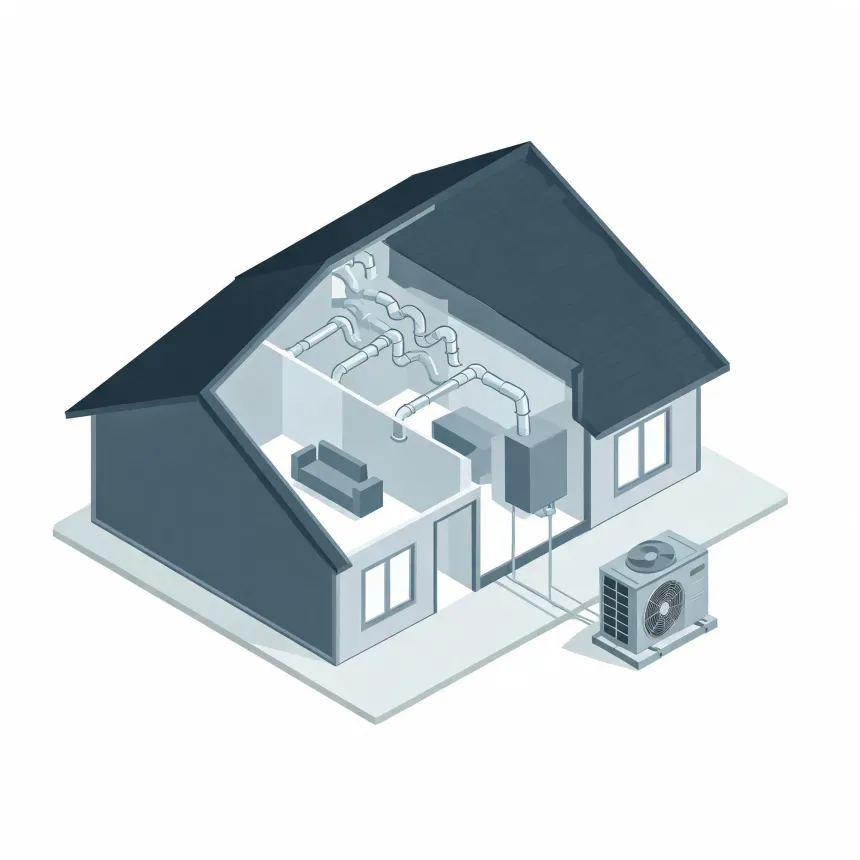
Isometric cutaway illustration of a house showing interior ductwork, an indoor air handler unit, and an outdoor condenser unit beside the building.
Your system heats October through April and cools May through September.

NOAA nClimDiv, 1991–2020 normals

A heat pump that short cycles or trips its breaker repeatedly is telling you something more than a weak part.

A single worn component is worth fixing, but repeated failures on the same system point to a compressor on its way out.

Heat pumps here work hardest the moment October's heat kicks on, right when a weak part finally gives out

Cooling runs May through September
Heat runs October through April
91 damaging wind events from 2015 to 2024
A newer house usually means a heat pump worth fixingHalf the homes in Craighead County were built in 1992 or later.

Before calling anyone, go outside and look at the unit. Check that the outdoor coil has airflow on all sides, nothing pressed up against it, no leaves packed into the fins. Look at the fan through the top grille and see if it's spinning free or wobbling. Check your breaker panel for a tripped switch, and if you reset it, watch whether it trips again within a few minutes. Inside, make sure the thermostat is set to heat or cool as needed and the batteries aren't dead. If you have a filter you can check, pull it and hold it up to a light. If it's gray and you can't see through it, that alone can make a heat pump struggle even with everything else working fine.

Get it looked at while repair is still the right call

Fix it and your heat pump has a newer house behind it to run in. If it's acting up now, a repair is worth calling in before the part that's struggling now takes others with it.

Find a contractor
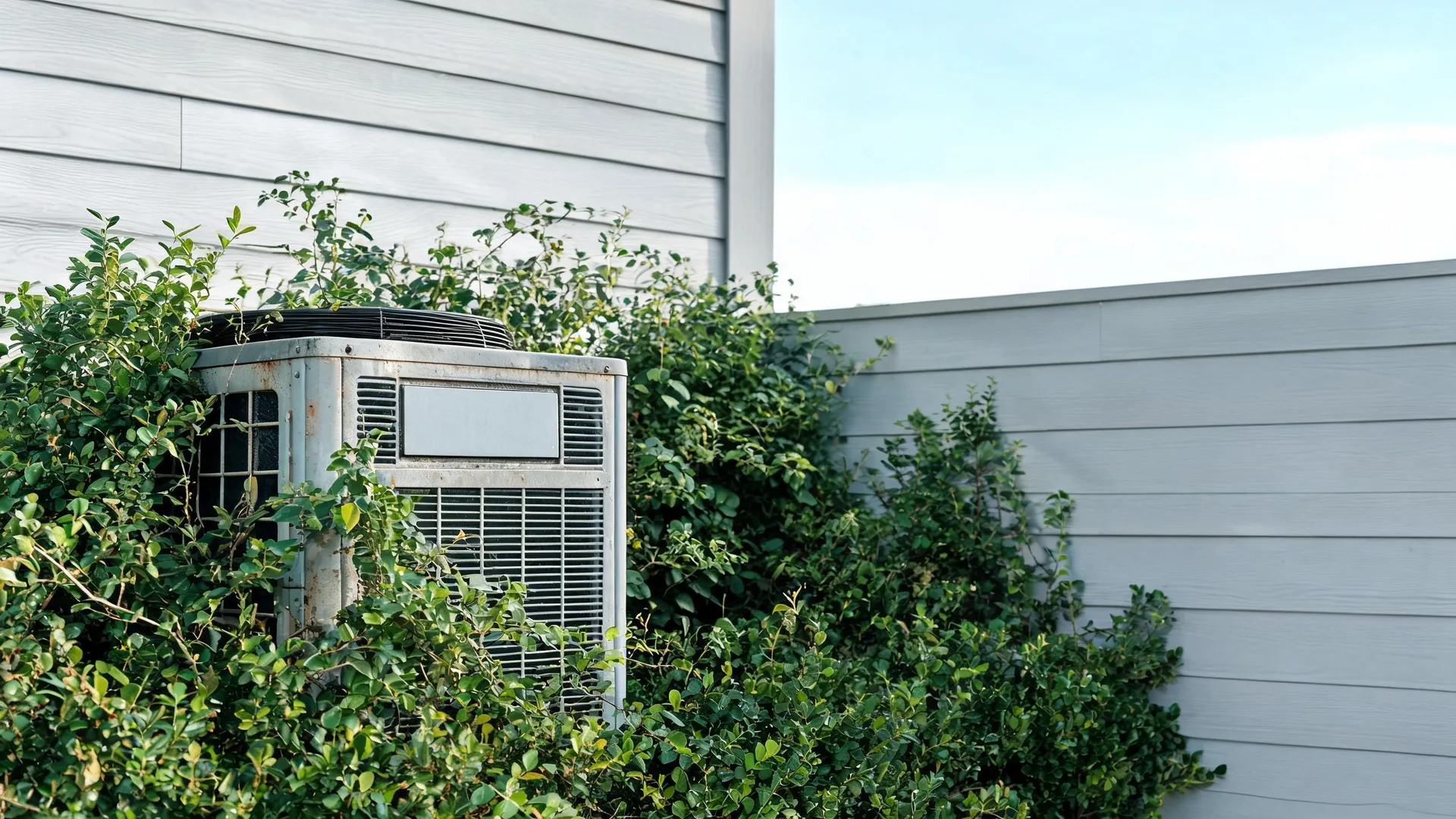
A residential heat pump outdoor unit mounted on a concrete pad next to a house with gray vinyl siding.

The part that's failing isn't always the part that fails next

A weak capacitor makes the compressor pull harder every time it starts. Run it like that for a week and the compressor windings take the wear instead. A refrigerant leak behaves the same way. The system keeps moving what's left, the compressor works to make up for the lower charge, and it runs hotter than it was built to. A fan motor that wobbles instead of spinning true will wear its bearing down to the point it seizes, and when that happens the compressor can overheat with nowhere for its heat to go. None of these start as compressor problems. They end as compressor problems if the unit keeps cycling on them. A compressor is the one part that turns a repair into a replacement, so the question with any of these isn't whether the heat pump still runs. It's what today's running is costing the part that's hardest to replace.

The reversing valve is the one part unique to a heat pump

The reversing valve switches the system between heating and cooling. When it fails, the heat pump gets stuck in one mode, or it runs and blows the wrong temperature air. A stuck valve often still runs and still pulls power. The failure can hide for a while before anyone notices the house isn't getting what the thermostat is asking for.
Most other failures are the same ones any AC has

A capacitor that's gone weak will make the compressor or fan motor struggle to start. A contactor with pitted contacts will chatter or stop closing the circuit at all. These parts wear from ordinary cycling over years, not from any one bad event. They're usually a straightforward swap compared to the compressor or the valve behind them.

Short cycling is one of the clearest signs, where the heat pump kicks on, runs for a short stretch, and shuts off before it's actually satisfied the thermostat. Warm air coming out of the vents in heating mode, or cool air showing up during a heating cycle, usually points to the reversing valve rather than the thermostat. A unit that runs constantly without ever catching up is often low on refrigerant or struggling to move air across a blocked or frozen coil. Ice forming on the outdoor unit outside of genuinely cold weather means the defrost cycle isn't doing its job. A clicking or chattering sound at startup is usually the contactor, and it's not something that fixes itself. Any burning smell from the vents, or a breaker that trips more than once, is worth stopping and getting looked at before running the system again.

A diagnostic visit starts at the thermostat and the breaker panel, then moves outside to the unit itself. A tech runs the system in both heating and cooling to see if it switches modes the way it should. That alone can confirm or rule out the reversing valve. Gauges go on next to check refrigerant pressure. Low charge and a failing compressor can look similar from inside the house, but they read differently on the gauges. The contactor and capacitor get checked by hand, not just by ear, since a capacitor can test weak before it ever starts chattering. Amp draw on the compressor tells its own story. A compressor pulling more current than it should is already working harder than it was built to, even if it hasn't failed yet.