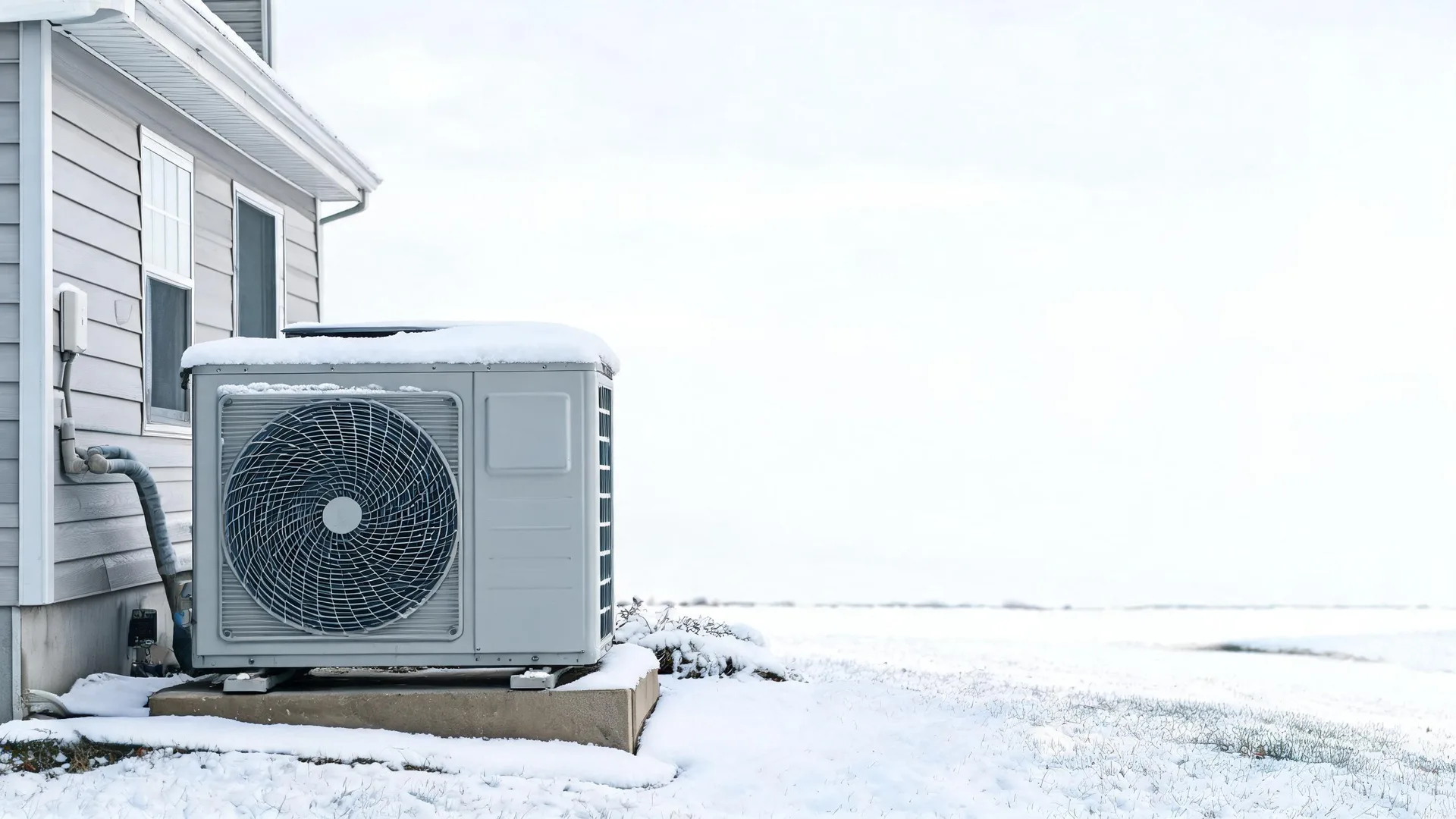
An outdoor HVAC condenser unit on a concrete pad in front of a two-story suburban house.

Heat Pump Repair in Heber Springs, AR

Tell us about the job

Takes about a minute. No obligation.

RepairHeat PumpCleburne County, AR
Step 1 of 2

What ZIP code is the job in?

October is when a weak heat pump shows itself

Heat here runs October through April, about seven months. When a heat pump switches over after sitting idle since spring, whatever was already marginal in it, a weak capacitor, a low charge, a failing board, tends to give out under the first real load.


September is the month to get it looked at

A heat pump due for repair holds up better if it's checked before October, not after the cold hits and it's running every day. Waiting until the first cold snap means diagnosing the problem while you're already without heat.

7 months
October through April, your system heats
5 months
May through September, it cools
31°F
the average winter night it heats against
89°F
the average summer afternoon it cools against
Isometric grayscale illustration of a cutaway house showing interior rooms, ceiling ductwork and an air handler, connected by lines to an outdoor condenser unit on a pad outside.
Your system heats October through April and cools May through September.

NOAA nClimDiv, 1991–2020 normals

A heat pump works all year, cooling in summer and heating in winter, so its parts never get a season to rest.

A worn capacitor or failing contactor from a summer of cooling is often the same part that quits on the first cold night.

Nothing about Cleburne County's climate is hard on a heat pump

Power costs 12.32 cents a kWh statewide
Climate zone 3A
Cooling runs May through September

A heat pump that came with a newer house usually hasn't logged the years that push toward replacement. So if a capacitor or board is failing, fixing it is almost always the right call rather than starting over. One thing worth checking first is whether the unit is original to the house or was swapped in later, since that changes how much life it has left. If you're in a mobile home, mention that to whoever comes out, since those systems are sometimes sized and installed differently than one in a site-built house.

Get it looked at early

Problems tend to show up in the first weeks of the season, when the load hits a part that was already weak.

Find a contractor
A man in a dark cap, gray long-sleeved shirt and tan work pants, seen from behind, carries a worn canvas tool bag up wooden steps toward a green front door flanked by white columns and a potted shrub.
A gray outdoor HVAC unit mounted on a concrete pad beside a house with gray lap siding and a stone foundation.

What to check yourself first

Before you call anyone, go outside and look at the outdoor unit. The fan should be spinning freely and the coil around it should be clear of leaves, grass clippings and ice. If you see ice building up on the coil or the lines, that's worth noting, though don't chip at it yourself. Inside, check the thermostat is set to heat and the temperature is actually set above room temperature, then listen for the system starting up. Check your air filter while you're at it. A clogged filter restricts airflow and can make a heat pump struggle or trip off on its own. Walk around the house and feel the vents. If air is coming out but it feels cool rather than warm, that's useful to mention when you call, since it points at the reversing valve or the compressor rather than something simpler. Check your breaker panel too. A heat pump that won't start at all sometimes just needs a tripped breaker reset. None of this fixes a failing capacitor or a low refrigerant charge, but it rules out the simple stuff and gives whoever comes out a clearer picture of what you're seeing.

It won't switch over to heat

The outdoor unit hums or the fan turns but no warm air comes from the vents, or the system runs nonstop and never gets the house to temperature. This often points at the reversing valve, the part that tells the system whether to heat or cool, or at a compressor that's lost the capacity to do the job.

It's cycling short or tripping off

A heat pump that turns on, runs a couple minutes, then shuts off on its own is protecting itself from something. Low refrigerant charge, a dirty coil, or a failing capacitor can all cause this, and each time it trips the strain on the compressor gets worse.

A heat pump that's icing up or short cycling and gets left alone doesn't just keep failing the same way. It fails worse. Short cycling puts a hard start on the compressor every few minutes instead of one clean start for the day, and a compressor isn't built for that kind of repeat strain. Ice on the coil blocks airflow, so the system pulls harder to do the same job, which pushes a marginal capacitor or a low charge closer to the point where it quits outright. A refrigerant leak that's small today is still a leak tomorrow, and running the system on a low charge makes the compressor work oil-starved, which is how a repair turns into a compressor replacement. None of this reverses itself by running the system more. It only moves faster.

A diagnostic visit starts outside at the unit and inside at the air handler, because a heat pump problem usually shows itself in both places. Gauges go on the refrigerant lines to check the charge, since a system low on refrigerant will run but won't move enough heat. The capacitor and contactor get tested under load, not just looked at, because a capacitor can look fine and still be weak. The reversing valve gets checked too, since that's the part deciding whether the system heats or cools, and a valve that's stuck will mimic other problems that have nothing to do with it. Electrical connections get checked for corrosion and loose terminals, since those cause faults that come and go and are easy to miss if you only look at the big parts. By the end, the point isn't just naming what failed. It's knowing why that part failed, so the fix holds instead of coming back.