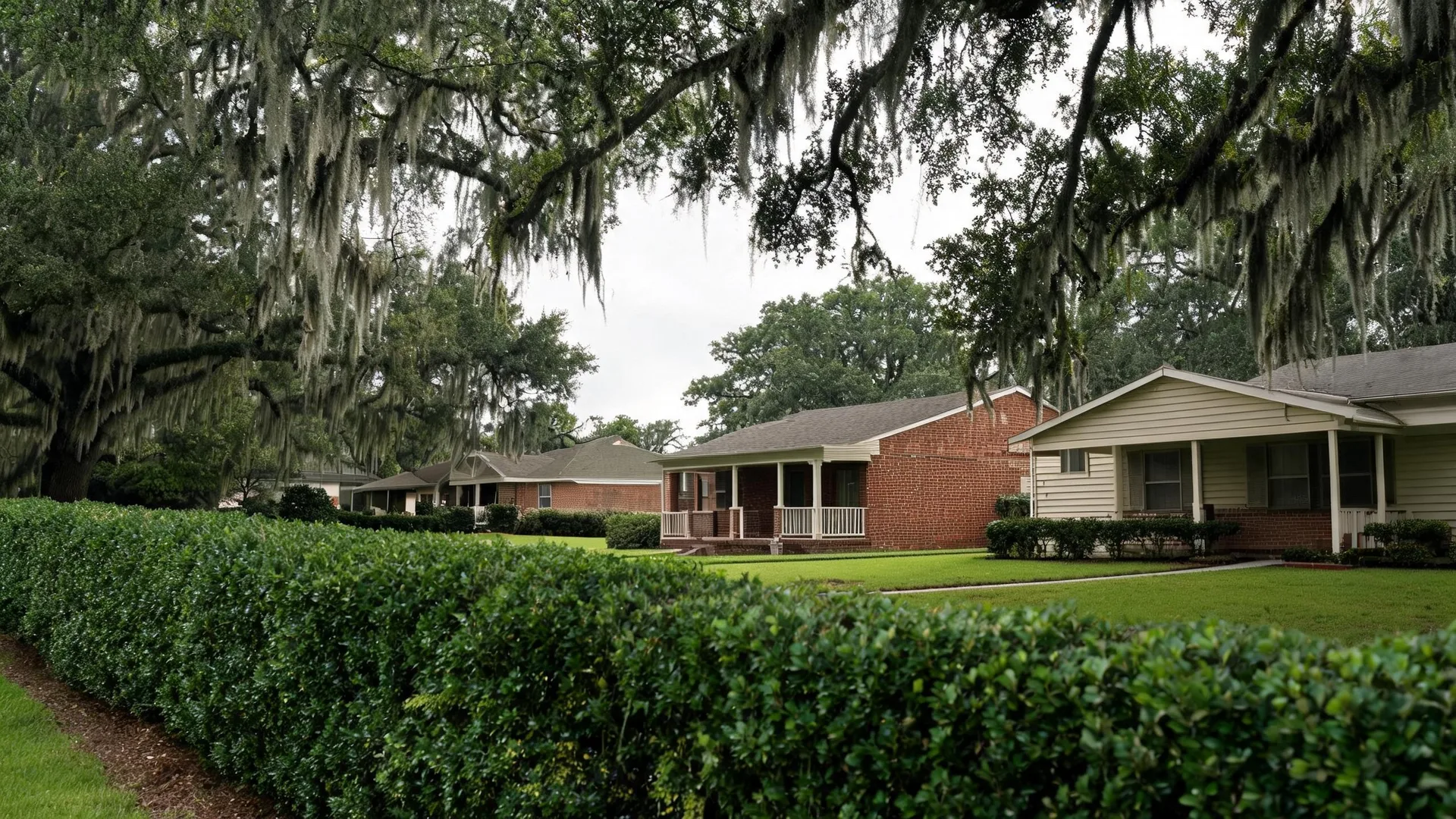






Single-story brick and siding houses with lawns behind a long trimmed hedge, framed by large oak branches draped with Spanish moss under an overcast sky.

Heat Pump Repair in Harrison, AR

Tell us about the job

Takes about a minute. No obligation.

RepairHeat PumpBoone County, AR
Step 1 of 2

What ZIP code is the job in?

Winters here are not mild. The overnight low averages 28°F across December, January and February, and Boone County sits in a mixed climate zone that asks real work of both heating and cooling. A heat pump in this county is not coasting through the year. But it is not getting pushed to its limit either, the way it would somewhere with harder winters or longer, more humid summers. That matters when something goes wrong. A unit that has been working within its range rather than past it usually has more life left in it, and a repair is more likely to be worth the money than a sign the system is done.

7 months
October through April, your system heats
4 months
June through September, it cools
28°F
the average winter night it heats against
87°F
the average summer afternoon it cools against
Isometric illustration of a cutaway single-family house showing interior ductwork and an air handler, with an outdoor condenser unit connected by lines along the exterior wall.
Your system heats October through April and cools June through September.

NOAA nClimDiv, 1991–2020 normals

Half the homes in Boone County were built in 1985 or later.

A heat pump in a newer Boone County home usually still has working life left in it, which is why repair is worth calling first.

Boone County weather is not what wears out a heat pump

90 severe weather events from 2015 to 2024
24% of homes statewide lost power a day or more in 2024
37 damaging wind events from 2015 to 2024
June and October are when a weak part shows itselfCooling starts in June here, heating in October. The first cold snap or hot stretch finds whatever part was already wearing out.

So when a repair call turns up a bad capacitor or a stuck reversing valve, get it fixed rather than treat it as a sign to replace the unit. A heat pump that has not been run past its limit for years at a time does not usually fail outright, it wears one part at a time. That favors repair over replacement when something does go wrong. Hail is the bigger risk to watch for here, with 43 events across the county between 2015 and 2024, and that kind of damage shows up in the outdoor unit's fins and coil, not the parts that wear from routine heating and cooling.

A newer house usually means a heat pump worth repairing

If the system in your home came with the house, there's a good chance it's not old enough to be the problem. Get the repair quote before you assume you need a new unit.

Find a contractor
A gray outdoor HVAC unit mounted on a concrete pad beside a house with gray lap siding and a stone foundation.

Running it longer does not buy you time

A heat pump that is struggling does not fix itself by staying on. Low refrigerant charge is the clearest case. The system keeps running to try to reach the setpoint, the compressor stays under load longer than it should, and heat that would have been caught early turns into a compressor replacement. A failing capacitor is similar. It lets the compressor or fan motor start hard instead of smoothly, and every hard start adds wear that a weak capacitor was already causing. Ignore a reversing valve that is sticking and you risk it failing in one position, leaving you with a unit that only heats or only cools. None of these get better with runtime. The part does not rest and recover. It just gets asked to do the same failing job again on the next cycle.

What you can check at the thermostat

Set it below room temperature and see if the system responds within a few minutes. If the outdoor unit never kicks on, check the breaker first. A tripped breaker or a switch left off at the disconnect box next to the outdoor unit is something you can safely reset yourself. If it trips again after resetting, stop there and let a contractor find out why.
What's worth a look outside

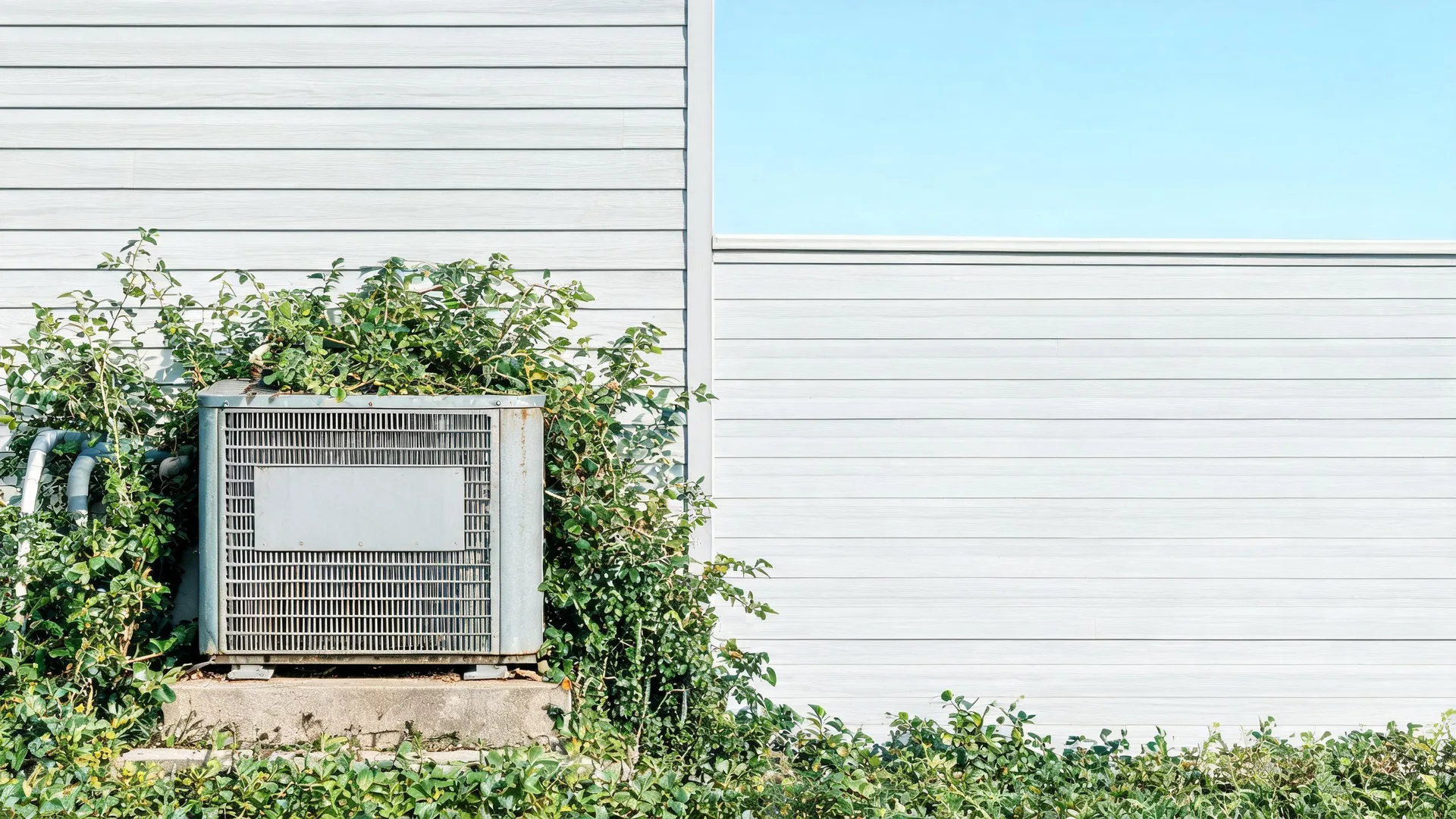
Walk out to the outdoor unit and look at the coil, the fins around the cabinet. Leaves, grass clippings or ice built up on them block airflow and make the whole system work harder. Clearing debris by hand is safe. Chipping away ice is not, and a unit icing over in heating mode usually means a problem with the reversing valve or refrigerant charge that needs a trained eye, not a homeowner with a hairdryer.

Most heat pump trouble shows up as a change you can feel or hear, not a total shutdown. Air coming from the vents that is cooler than usual in heating mode, or warmer than usual in cooling mode, often points to a refrigerant leak or a failing compressor. A unit that short cycles, turning on and off every few minutes instead of running a full cycle, puts stress on the compressor and usually means a bad sensor or a thermostat problem. Listen for noise too. Grinding or squealing from the outdoor unit points to a failing motor bearing, and a loud clicking that keeps repeating without the system starting usually means the capacitor is too weak to get the compressor going. Ice on the outdoor coil during the heating months is not normal and points to a stuck reversing valve or low charge, not weather.

A heat pump rarely fails all at once. It is a loop of parts, the compressor, the reversing valve, the capacitor, the fan motor, each one doing its job thousands of times a season, and most repairs are one of those parts finally giving out while the rest of the system is fine. That is the case for fixing it. Replacement starts to make more sense when the compressor itself is the problem, since that is the most expensive part in the system and the one every other part depends on. It also makes sense when the same part keeps failing or a contractor finds more than one thing wrong at once, since that pattern usually means the system as a whole is wearing out rather than one component. Age on its own is not the deciding factor. What the unit has been asked to do over its life is.