





Two illuminated white Southern-style houses with wraparound porches and staircases, framed by a Spanish moss-draped tree on a quiet street at night.

Heat Pump Repair in El Dorado, AR

Tell us about the job

Takes about a minute. No obligation.

RepairHeat PumpUnion County, AR
Step 1 of 2

What ZIP code is the job in?

A heat pump that's struggling will often keep trying anyway, and that's where the damage happens. A low refrigerant charge makes the compressor work harder to move heat, and running it that way long enough can burn the compressor out entirely, which turns a repair into a full replacement. A failing capacitor can let the compressor start and stumble over and over, and each rough start wears down the motor windings a little more. Ice on the outdoor coil blocks airflow, and if the system keeps running instead of shutting down to defrost, that ice just builds until the coil can't absorb any heat at all. None of these fix themselves by staying on. The longer a struggling heat pump runs, the more likely the fix turns from a part to a whole unit.

5 months
November through March, your system heats
5 months
May through September, it cools
35°F
the average winter night it heats against
92°F
the average summer afternoon it cools against
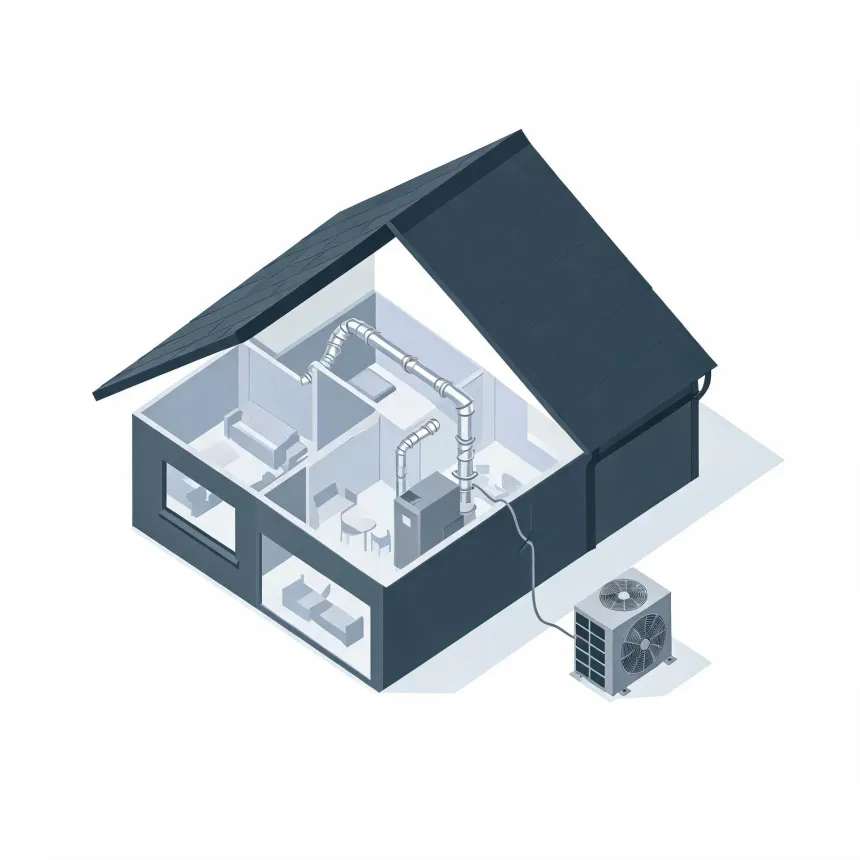
Isometric illustration of a cutaway house showing interior rooms with furniture, a furnace and ductwork, connected by a line to an outdoor condenser unit on the ground outside.
Your system heats November through March and cools May through September.

NOAA nClimDiv, 1991–2020 normals

Half the homes in Union County were built in 1979 or earlier.

But a heat pump's age tells you more about its risk of failure than the house's does.

November is when a weak heat pump here gets found out

Cooling runs May through September
Heat runs November through March
Power costs 12.32 cents a kWh statewide

Union County has logged 113 severe weather events between 2015 and 2024, and most of those were damaging wind. That outdoor unit sits outside through all of it, exposed to whatever comes through. Hail hits the county too, and hail dents coil fins and bends the cabinet in ways you can't always see from a glance. A unit that took a hit doesn't always quit right away. It can keep running for months with bent fins choking off airflow, working harder than it should until something finally gives. If a storm came through and the heat pump still turns on, that's not the same as it being fine. Worth having someone check the coil and cabinet before winter puts more load on it.

Get the usual fix

Nothing about this area is especially hard on it. It's most likely the usual problem with the usual fix.

Find a contractor
A man in a dark cap, gray T-shirt and tan work pants walks up porch steps toward a green front door, carrying a canvas tool bag with hand tools, beside a potted shrub.
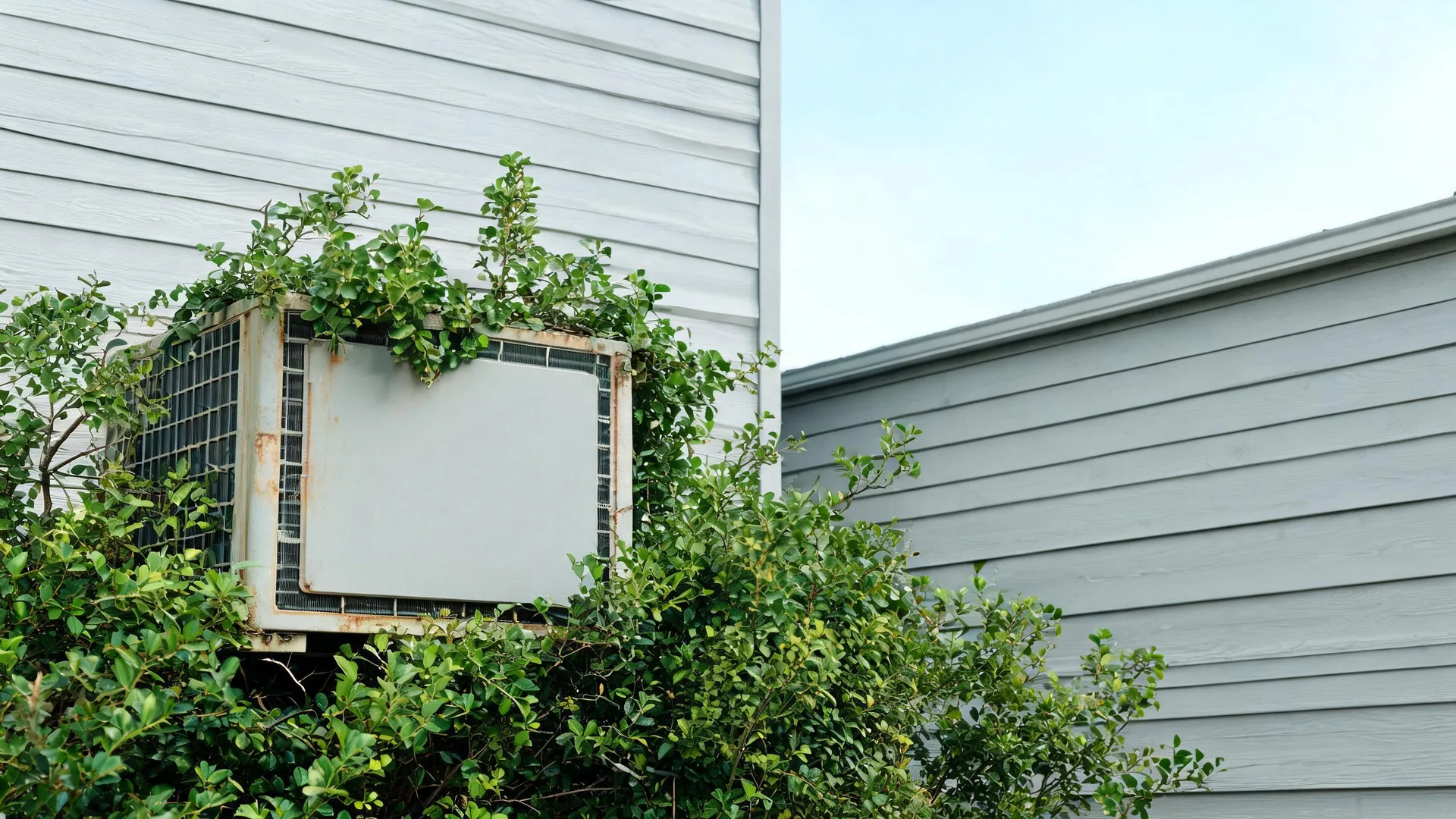
A gray heat pump outdoor unit mounted on a concrete pad next to a residential house with lap siding and stone accents.

What actually wears out on a heat pump

Reversing valves are a common failure point because a heat pump relies on one to switch between heating and cooling, and that valve is cycling every time the system changes modes. When it sticks, the unit can get stuck blowing cold air during a heat cycle or just stop switching at all. Contactors wear out from the arcing that happens every time they open and close, and a pitted contactor eventually fails to make a clean connection, so the outdoor unit won't start even though it's getting a call for heat. Defrost boards and sensors fail too, and when they do, the coil ices over because the system never gets the signal to defrost. None of these are tied to how hard the weather's been. They're just what wears out on a machine that starts and stops this often, year after year.

What you'll actually notice first

The thermostat calls for heat and the outdoor unit either doesn't start or runs without ever feeling warm at the vents. Sometimes it's blowing air that's barely different from room temperature. Sometimes you hear the outdoor unit humming but the fan isn't turning. Ice showing up on the outdoor coil when it shouldn't, or staying there instead of melting off during a defrost cycle, is another one people catch. Short cycling, where the system kicks on and off every few minutes instead of running a full cycle, is usually noticed as a change in sound more than anything else.
What those signs mean for the call

A system that runs but doesn't heat points at the reversing valve or the refrigerant charge, not the thermostat. A unit that won't start at all when it's getting power and a call for heat usually comes down to the contactor or the capacitor. Ice that won't clear means the defrost board isn't doing its job. None of these get better with time, and most of them are still a repair if you catch them while the unit is still trying to run. Once the compressor stops starting altogether, the job usually isn't a repair anymore.

A few checks are safe to do yourself before anyone comes out. Start at the thermostat. Make sure it's set to heat, not auto, and that the set point is actually above room temperature. Check the breaker for both the indoor air handler and the outdoor unit, since a tripped breaker on either side will stop the system cold. Look at the air filter. A filter clogged with dust chokes airflow across the indoor coil, and that alone can mimic a refrigerant problem. Walk outside and look at the unit itself. If the fins are packed with leaves or grass clippings, or if ice has built up and isn't clearing, that's worth noting for whoever comes out, but don't chip at the ice or hose it down. Past that, the inside of the cabinet and the refrigerant circuit aren't something to open up yourself.

A repair makes sense when one part has failed but the rest of the system is still sound, a reversing valve, a contactor, a capacitor, a defrost board. Swap the part and the compressor, the coil and the rest of the circuit go back to doing what they've always done. Replacement gets pushed onto the table when the compressor itself is the problem, because a compressor isn't something anyone swaps out on its own. It's sealed into the refrigerant circuit, and the labor to replace just that part usually costs close to what a new outdoor unit runs anyway. Age matters too, but not by itself. A heat pump nearing the end of its expected life that needs a major part is a different call than a younger one with the same failure, since the older unit is more likely to have a second major part fail soon after the first gets fixed. The pattern worth watching for is repairs stacking up close together in a short stretch of time. One failure is a repair. Several on the same unit within a short span is usually the system telling you it's done, one part at a time.