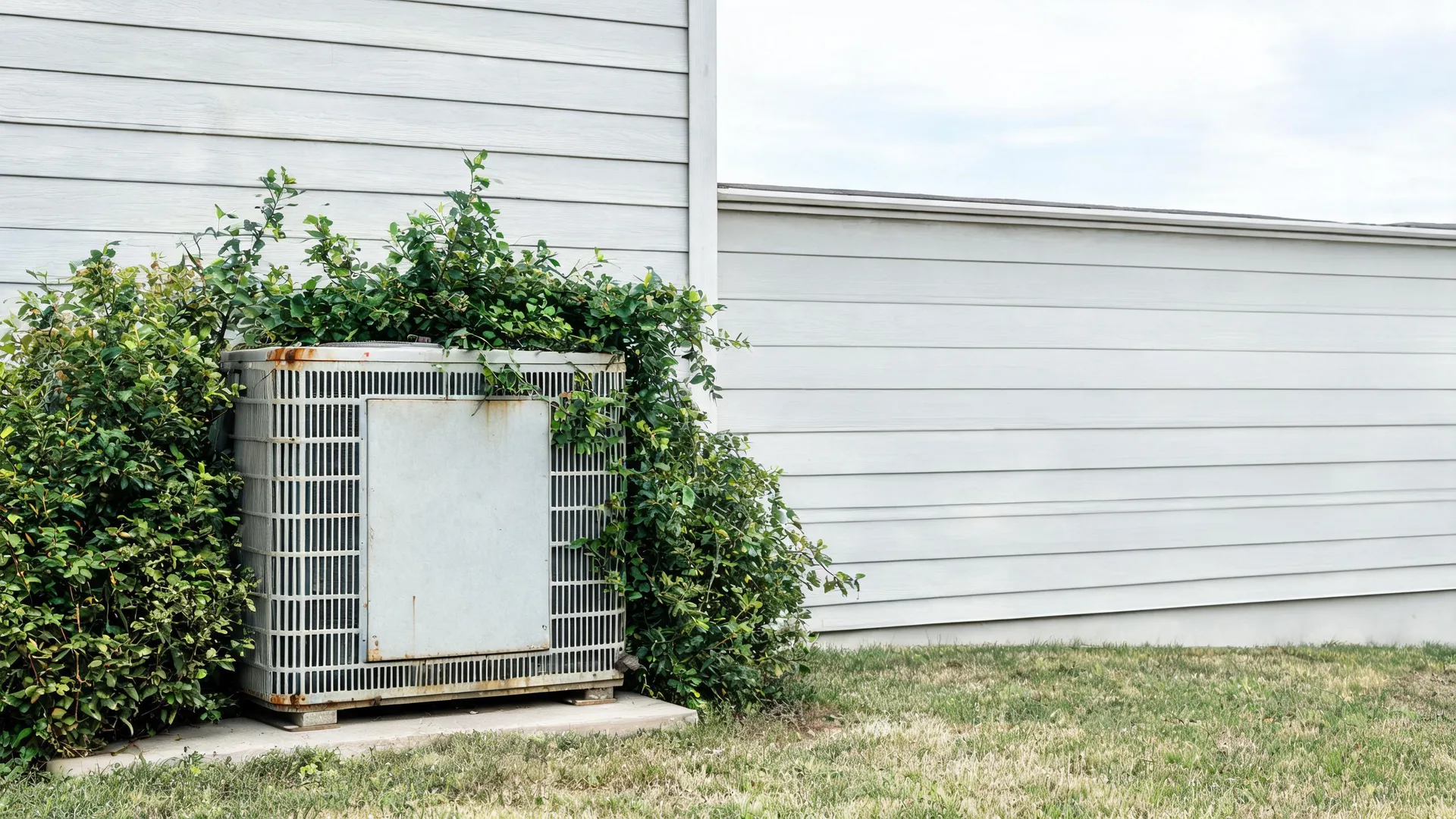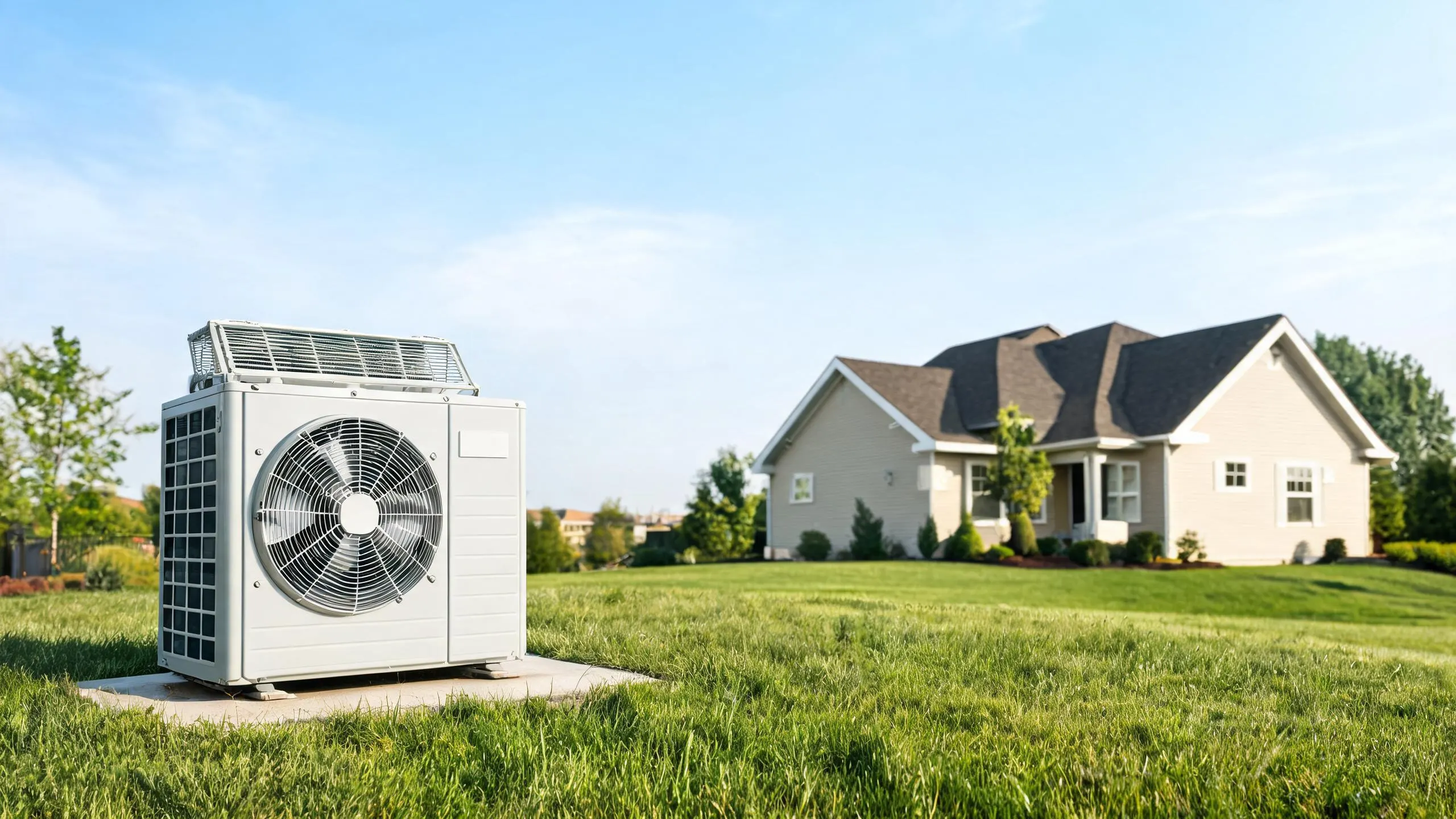
An outdoor air conditioning condenser unit mounted on a concrete pad in front of a single-story suburban house.

Heat Pump Repair in Crossett, AR

Tell us about the job

Takes about a minute. No obligation.

RepairHeat PumpAshley County, AR
Step 1 of 2

What ZIP code is the job in?

Weather here isn't the main cause

Ashley County gets its share of wind and the occasional ice storm. But a heat pump breaking down is rarely about the weather that day. Most calls trace back to a worn contactor, a low charge, or a capacitor that gave out after years of normal cycling.

What that means for a repair call

A tech checking a heat pump in Crossett looks at the same spots as anywhere else. The outdoor unit's capacitor and contactor. The refrigerant charge. The thermostat signal. Nothing about this area changes where the problem is likely to be found.

5 months
November through March, your system heats
5 months
May through September, it cools
36°F
the average winter night it heats against
91°F
the average summer afternoon it cools against
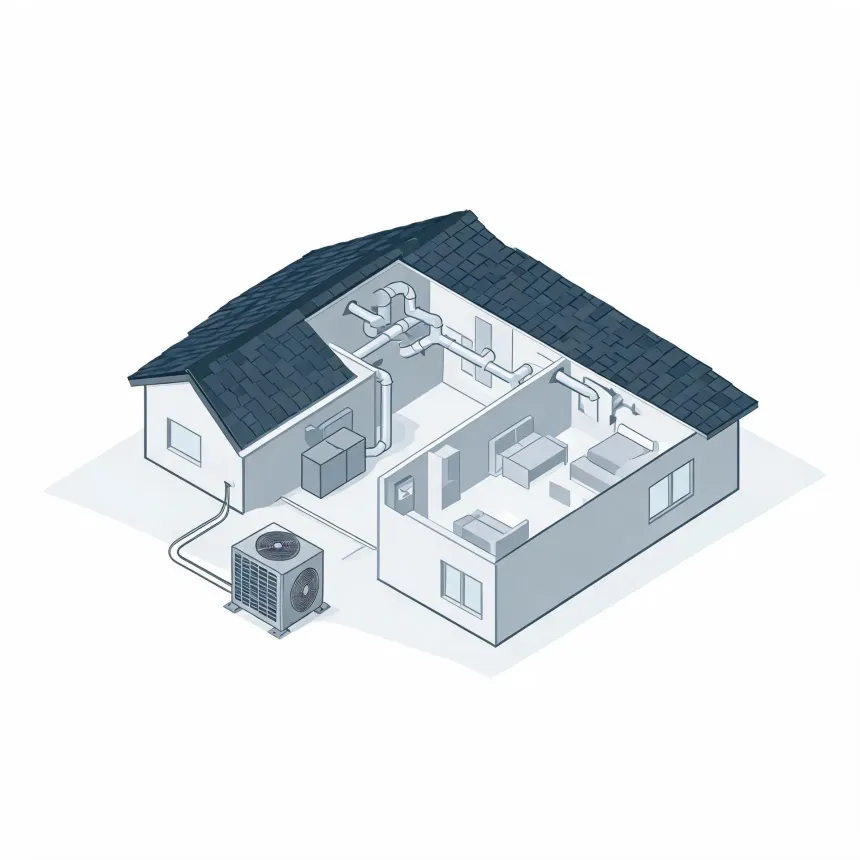
Isometric cutaway illustration of a single-story house showing interior rooms, ceiling ductwork, an indoor air handler, and an outdoor condenser unit connected by lines on the ground.
Your system heats November through March and cools May through September.

NOAA nClimDiv, 1991–2020 normals

A heat pump blowing cold air in heating mode usually means it's stuck in defrost or the reversing valve isn't shifting back.

Leave it running and the backup heat strip may carry the whole load, which drives up wear on parts that were never meant to run alone.

The first cold snap finds what was already weakHeat runs November through March here, so October is when a weak part tends to show itself.

Half the homes in Ashley County were built in 1977 or earlier. A heat pump that came with a house that age is probably not the original equipment anymore, and whatever is running now has its own install date worth tracking down. If nobody remembers when it went in, that is worth finding out before a big repair gets approved. An older unit nearing the end of its life may not be worth a compressor or reversing valve replacement. Mobile homes make up a good share of the housing here as well, and those units wear differently given tighter equipment pads and shorter line runs. Either way, the question worth asking before any repair is how many years the unit has left in it.

Get the usual fix

Nothing about this area is especially hard on it. It's most likely the usual problem with the usual fix.

Find a contractor
A man in a cap, dark shirt and tan work pants walks up porch steps toward a green front door, carrying a canvas tool bag at his side, with a potted shrub beside the entry.
A gray heat pump outdoor unit mounted on a concrete pad next to a residential house with lap siding and stone accents.

What to check before the tech shows up

Start at the thermostat. Make sure it is set to heat and the temperature is set above the room. Go to the breaker panel and look for anything tripped, both the air handler and the outdoor unit have their own breaker. Walk outside and look at the coil. A light frost in cold weather is normal. A solid block of ice is not, and that points to a defrost or airflow problem rather than something you can fix by waiting it out. Check that the outdoor fan is actually turning when the system is running. Pull the air filter and hold it up to a light. If light does not pass through, that filter is choking the airflow, and a choked filter alone can cause symptoms that look like a bigger failure. Listen for anything out of the ordinary. A hum with no fan movement usually means a bad capacitor. A click that repeats without the unit starting points to the same thing or a failing contactor. Leave the access panels alone and do not touch the refrigerant lines. That part is for the tech.

The parts that wear out first

The contactor carries full current every time the outdoor unit cycles on, and the contacts burn a little each time until they stick or stop connecting. The capacitor behind it stores the jolt that starts the compressor and fan motors, and it weakens with age until those motors can no longer start on their own. Both fail from ordinary use over years of normal cycling, not from any one bad day.

Why the reversing valve matters most

A heat pump depends on the reversing valve to switch between heating and cooling, and it has no equivalent in a furnace or a straight air conditioner. When the valve's coil burns out or the valve body sticks, the system can get stuck in one mode or stop shifting cleanly between them. That calls for real diagnosis, not a part swapped on a guess.

A few things get worse the longer a struggling heat pump is left running. A compressor low on charge starts working harder to move less heat, and running it that way wears the compressor itself rather than just costing comfort. A frozen coil blocks airflow, and a system pushing air through ice can crack the fins or force liquid refrigerant back into the compressor, which it was never built to handle. A failing capacitor makes the compressor motor pull harder on every start, which shortens whatever life was left in that motor. None of these fix themselves by waiting. The part that was marginal becomes the part that fails, and a repair that would have been simple becomes a replacement.

A diagnostic call starts before any panel comes off. The tech asks what the system is doing, when it started, and whether it's heating, cooling, or stuck somewhere in between. Then comes the thermostat, the breakers, and a look at the outdoor unit before anything gets tested with a meter. Refrigerant pressures, electrical readings at the capacitor and contactor, and the defrost cycle all get checked against what they should read, not just whether the unit is running. Airflow gets a look too, since a coil full of ice or a clogged filter can mimic a failing part that's actually fine. The diagnosis is the part that takes the time. Once the tech knows which part failed and why, swapping it is usually the quick part of the visit.