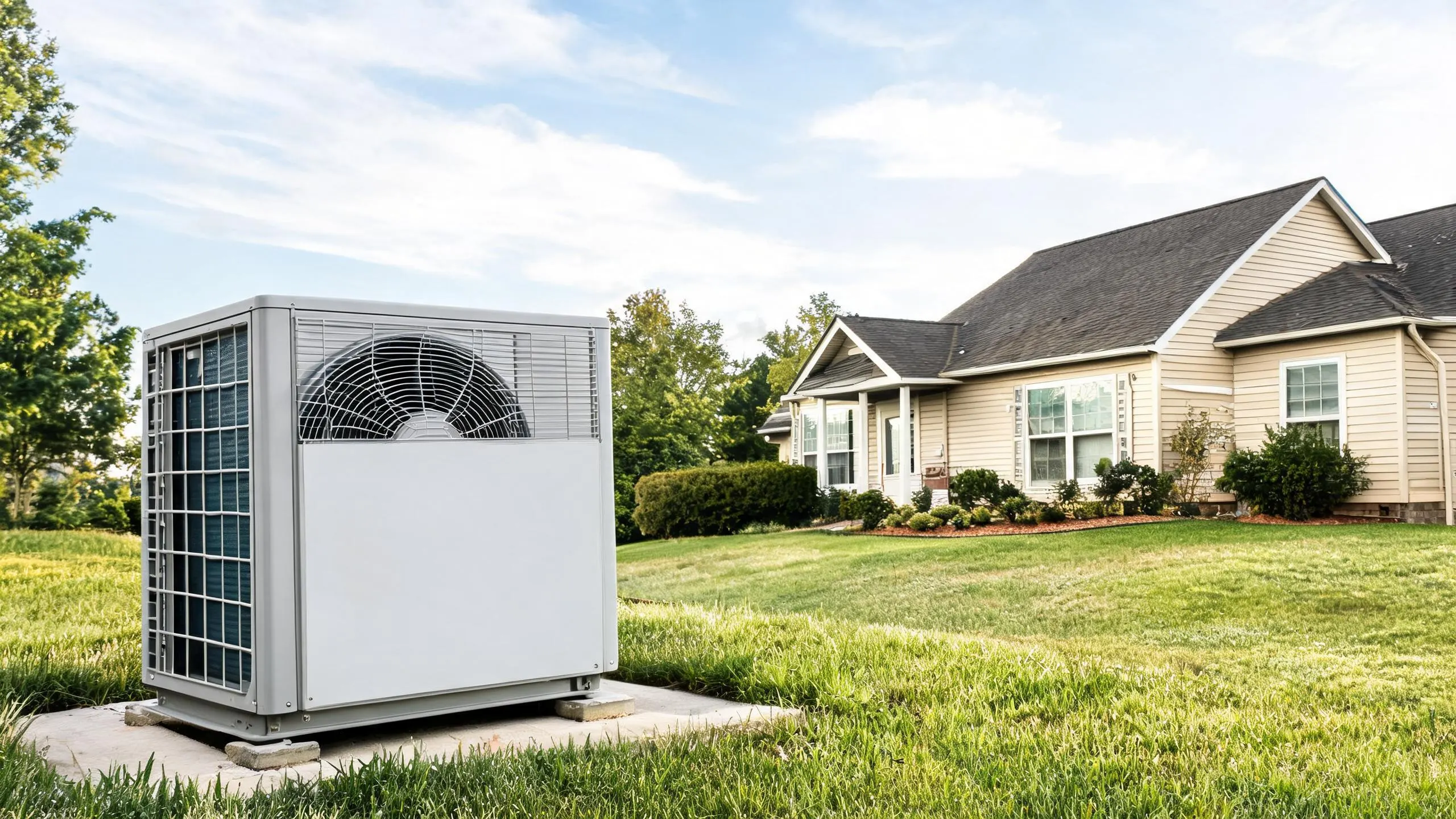
An outdoor heat pump unit mounted on a concrete pad in front of a single-story suburban house with beige siding.

Heat Pump Repair in Clinton, AR

Tell us about the job

Takes about a minute. No obligation.

RepairHeat PumpVan Buren County, AR
Step 1 of 2

What ZIP code is the job in?

A long, mild stretch of cooling weather

Clinton runs warm and humid most of the year, with only a short, mild winter. A heat pump here spends most of its hours cooling the house, not heating it. The compressor and outdoor coil do the bulk of the work, year after year. Wear shows up where it always does on these systems, not from anything unusual about this area.


The cause is usually a familiar one

When a heat pump stops keeping up, the reason is almost always something a contractor has seen many times before. A failing capacitor. A low refrigerant charge. A dirty outdoor coil. A reversing valve stuck in one position. Getting the diagnosis right is what fixes it, not looking for something rare.

7 months
October through April, your system heats
5 months
May through September, it cools
30°F
the average winter night it heats against
88°F
the average summer afternoon it cools against
Isometric line illustration of a cutaway single-story house showing interior ductwork, an indoor air handler unit, and an outdoor condenser connected by refrigerant lines, with a dark shingled roof.
Your system heats October through April and cools May through September.

NOAA nClimDiv, 1991–2020 normals

A tech starts by asking what the system is doing wrong, heating, cooling, neither, or running nonstop.

The symptom a homeowner describes narrows where to look before a single panel comes off.

Cooling starts in May and heat starts in October, so this is when a weak part gets found out

Cooling runs May through September
Heat runs October through April
28 hail events from 2015 to 2024

Van Buren County has logged 73 severe weather events over the years tracked, most of it wind and hail. None of that targets a heat pump any differently than it targets the rest of the house. The outdoor unit sits outside, so a direct hit from a storm can dent a cabinet or bend a fan blade, but what actually stops a heat pump from running is almost never that. It's the same wear that shows up anywhere, a part that's aged out, a charge that's drifted low, a coil that needs cleaning. Power outages are the other piece worth knowing about. A heat pump that won't start after the lights come back on usually just needs its breaker reset or its disconnect checked, nothing more involved than that.

Get the usual fix

Nothing about this area is especially hard on it. It's most likely the usual problem with the usual fix.

Find a contractor
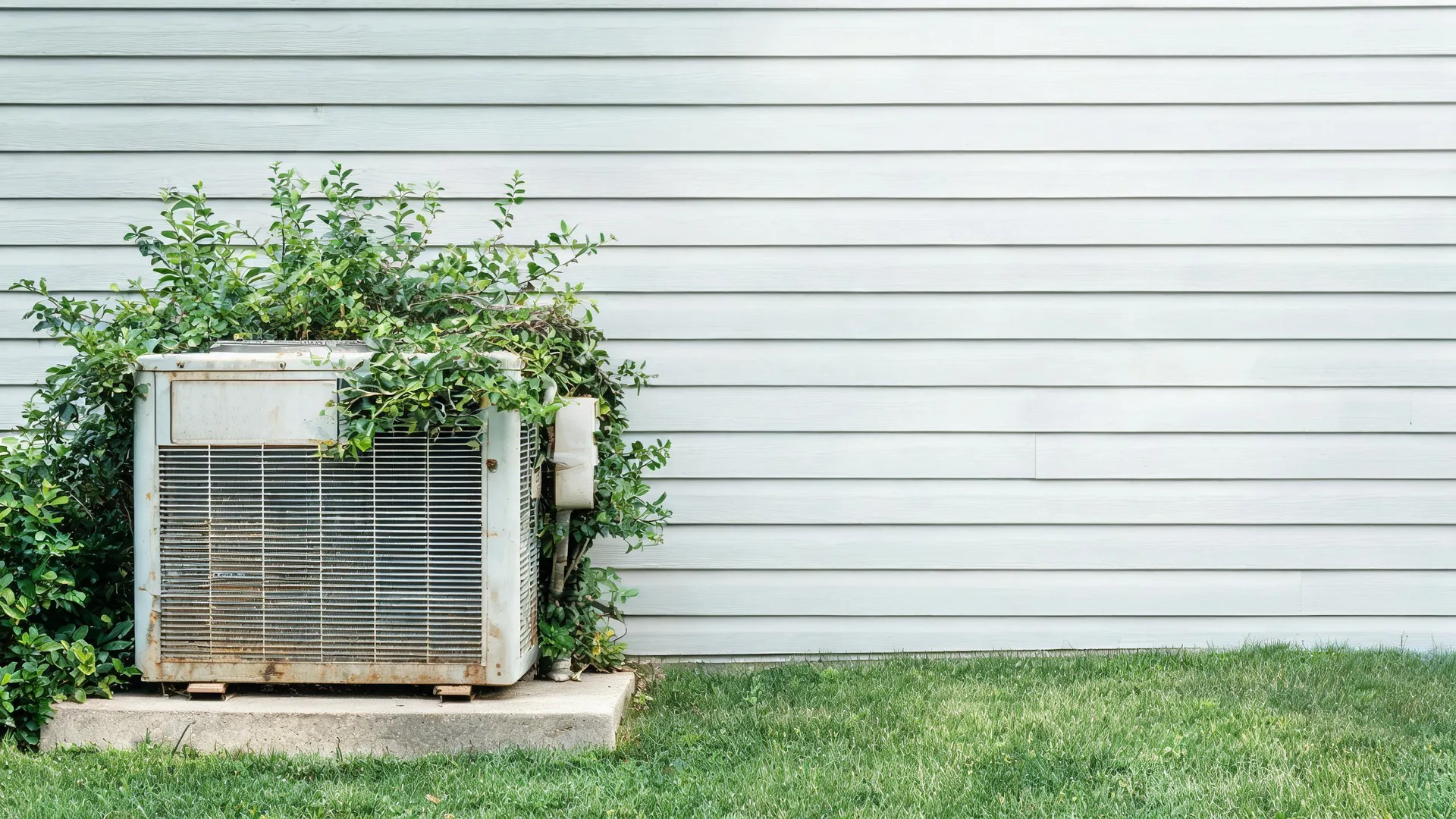
A gray air-source heat pump mounted on a concrete pad next to a house with gray vinyl siding, surrounded by gravel and flanked by green shrubs and white hydrangea flowers.

What you can check yourself first

Check the thermostat first. Make sure it's set to the mode you want, heat or cool, and that the set temperature is actually past room temperature. A thermostat bumped to the wrong setting explains a lot of service calls by itself. Next, look at the breaker panel and any disconnect box near the outdoor unit. A tripped breaker or a pulled disconnect will stop the whole system, and resetting it is safe to try. Check the air filter. A filter clogged with dust chokes airflow across the indoor coil, and a heat pump starved for airflow will ice up or stop keeping temperature. Walk outside and look at the outdoor unit. Leaves, grass clippings, or anything piled against the cabinet blocks the coil, and clearing the area around it is fine to do yourself. If you see ice on the outdoor coil beyond what a normal defrost cycle leaves behind, that's worth telling the tech, not something to chip off or hose down. Listen for what the system is actually doing. Running without reaching temperature, blowing air that isn't hot or cold, or a new noise all point to different problems, and naming which one it is helps once someone arrives. What you shouldn't do is open the outdoor unit's cabinet. The electrical components inside need the right tools.

Most failures start with one part

A capacitor weakens and can no longer start the compressor or the fan motor. A contactor pits from years of switching current and stops making contact. These are wear parts, built to fail after enough cycles, not signs anything else is wrong.

One part only exists on a heat pump

The reversing valve switches the system between heating and cooling. When it sticks, the heat pump keeps running but blows the wrong temperature of air, or won't leave one mode. A furnace or a straight air conditioner has no such part, so a system stuck heating only or cooling only points straight at it.

A heat pump that's struggling still tries to reach the set temperature, and that's what turns a small problem into a bigger one. A weak capacitor makes the compressor labor to start, and each hard start heats the windings a little more than the last one. Enough of that and the compressor trips on its own overload protection, or doesn't survive at all. Low refrigerant works the same way. The compressor was built to move a certain charge, and running it low makes it work harder while cooling itself less. A dirty outdoor coil can't shed heat properly, so the system runs longer to do the same job, and that extra runtime is what the compressor pays for. The part that was actually failing rarely gets worse by sitting off. It's the parts around it that take the damage while the system keeps trying.

A tech weighs repair against replacement by looking at the compressor, not the thermostat or a blower motor. Those parts get swapped on their own all the time. The compressor is what makes the system a heat pump, and when it's the one failing, the math changes. An aging system that needs a capacitor or a contactor is still worth fixing, those are normal wear parts and replacing one brings the whole unit back to normal. A system that's lost its charge more than once points to a leak somewhere in the coil or the line set, and that's worth finding before deciding anything. What tips a repair into a replacement is usually the compressor itself going bad, because a compressor swap is major work on an old system, and a heat pump nearing the end of its working life rarely justifies that expense. Age by itself isn't the deciding factor. What it's been asked to do and what's already failed on it matter more.