A red brick single-story house with a covered porch and adjacent cream-sided houses behind a trimmed hedge and lawn, framed by large oak trees draped with Spanish moss under an overcast sky.

Heat Pump Repair in Clarksville, AR

Tell us about the job

Takes about a minute. No obligation.

RepairHeat PumpJohnson County, AR
Step 1 of 2

What ZIP code is the job in?

A small fault can take down a big part

A heat pump that keeps running with low refrigerant pushes the compressor past what it was built for. Refrigerant carries the oil that lubricates the compressor, so a system low on charge is also running dry. Keep it going long enough and a leak, which is a fairly simple repair, turns into a failed compressor, which usually means replacing the whole outdoor unit.


Ice is a sign to shut it down, not wait it out

If the outdoor coil is icing over, the system cannot pull heat from the air the way it should, so it runs longer to do less. Letting it run through that only builds more ice and strains the compressor further. Switching the system off and getting someone out to look at it gives the coil a chance to clear instead of working against it.

7 months
October through April, your system heats
5 months
May through September, it cools
30°F
the average winter night it heats against
88°F
the average summer afternoon it cools against
Isometric cutaway illustration of a single-story house showing interior ductwork, an air handler and rooms, with an outdoor condenser unit connected by refrigerant lines on a plain white background.
Your system heats October through April and cools May through September.

NOAA nClimDiv, 1991–2020 normals

Clarksville doesn't run harder winters or stickier summers than any other zone 3A county.

A heat pump acting up here is most likely a part worn out or low on charge, not a system fighting the climate.

Half the homes in Johnson County were built in 1986 or later

Half the homes here were built by 1986
63 damaging wind events from 2015 to 2024
Power costs 12.32 cents a kWh statewide
Weather takes out power, not heat pumpsJohnson County saw 85 severe weather events between 2015 and 2024, mostly wind and hail.

A heat pump that's only a few years old is still well within its working life, which makes repair the clear move when something goes wrong. Worn parts, a low charge, a bad sensor, these are things a contractor fixes, not reasons to start over. If your system came with the house, check the paperwork or ask whoever installed it how old it actually is. That one number tells you more about what to expect than anything else about the house itself.

Get the usual fix

Nothing about this area is especially hard on it. It's most likely the usual problem with the usual fix.

Find a contractor
A gray air-source heat pump mounted on a concrete pad next to a house with gray vinyl siding, surrounded by gravel and flanked by green shrubs and white hydrangea flowers.

It runs every day of the year, and parts wear on that schedule

A heat pump runs every day of the year, not just in the stretch when it's heating or cooling hardest. That steady duty cycle wears parts on its own schedule. A contactor pits from switching on and off thousands of times. A capacitor loses its charge slowly until the compressor or fan struggles to start. Bearings in the outdoor fan motor dry out and start making a grinding or rattling noise before they seize. None of this means something went wrong. It means the system has been working. The signs worth paying attention to are a system that runs constantly without hitting the temperature you set, short cycling where it kicks off soon after starting, a noise that wasn't there before, or air at the vents that doesn't feel as warm or cool as it used to. Any of those is the system telling you a part is on its way out while it can still be replaced on its own.

What you can check from the thermostat

Try changing the setpoint a few degrees and listen for the system to respond. Check that the batteries aren't dead and that it's set to heat or cool, not off or set to the wrong mode. Look at the outdoor unit if you can get to it safely. Ice coating the coil or the lines, or the fan not spinning when the system is calling, are things worth noting before anyone comes out.

What to leave alone

Don't chip at ice on the coil or pour water on it. Don't open the outdoor cabinet or touch wiring inside it. Don't keep resetting a breaker that keeps tripping. These point to a refrigerant or electrical problem that needs the right tools to find, and poking at it can turn a simple repair into a bigger one.

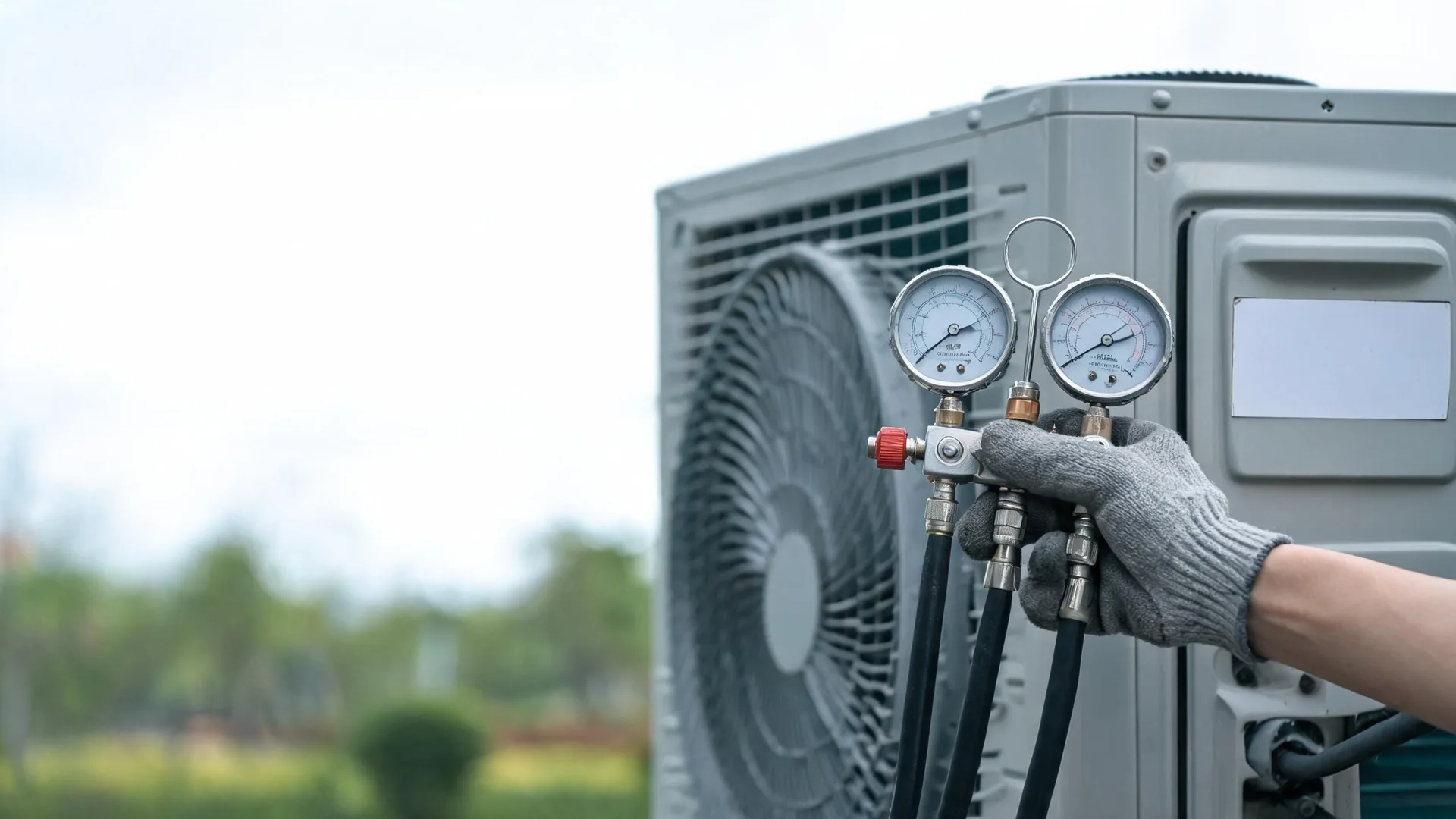
Most heat pump failures start small. A capacitor weakens and the compressor strains to start each cycle. A contactor pits until it sticks or stops making contact at all. The reversing valve that switches between heat and cool can get stuck partway, so the system blows the wrong temperature air or won't switch modes. Refrigerant leaks slowly at a fitting or coil, and the system keeps running on less charge than it needs until it's doing real damage. A defrost sensor or control board can fail, leaving the outdoor coil to ice over with nothing telling the system to clear it. Almost all of this is a single part failing on its own schedule, not the whole system giving out.

A diagnostic visit starts outside, with the unit running if it can run at all. A contractor checks refrigerant pressure, looks at the reversing valve, and watches whether the outdoor fan and compressor actually kick on when the thermostat calls for heat or cool. Inside, they check airflow at the vents and look at the indoor coil for ice or dirt. Electrical readings on the capacitor and contactor tell them whether a part is weak now or already failing. Most of this points to one part, and a tech can usually tell you what it is and what it takes to fix before they finish the visit.