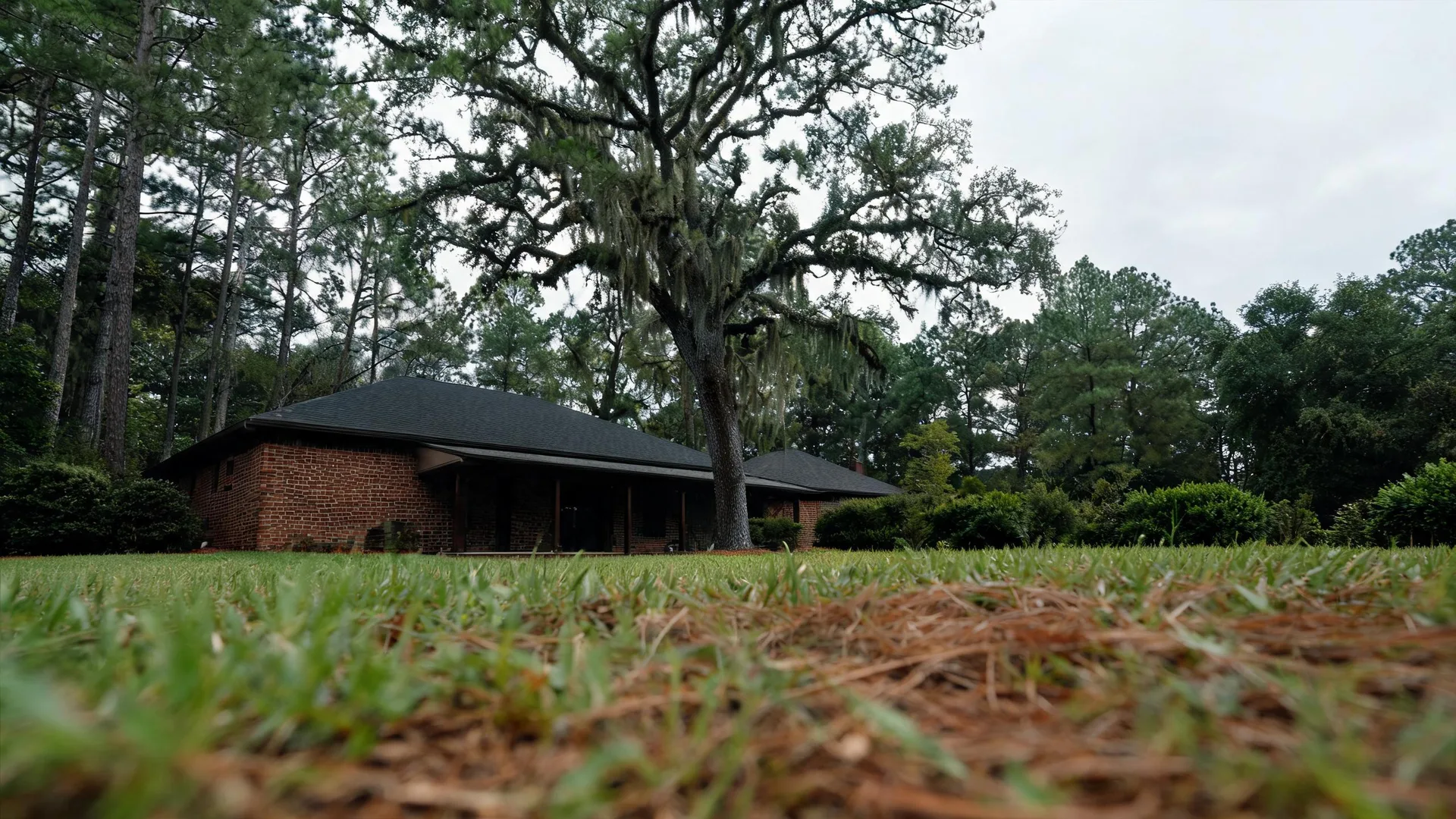
Low ground-level view across a lawn toward a single-story brick house with a dark shingled roof, framed by a large moss-draped oak and tall pine trees under an overcast sky.

Heat Pump Repair in Cherokee Village, AR

Tell us about the job

Takes about a minute. No obligation.

RepairHeat PumpSharp County, AR
Step 1 of 2

What ZIP code is the job in?

April and September are when this shows up

A heat pump in Cherokee Village switches from heat to cooling in May and back again in October. Whatever part was already weak tends to get found right as that load hits, so trouble often starts in April or September rather than mid-season.


When it started tells the contractor something

If the system is struggling right as it switches jobs, that is not bad luck, it is a weak part finally being asked to work. Telling the contractor when the trouble began helps point at the cause instead of guessing.

7 months
October through April, your system heats
5 months
May through September, it cools
29°F
the average winter night it heats against
88°F
the average summer afternoon it cools against
Isometric line illustration of a cutaway house showing interior rooms with furniture, ceiling ductwork, and an outdoor condenser unit connected by lines along the exterior wall.
Your system heats October through April and cools May through September.

NOAA nClimDiv, 1991–2020 normals

Cherokee Village gets a long warm season and a short mild winter, not the heavy swings some places see.

A heat pump here spends its year doing steady, moderate work, so a repair is more often worth doing.

Sharp County gets its share of wind, hail and storms, like most places, and none of it points at your heat pump

60 severe weather events from 2015 to 2024
24% of homes statewide lost power a day or more in 2024
28 damaging wind events from 2015 to 2024

Get it looked at early

Problems tend to show up in the first weeks of the season, when the load hits a part that was already weak.

Find a contractor
A man in a dark cap and jacket, seen from behind, climbs porch steps toward a green front door while carrying a canvas tool bag.
A dark gray heat pump unit mounted on a concrete pad next to a house with gray siding and a stone veneer wall.

What to check before you call

Before you call anyone, go outside and look at the outdoor unit. If the fan isn't spinning at all, check the breaker first. A tripped breaker or a thrown disconnect is something you can reset yourself. While you're out there, look at the coil, the metal fins around the outside of the unit. If it's caked in dirt, leaves or thick frost that doesn't go away between cycles, that's worth noting for the contractor. Inside, pull the air filter and hold it up to a light. If you can't see light through it, it's choking the system and needs changing regardless of what else is wrong. Check your thermostat batteries if it has a screen that's dim or blank. There's also a switch near the indoor unit that looks like a regular light switch. Make sure nobody bumped it off. None of this fixes a bad compressor or a low refrigerant charge, but it rules out the simple stuff before a service call.

A weak part carries the load until it can't

A heat pump doesn't fail all at once. A capacitor running weak still starts the compressor, just with more strain each time. A refrigerant leak still lets the system run, just on less charge than it needs. The machine keeps working because it's built to keep working, right up until the part it was leaning on gives out completely.

Running it longer can turn a repair into a replacement

A compressor forced to start again and again on a failing capacitor takes damage that a new capacitor can't undo. A system low on refrigerant runs colder than it should on the parts around it, which can crack a coil that was otherwise fine. The longer the bad part stays in charge of the job, the more of the system it's likely to take down with it.

Most calls start with the thermostat doing something that does not add up. It is set to heat but the air coming out feels cool, or it runs nearly nonstop and the house still will not hold temperature. Sometimes the outdoor unit is caked in frost that never melts off, even in mild weather. Sometimes it is noise, a hard clank on startup, a rattle that was not there before, or a hum where the fan should be turning and is not. Short cycling, where it kicks on and off every few minutes instead of running a full cycle, points at a different kind of trouble than a system that runs all day and barely keeps up. Any of these is worth a call. A heat pump showing one of these signs is already working harder than it should to do the same job.

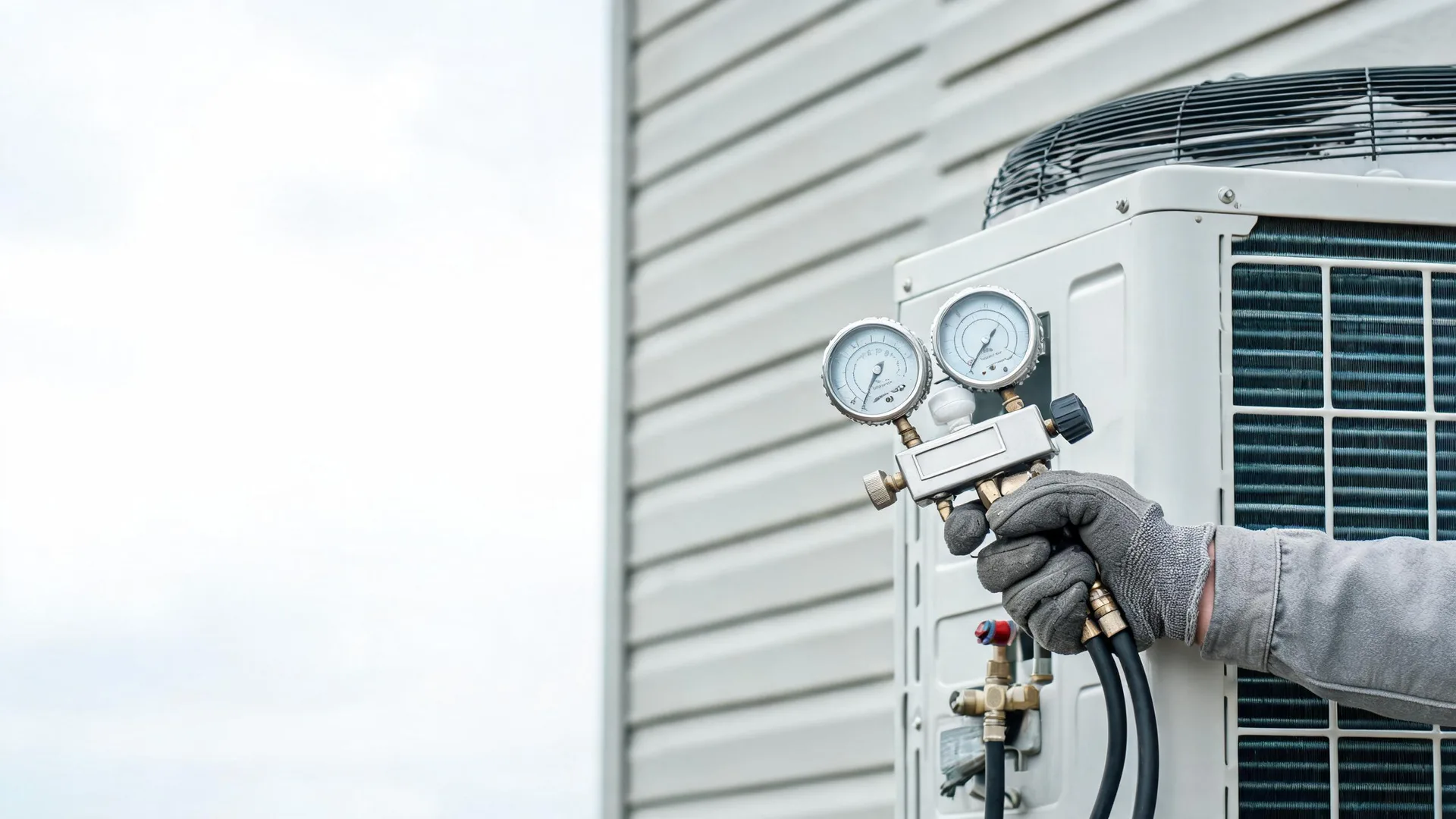
A diagnostic visit starts outside at the unit itself, not with a clipboard of guesses. The contractor checks refrigerant pressure on both sides of the system, because that number says whether the charge is right before anything else gets touched. They'll test the capacitor under load rather than just looking at it, since a capacitor can look fine and still be failing. The reversing valve gets checked too, because that's the part that decides whether you get heat or cold air, and a stuck valve explains a lot of thermostat complaints by itself. Electrical connections get checked for corrosion or looseness, especially at the contactor, since a loose connection can mimic a bad part. By the time that's done, the contractor usually knows which part is failing and why, not just that something is wrong.