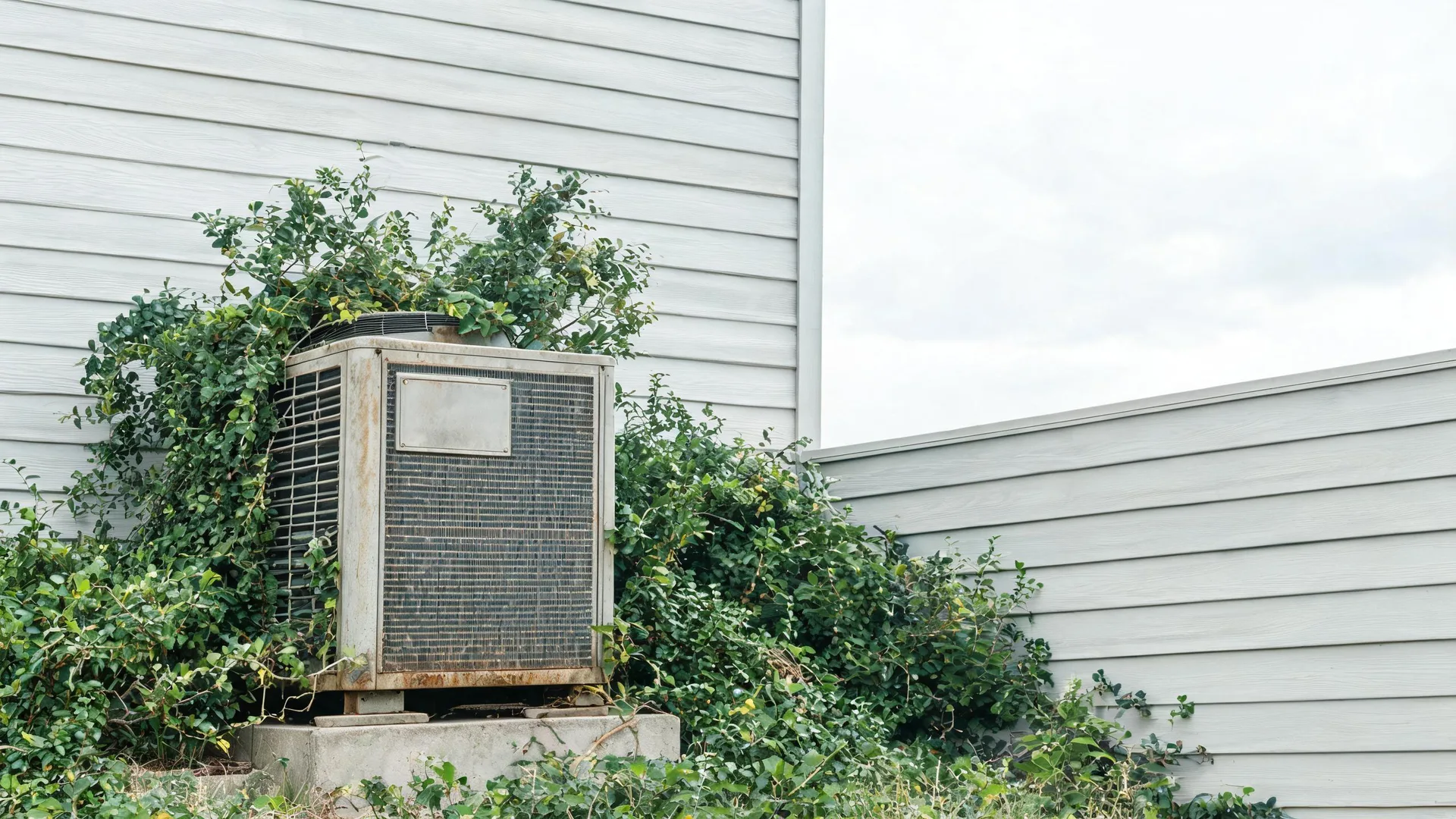
An outdoor heat pump unit mounted on a concrete pad in front of a two-story suburban house.

Heat Pump Repair in Camden, AR

Tell us about the job

Takes about a minute. No obligation.

RepairHeat PumpOuachita County, AR
Step 1 of 2

What ZIP code is the job in?

The age of your heat pump matters more than the address

Half the homes around Camden were built in 1974 or earlier, half after. A heat pump installed when an older house was built has had more years to wear a capacitor or a contactor than one in a newer system. Camden itself doesn't put unusual strain on the equipment.


The fix is usually the ordinary one

A heat pump that's not heating or cooling right is most often down to a worn part, a low charge, or a thermostat problem, the same things that go wrong with this equipment anywhere. A tech can check the common causes first before assuming something more involved.

5 months
November through March, your system heats
5 months
May through September, it cools
34°F
the average winter night it heats against
91°F
the average summer afternoon it cools against
Isometric line illustration of a cutaway single-story house showing interior rooms, ceiling ductwork connected to an indoor air handler, and refrigerant lines running to an outdoor condenser unit on a pad.
Your system heats November through March and cools May through September.

NOAA nClimDiv, 1991–2020 normals

A heat pump blowing air that's not quite warm or not quite cool usually means the reversing valve is stuck between modes.

A stuck reversing valve needs a tech's attention. It won't reset itself, and running it that way adds wear elsewhere in the system.

Camden's weather isn't why your heat pump strugglesOuachita County saw 62 severe weather events from 2015 to 2024, but that's not what wears out a heat pump.

November starts heat here, so October is worth a look if your heat pump has been sitting idle since spring. The switch from cooling to heating is where a stuck reversing valve or a weak capacitor finally shows itself, because the system is calling on parts it hasn't used in months. The same thing happens in reverse come April, before cooling starts in May. A unit can seem fine right up until that first cold morning in November, when something that was already marginal gets asked to work. Getting it checked the month before the season starts means it's already working right when you need it.

Get the usual fix

Nothing about this area is especially hard on it. It's most likely the usual problem with the usual fix.

Find a contractor
A gray heat pump outdoor unit mounted on a concrete pad next to the stone-accented exterior wall of a house.

It runs all year, so the parts that move the most wear out first

A heat pump runs every month of the year, not just in the hard freeze or the hard heat, so the parts that wear are the parts that run all the time. The contactor pulls in every time the compressor starts, and that contact surface pits and burns a little more with each cycle until it finally sticks or stops making contact. The run capacitor holds the charge that kicks the compressor and the fan motor into motion, and it loses a bit of that charge every time it fires, until the motor starts slow, hums, or doesn't start at all. The reversing valve is what switches the system between heating and cooling, and the coil that pulls it back and forth is the thing that eventually sticks halfway, leaving the system stuck between modes. None of this is damage from strain. It's the ordinary wear of a machine that's asked to work in both directions, all year, and the parts that move the most are the parts that go first.

A refrigerant leak gets worse the longer it runs

A heat pump low on charge still tries to heat or cool, and the compressor keeps working to make up for it. That extra work is what burns a compressor out. A leak that would have been a simple repair early on can turn into a compressor replacement if the system keeps running on it.

A failing part puts load on the parts next to it

A weak capacitor makes the compressor or fan motor strain to start instead of kicking on clean. A motor that struggles to start runs hotter than it should every time it does. Left alone, the motor it's starting is the next thing to fail, not just the capacitor.

A diagnostic visit starts before any panel comes off. A tech asks what the system is doing, when it started, and whether it's heating, cooling, both, or neither. Then comes a check of the thermostat settings and the air filter, because those rule out the simple causes fast. From there it's gauges on the refrigerant lines to read the charge, a meter on the capacitor to see if it's holding what it should, and a look at the contactor contacts for pitting or burn marks. If the system is stuck between heating and cooling, the reversing valve and its coil get checked next. The point of all this is to find the actual failed part before replacing anything, not to guess and swap parts until something works.