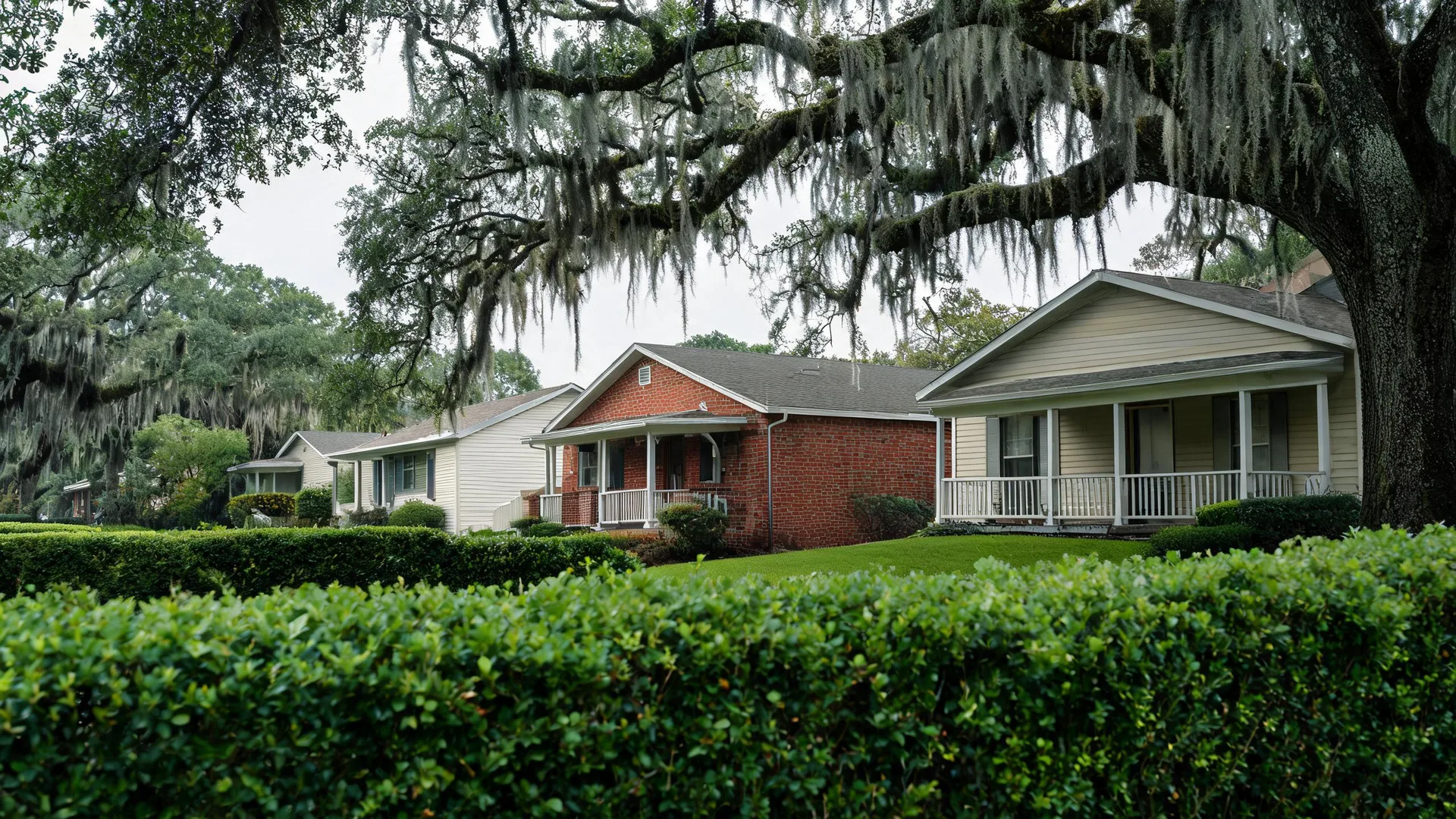





A row of single-story houses, one brick and others with light siding and covered porches, set behind a trimmed green hedge and lawn, under large oak branches draped with Spanish moss.

Heat Pump Repair in Cabot, AR

Tell us about the job

Takes about a minute. No obligation.

RepairHeat PumpLonoke County, AR
Step 1 of 2

What ZIP code is the job in?

A heat pump works year round, so it rarely fails from one single event. Usually it wears down over several seasons, and the question is how much life is left in the parts underneath the one that just quit. A failed capacitor or a bad contactor is a quick fix on a system that is otherwise sound. But if the compressor itself is failing, or the reversing valve is stuck, that's a different conversation, because those parts cost close to what the rest of the system is worth. Age matters too. A unit that's been reliable for years and just hit a rough patch is worth repairing. One that's needed a service call every season is telling you something. A technician checking refrigerant charge and electrical components can usually tell you within a visit which situation you're in.

5 months
November through March, your system heats
5 months
May through September, it cools
34°F
the average winter night it heats against
90°F
the average summer afternoon it cools against
Isometric grey-toned illustration of a cutaway house showing interior rooms, ceiling ductwork and an air handler, connected by lines to an outdoor condenser unit beside the building.
Your system heats November through March and cools May through September.

NOAA nClimDiv, 1991–2020 normals

A heat pump that won't switch between heating and cooling usually has a reversing valve stuck in one position.

The reversing valve controls which direction the refrigerant flows, so a stuck valve keeps the system doing one job no matter what the thermostat asks for.

In Cabot, a heat pump works through November's cold snap and May's first real heat, right where a weak part finally gives out

Cooling runs May through September
Heat runs November through March
54 hail events from 2015 to 2024

Half the homes in Lonoke County were built in 1997 or later, so there's a good chance yours is one of the newer ones. That matters when you're deciding what to do about a failing part. A heat pump installed with a newer house hasn't necessarily run through many years of wear, and a compressor or reversing valve problem on a younger system is more likely a one-off defect than the result of age. That's a system worth putting money into. The math looks different on a system that's been running since 1997 or earlier.

Get it looked at early

Problems tend to show up in the first weeks of the season, when the load hits a part that was already weak.

Find a contractor
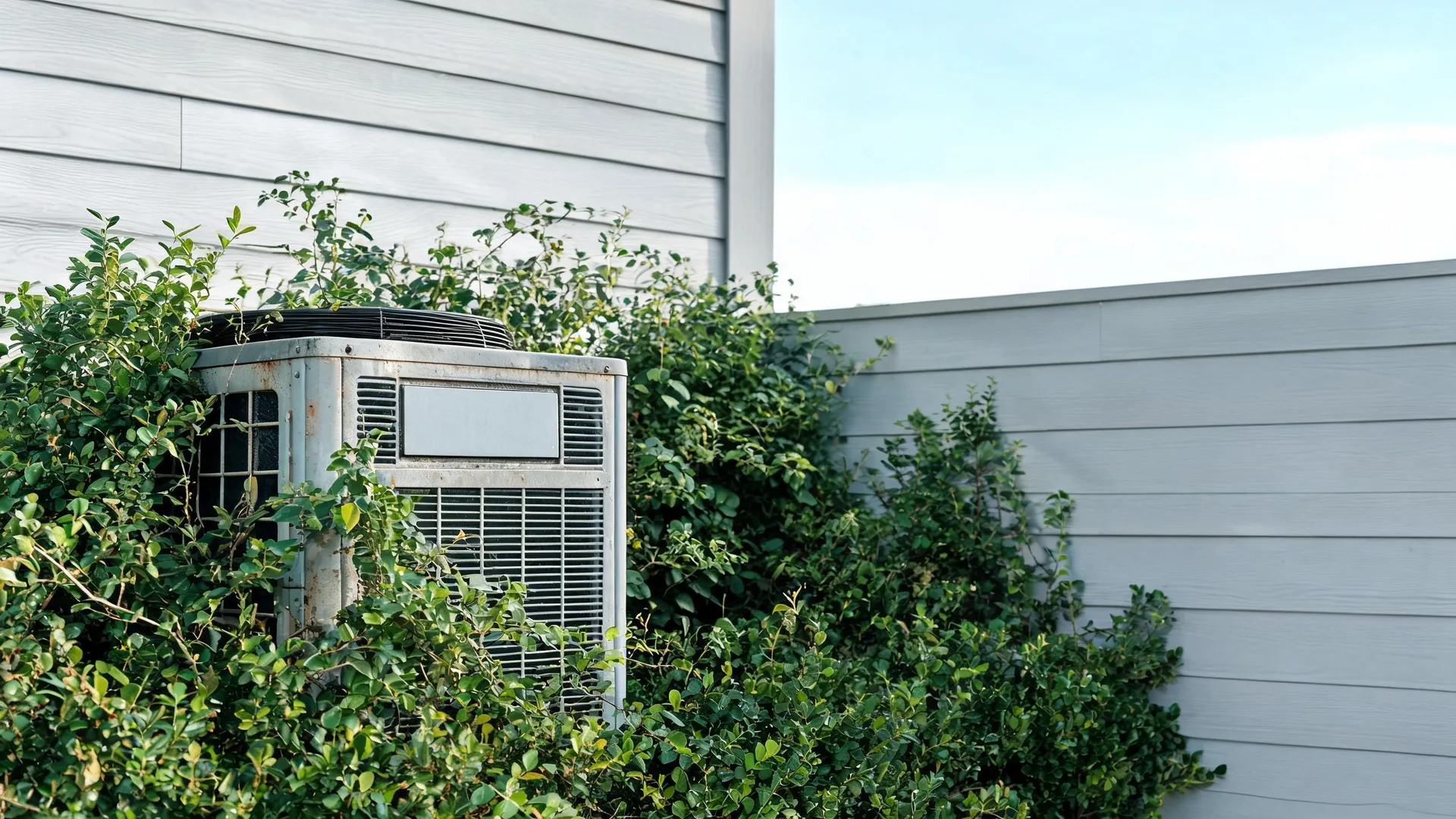
A residential heat pump outdoor unit mounted on a concrete pad next to a house with gray vinyl siding.

Get the repair number before you decide it's not worth it

If a repair tech gives you a number for fixing the reversing valve or the compressor, that's the number to act on, not a guess about how old the system might be. Ask when the heat pump was installed. If it came with the house and the house is recent, you're likely looking at a repair that's worth doing. Get the quote, and get it before the next cold snap or the first hot week puts more load on the part that's already struggling.

What you can check yourself

Look at the outdoor unit first. If the fan isn't spinning and you hear a hum, that's often a failed capacitor, not the compressor. Check your thermostat batteries and settings before anything else. Make sure the indoor filter isn't clogged. A dirty filter starves the system of airflow and can make a heat pump look like it's failing when it just can't breathe. Check your breaker panel for a tripped breaker, since a heat pump that won't start at all sometimes just needs a reset.
What to leave alone

Don't open the outdoor unit's electrical panel or touch the refrigerant lines. Heat pumps run on high voltage and a sealed refrigerant system, and handling either one without training can hurt you or turn a small problem into a bigger repair. If you see ice on the outdoor coil, don't chip at it. Turn the system to fan-only and let it thaw, since ice usually means a refrigerant or airflow problem a technician needs to diagnose.

A heat pump that's struggling keeps trying to hit the setpoint, and that means the compressor runs longer to do the same job. If it's low on refrigerant, running it longer doesn't help. The compressor just works harder against a charge that isn't there, and heat builds up in a part that was already stressed. A failing capacitor shows the same pattern. It might still start the compressor some of the time, but each hard start draws more current through a motor that isn't getting clean power, and that wears the windings faster than a clean start would. Ice on the coil is the clearest case. Left alone, it blocks airflow across the coil, the system pulls in warmer return air to compensate, and the compressor can end up pulling in liquid refrigerant instead of vapor. That's one of the faster ways to take out a compressor for good. None of these problems fix themselves by running more. They just move the strain from a small part to the one part in the system that's hardest to replace.

A diagnostic visit starts outside, at the unit itself. A technician checks the capacitor and contactor first, since those fail often and are quick to test. From there it's gauges on the refrigerant lines, checking the charge against what the system is supposed to hold. Electrical readings come next, pulling the amp draw on the compressor to see if it's working harder than it should. If the system has been short cycling or icing up, the technician will also look at airflow, since a weak charge and a blocked coil can look a lot alike. By the end of the visit you should know which part is at fault and whether it's worth repairing on this system.