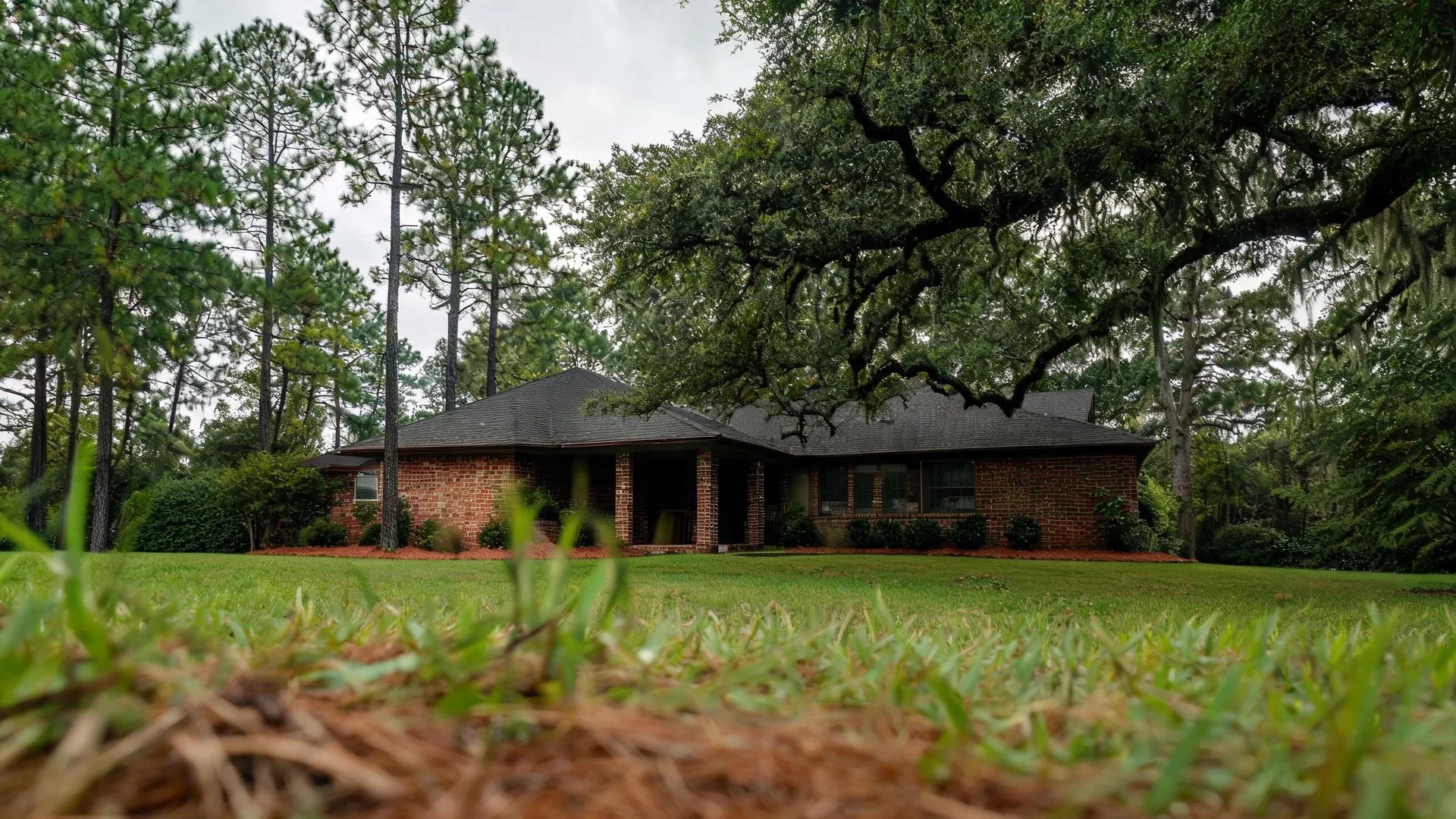



A single-story brick house with a dark shingled roof set behind a lawn, framed by pine trees and a large spreading oak, photographed from a low angle with blurred grass in the foreground.

Heat Pump Repair in Booneville, AR

Tell us about the job

Takes about a minute. No obligation.

RepairHeat PumpLogan County, AR
Step 1 of 2

What ZIP code is the job in?

May is when cooling starts here, and that first stretch of hot days is when a weak heat pump shows its problems. A capacitor or contactor that barely made it through last September can give out once the system has to run for hours at a stretch. October starts the heating months, and a heat pump that struggled to cool in the summer often struggles to switch over and heat too, since it is the same system doing both jobs. If yours is blowing warm air, short cycling, or not keeping up, the cause is usually one weak part rather than the whole unit. Getting it looked at before the season settles in means less strain on the parts that are already working harder than they should.

7 months
October through April, your system heats
5 months
May through September, it cools
31°F
the average winter night it heats against
90°F
the average summer afternoon it cools against
Isometric grayscale illustration of a cutaway two-story house showing interior ductwork, an indoor air handler unit, and an outdoor condenser unit on a pad beside the building.
Your system heats October through April and cools May through September.

NOAA nClimDiv, 1991–2020 normals

A heat pump that runs nonstop without hitting the set temperature has lost capacity somewhere, often the charge or a failing compressor.

Catching that early is a repair. Letting it run that way for weeks can mean the compressor doesn't make it.

Nothing unusual here, just the usual wear on a heat pumpLogan County saw 55 damaging wind events between 2015 and 2024, about average for the region.

Half the homes in Logan County were built in 1979 or later, so a lot of the heat pumps in them are newer systems, not machines limping past their expected life. If yours came with a newer house, a breakdown is more likely a bad capacitor or a stuck reversing valve than a sign the whole unit is done. Those parts fail on their own schedule, regardless of how new the system is around them. Worth finding out which one it is before anyone talks about replacing the unit.

Get it looked at early

Problems tend to show up in the first weeks of the season, when the load hits a part that was already weak.

Find a contractor
A dark gray heat pump unit mounted on a concrete pad next to a house with gray siding and a stone veneer wall.

Running both directions wears different parts

A heat pump works harder than a straight air conditioner because it runs in both directions instead of sitting idle part of the year. That extra duty falls on a few parts more than others. The reversing valve is the one unique to this system, and it can stick from sitting in one position too long between seasons. The compressor logs more run hours than it would in a cooling-only system, so normal wear catches up with it sooner. Capacitors weaken gradually, not all at once, so the system can run fine on a mild day and fail the moment it has to work harder. Outdoor coils take a beating too, since they sit outside through every season instead of just the hot months. None of this means a unit is near the end. It means the parts doing the most work are the ones most likely to be the problem.

What you can check safely

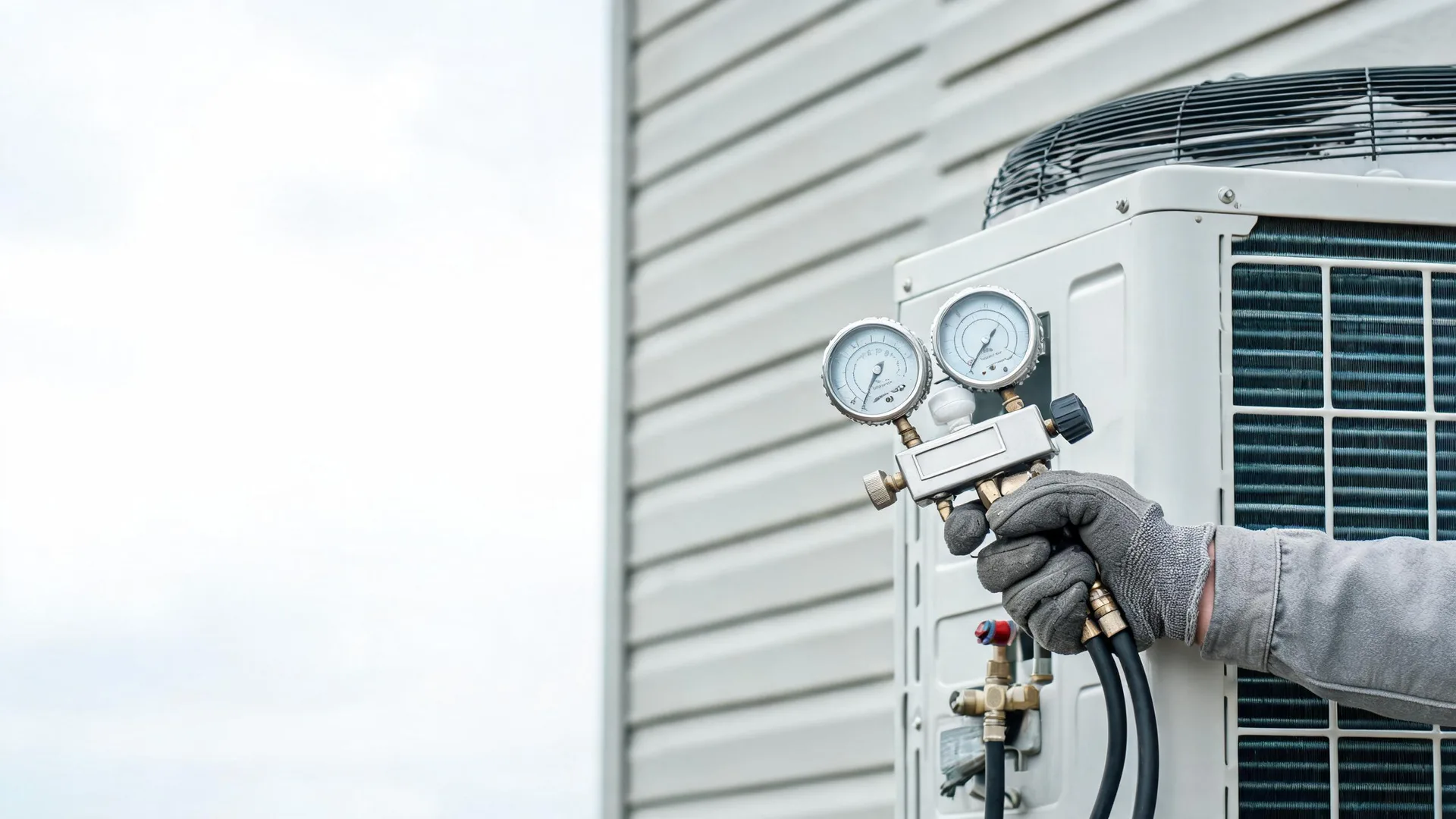
Look at the outdoor unit and see if the fan is turning and if the coil is covered in leaves, grass clippings or ice. Check the thermostat is set to heat or cool as needed and that the batteries aren't dead. Go to the breaker panel and see if the breaker for the heat pump has tripped. Check the air filter and swap it if it is gray or clogged. These take a few minutes and none of them require opening the unit or touching any wiring.
What to leave alone

If the outdoor coil is iced over, do not chip at it or spray it with water. Turn the system to off and let it sit so the ice melts on its own, or switch to fan only if the thermostat allows it. Do not pull the access panel on the outdoor unit or touch anything inside the cabinet. A heat pump holds refrigerant under pressure and carries electrical components that stay live even when the thermostat is off.

A heat pump that's struggling doesn't fail cleanly. It fails by making the parts around the problem work harder to cover for it. A low charge makes the compressor run longer trying to reach the set temperature, and that extra run time is what burns a compressor out. A failing capacitor makes the motor it feeds draw more current trying to start, and that heat is what takes the motor out next. A reversing valve that's stuck partway forces the system to fight itself, heating and cooling at once, and that strain doesn't stay with the valve. It spreads to whatever is working hardest to compensate. None of these start as big problems. They get big because the system kept running while something small did damage a shutdown would have stopped.

A repair makes sense when the failure is one part acting alone, a capacitor, a contactor, a reversing valve stuck in one spot. Swap the part and the system goes back to doing what it was built to do. Replacement starts to make more sense when the compressor itself is the problem, since that part does most of the work in the system and costs the most to deal with on its own. Age matters less than people think. An older unit with a bad capacitor is still just a repair. A unit of any age with a failed compressor is a harder conversation, because now you're weighing a major repair against how much life is left in everything else. The honest way to think about it is which part failed, not how old the unit is.