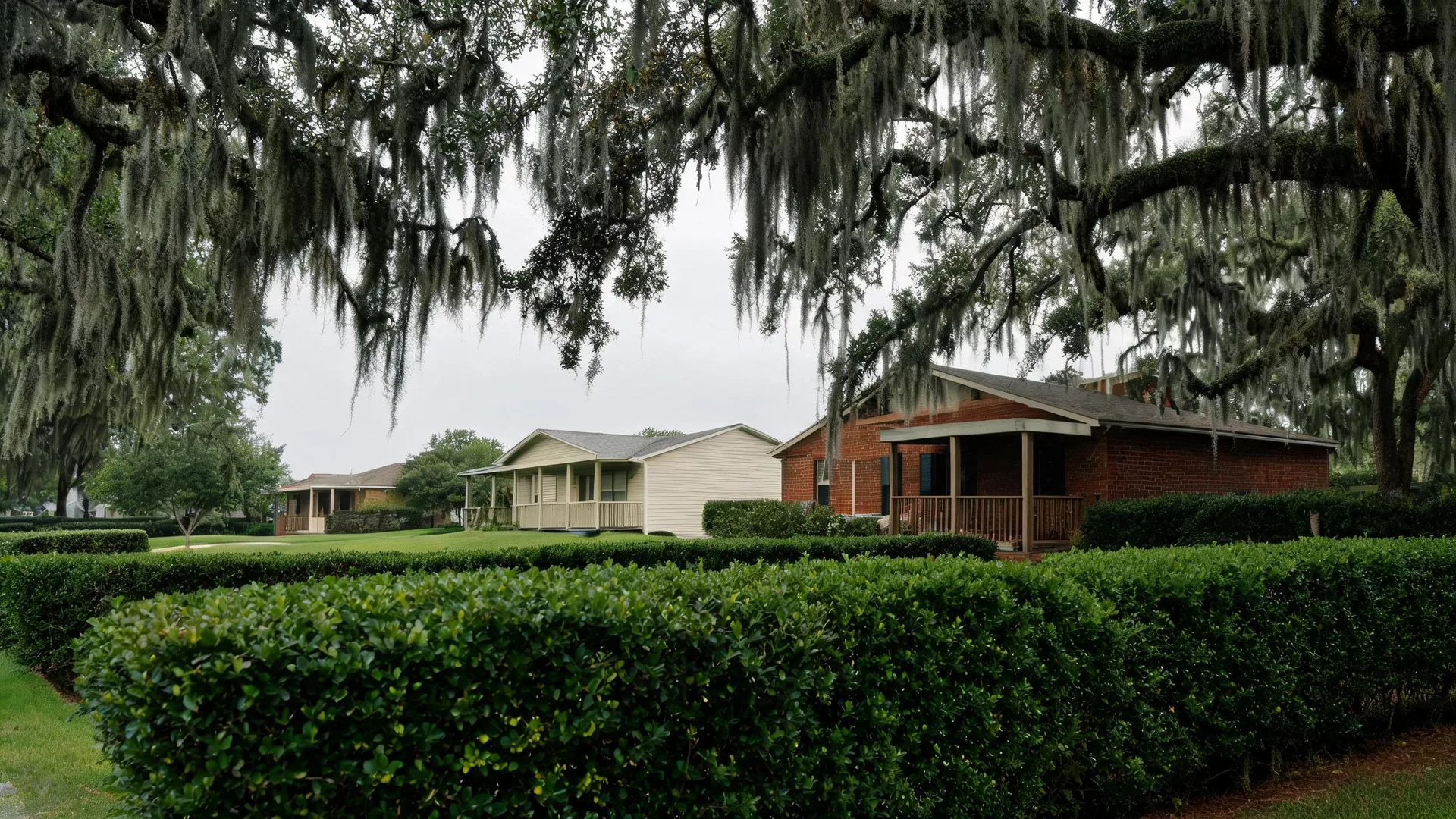
Single-story brick and white-sided houses behind a trimmed hedge and lawn, framed by overhanging oak branches draped with Spanish moss under an overcast sky.

Heat Pump Repair in Berryville, AR

Tell us about the job

Takes about a minute. No obligation.

RepairHeat PumpCarroll County, AR
Step 1 of 2

What ZIP code is the job in?

A mixed climate, not a brutal one

Carroll County sits in zone 4A, which asks a heat pump to work both sides of the year, heating and cooling. Winter nights average 28°F. That is cold enough for the system to earn its keep, but nowhere near the extremes that wear a compressor down fast.


What that means for a repair call

A heat pump that has not been run into the ground by brutal heat or deep cold is usually a heat pump worth fixing. If yours is acting up, the problem is more likely a part that failed or a system that got skipped on maintenance than one that was simply asked to do too much for too long.

7 months
October through April, your system heats
4 months
June through September, it cools
28°F
the average winter night it heats against
87°F
the average summer afternoon it cools against
Isometric cutaway illustration of a small house showing interior rooms with furniture, an indoor air handler with flexible ducting, and refrigerant lines running to an outdoor condenser unit beside the building.
Your system heats October through April and cools June through September.

NOAA nClimDiv, 1991–2020 normals

Half the homes in Carroll County were built in 1989 or later.

A heat pump that came with a newer house still has years of work left in it, so a repair call makes sense before anyone talks about replacing it.

September and May are when a weak heat pump gets found out

Cooling runs June through September
Heat runs October through April
33 hail events from 2015 to 2024

Carroll County gets its share of rough weather, 82 severe events recorded over the past ten years. Most of that is wind and hail, the kind that might dent a cabinet or bend a fin rather than break what is inside the unit. A run of winter storms shows up in that stretch too, but nothing like the sustained cold that wears a compressor down over years. None of it points to a heat pump that was pushed past what it was built for. If yours is acting up, look at what failed before you blame the weather outside.

Get the heat pump looked at, not replaced

Nothing about this climate points to a system worn out before its time. If yours is acting up, a repair call is the right next step.

Find a contractor
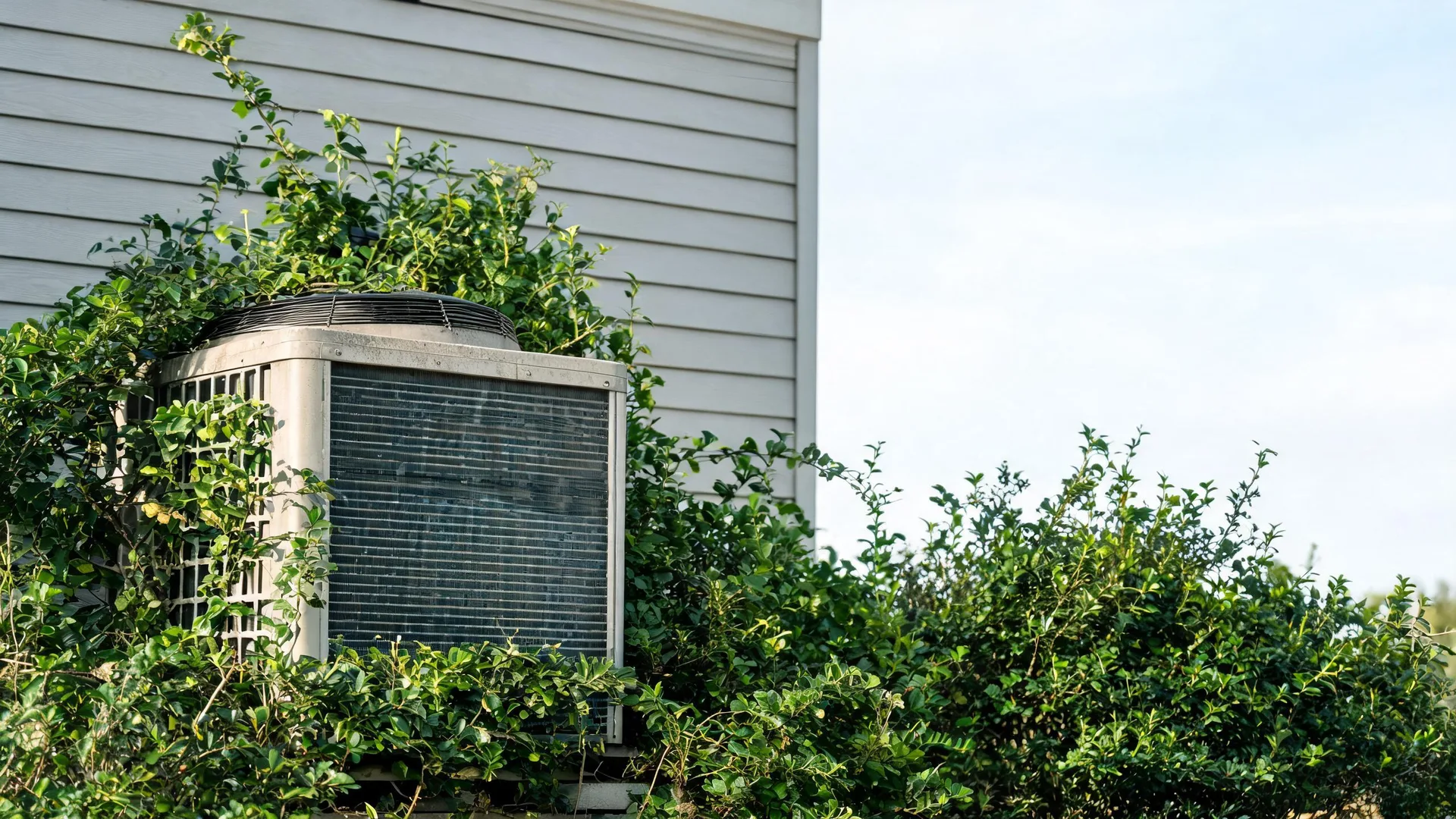
A gray heat pump outdoor unit mounted on a concrete pad next to the stone-accented exterior wall of a house.

Check the age before you assume the worst

A system installed when the house was built has had a known, short run on the clock. If your heat pump came with the house and the house is newer, that rules out a lot. Age out a worn compressor and you are usually left with the common fixes. A stuck reversing valve. A bad capacitor. Low refrigerant from a slow leak. Ask whoever comes out how old the unit actually is before any talk turns to replacing it.

What you can check yourself

Look at the outdoor unit first. If snow or leaves are packed around it, the coil cannot pull in air and the system will struggle no matter what else is right. Check the thermostat is set to heat or cool as needed and the batteries are not dead. Go to the air handler or furnace closet and pull the filter. A filter clogged with dust chokes the airflow the whole system depends on, and that alone causes a lot of the calls that sound like something worse.

What those checks tell you

A clear outdoor unit and a clean filter that do not fix the problem point to something inside the system itself, a part that failed rather than something you can clear away. That is worth knowing before anyone comes out, because it tells you this is a repair call, not something to clear with a broom. If the system runs constantly without reaching the set temperature, or blows air that is not warm in heating mode, say so when you call. That detail alone points a technician toward the right part before they even open the cabinet.

A heat pump in trouble usually tells on itself before it quits outright. It runs and runs without the house ever getting to temperature. It blows air that feels cool when it should be warm, or warm when it should be cool. Outside, the unit might ice over even when it is not that cold out, or you hear it short cycling, kicking on and off every few minutes instead of running a steady stretch. Listen for a hard clunk when it switches between heating and cooling, that is often the reversing valve. A hiss or bubbling sound near the lines can mean refrigerant escaping from a leak. Any of these is worth a call. None of them get better by waiting.

A diagnostic call starts outside, at the unit itself, before any panel comes off. A tech will check that the coil is clear and air is moving across it, then check airflow on the indoor side, since a starved system can mimic all sorts of other problems. From there it is gauges on the lines to read refrigerant pressures, a meter on the capacitor and contactor to see if they are holding up, and a check of the reversing valve to see that it actually shifts when it is told to. Temperature readings at the supply and return tell whether the system is doing the job it claims to be doing. Most of this gets answered without guesswork, since each reading either falls where it should or it does not. By the end you should have a named part and a straight answer on what it takes to fix it, not a guess dressed up as one.