Aerial view of a square outdoor air conditioning condenser unit on a concrete pad beside a house wall with a sliding glass door.

AC Maintenance in Texarkana, AR

Tell us about the job

Takes about a minute. No obligation.

Tune-up, service, or cleaningCentral ACMiller County, AR
Step 1 of 2

What ZIP code is the job in?

Five months of real heat

AC units in Miller County run May through September, and the afternoon high averages 92°F across June, July and August. Your system is not cycling on and off on a mild day. It is running long stretches against real heat, day after day, for months.

Worn parts turn up fast

A long, hot season like this wears on a capacitor or a contactor faster than a short, mild one would. Once the heat sets in, a part that was already weak does not get a break to hide behind. It shows up as a system that is not cooling right or not running at all.

5 months
May through September, your air conditioner is on duty
92°F
the average summer afternoon it cools against
22 hail events
in ten years, and hail bends the fins on outdoor coils
57 wind events
in ten years, and wind drives debris into outdoor units
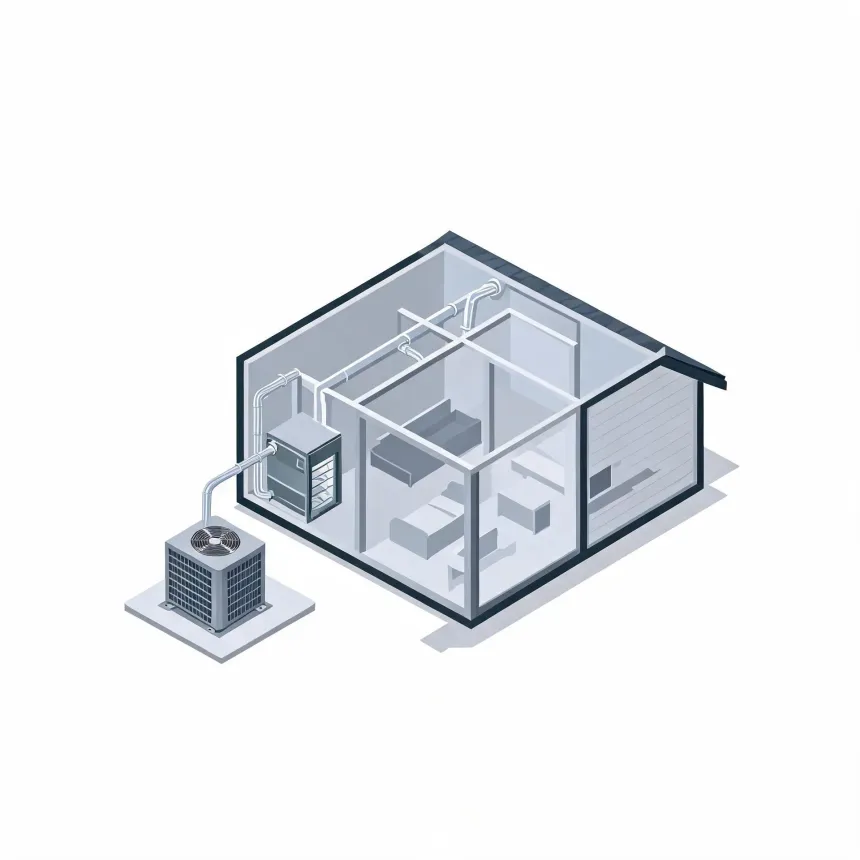
Isometric grayscale illustration of a cutaway house showing interior rooms, ductwork, an indoor air handler, and an outdoor condenser unit on a pad connected by lines.
Your air conditioner works hardest from June through September.

NOAA nClimDiv, 1991–2020 normals

Half the homes in Miller County were built in 1983 or later.

A system that age still has years ahead of it, and a yearly check is what keeps it running right through them.

Texarkana gets hit by weather most places do not see this often

91 severe weather events from 2015 to 2024
24% of homes statewide lost power a day or more in 2024
57 damaging wind events from 2015 to 2024
May starts it off hardAC runs May through September here. April is when a check still finds a weak part before the heat does.

One visit a year covers it. Not a spring check and another in fall, just one before the heat sets in. A technician checks the refrigerant charge, tests the capacitor, and clears the condenser coil of whatever has built up around it. Arkansas homes paid 12.32 cents per kilowatthour in 2024, and a system running clean uses less of that than one working around a weak part. Skip the visit and the part that was already failing picks its own time to quit, usually the afternoon it is working hardest.

Get it checked before the season asks more of it

A capacitor or contactor that is already weak does not get a break once the heat sets in. Get it checked before the May through September stretch starts asking more of it.

Find a contractor
A gray residential air conditioner condenser unit mounted on a concrete pad in an open grass field.

Between visits, the filter does the work

Between visits, the filter is the one thing worth checking yourself. Pull it out, hold it up to a light. If you can't see light through it, it's choking the airflow the coil needs, and no amount of refrigerant or capacitor strength makes up for that. Outside, keep the area around the condenser clear. Grass clippings, leaves, a fence line grown in too close, anything that blocks air from moving through the coil makes the whole system work harder to move the same amount of heat. A hose can rinse dirt off the fins if you can see it caked on, but that's the limit of it. Inside the house, listen for anything new. A rattle, a squeal on startup, a smell when it first kicks on. Those are the system telling you something before it tells you by quitting. Past that, leave the panel on. Checking refrigerant charge and testing a capacitor's output takes meters and gauges, and opening the cabinet yourself risks more than it finds.

The filter decides what the coil has to deal with

A dirty filter chokes airflow, and the evaporator coil cools whatever air gets past it. With less air moving, that coil can drop below freezing and ice over. Once ice builds on the coil, the system cools less and less until someone catches it and shuts it off to thaw.

A clogged drain backs up into the house

The condensate drain carries off the water the coil pulls out of the air, and that line grows algae over time like any damp pipe does. When it clogs, the water has nowhere to go but back up the pan it drains from. A float switch will shut the system down before it overflows, or if there is no switch, the water finds the ceiling below it instead.

Overhead view of a gray residential air conditioning condenser unit mounted on a concrete pad beside a house with asphalt shingle roofing.

Book your AC tune-up in April, before homes here start needing cooling in May.

  1. Jan
  2. Feb
  3. Mar
  4. Apr
  5. May
  6. Jun
  7. Jul
  8. Aug
  9. Sep
  10. Oct
  11. Nov
  12. Dec

A tune-up checks the refrigerant charge, cleans the coils, tests the capacitor and tightens the electrical connections.

A tune-up starts outside, at the condenser. The technician cuts power, pulls the panel, and checks the capacitor's output against what it is rated for. A capacitor that reads low will run the compressor and fan harder than they should have to work, and it only gets worse from there. From there it is the contactor, checked for pitting on the contacts, and the refrigerant charge, checked against what the system calls for since too little or too much both leave the house warmer than it should be. Inside, the evaporator coil gets inspected for dirt and the blower gets checked for the amp draw it should be pulling. Last is the condensate line, flushed clear so it keeps draining the way it is supposed to. None of this is guesswork. Every check has a number on the part itself that the reading either matches or does not.