AC making a loud noise in Fort Smith, AR

RepairCentral ACSebastian County, AR
Step 1 of 2

What ZIP code is the job in?

Why is my AC making a loud noise?

A loud noise from your AC usually means something is loose, worn, or hitting a part it shouldn't. In Fort Smith, where the system runs hard for months once summer sets in, that kind of strain shows up sooner than most homeowners expect. The sound itself is a clue, and which one you're hearing points to a different problem.

The noise points to a specific part, not the whole system

A grinding or screeching sound usually means a motor bearing is wearing out. A rattle is often a loose panel or a bolt that's worked free from the vibration of daily use. Banging can mean a part has broken loose inside the compressor. A hissing points to refrigerant escaping from a line. Each of these gets worse the longer the unit keeps running, since the part causing it is already failing and the strain of a Fort Smith summer won't let it rest. A system that runs from April through October doesn't get much downtime to recover between cycles, so a small issue at the start of the season can turn into a bigger repair by August if it's left alone.

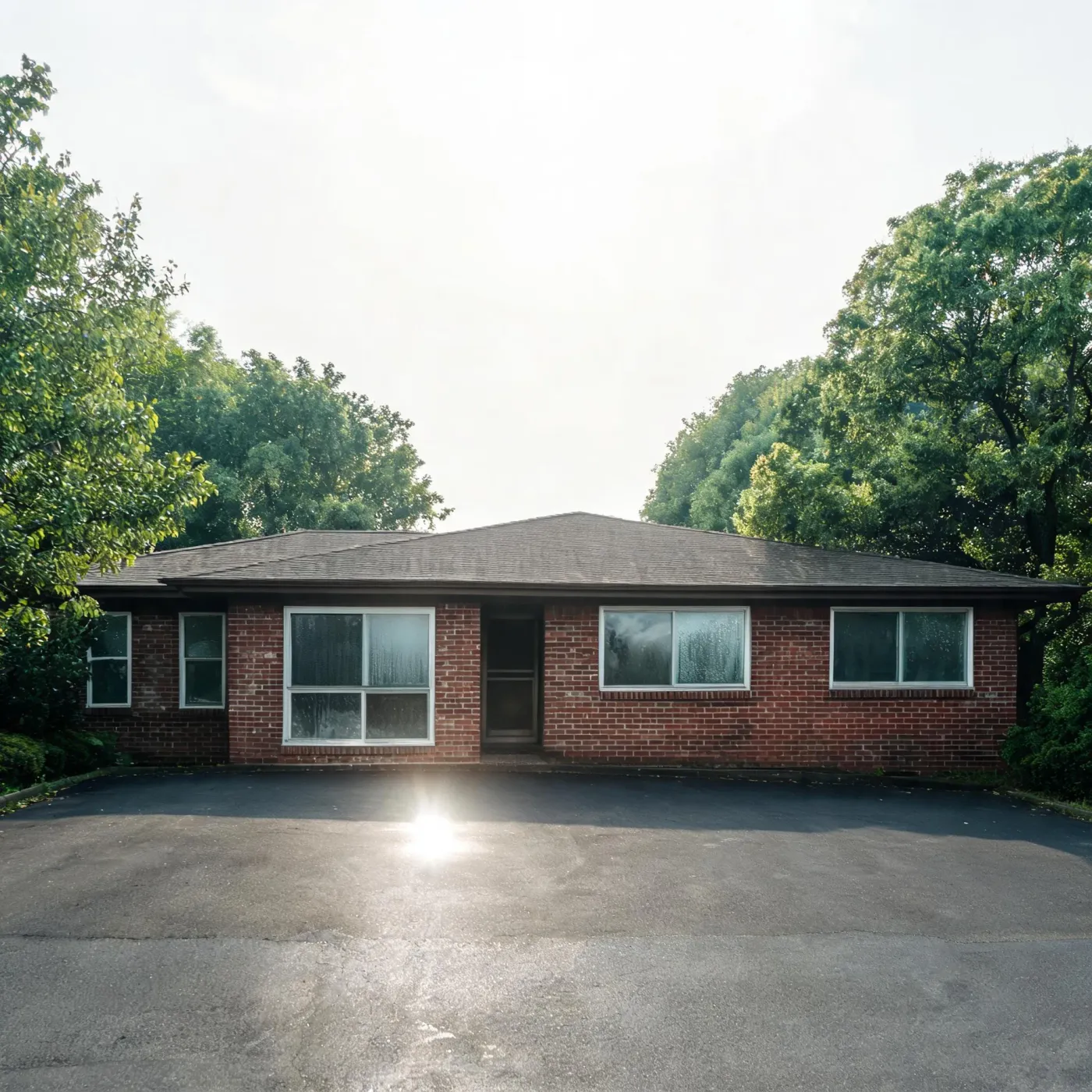
A single-story red brick building with a shingled hip roof, large windows and a recessed central entry, fronted by a wide empty asphalt parking area with sun glare, surrounded by green deciduous trees.

Summer air here holds a lot of moisture. Sebastian County averages a dew point of 67°F across June, July and August, according to NOAA climate records, and that thickness in the air means your AC isn't just cooling, it's wringing water out of the air at the same time. That's extra work on the compressor and the blower, run after run, for months. A noise that started as a faint rattle under light use can turn into a grinding or banging sound once the system is leaning on itself this hard. Loose parts work looser faster. A fan blade with a little wobble hits something sooner. If the noise showed up with the heat, the humidity is likely part of why.

NASA POWER T2MDEW

Ignore It or Get It Checked

Loud but harmless

  • A rattle that only shows up at high fan speed often means a loose screw on the vent hood or a panel that needs tightening, not a failing part.
  • A clicking sound right when the compressor starts or stops is usually just the contactor engaging, something that happens on every cycle.
  • A whistle near a vent can mean a closed register or a blocked return somewhere in the house, not a problem with the unit itself.
  • A hum that fades after a few seconds is often the capacitor doing its job to get the compressor moving.
  • If the noise comes and goes with no change in how the air feels, the system is probably still cooling the way it should.

Loud and worth a call

  • A grinding or screeching sound points to a motor bearing wearing out, and that part doesn't fix itself.
  • Banging from the outdoor unit can mean a part has come loose inside and is hitting the fan blade with every rotation.
  • A high-pitched squeal that doesn't let up usually means a belt or bearing issue, and running it longer can turn a repair into a bigger one.
  • If the noise shows up alongside warm air or the outdoor unit not running at all, something inside has likely failed.
  • A buzzing that gets louder over days instead of staying steady is a sign a part is working loose, not settling in.
  • Fort Smith summers push the system for months straight, so a noise that starts small in June has time to turn into a real failure by August.
An outdoor air conditioner condenser unit on a concrete pad beside a house wall, with a gray electrical disconnect box and conduit above it and grass in the foreground.

What a grinding noise means

A grinding sound usually points to the outdoor unit's fan motor bearings wearing out. Once those bearings go, the blade can wobble and strike the fan shroud with every turn. Left running, it can bend the blade or burn out the motor. Shut the system off at the thermostat or the outside disconnect until it's looked at, since running a motor with failed bearings tends to turn a motor repair into a full condenser job.

A gray outdoor air conditioner condenser unit on a concrete pad beside a house with horizontal lap siding, surrounded by white gravel and a lawn, with a white wall at left.

Why squealing often means the belt

A high-pitched squeal on startup often comes from a slipping fan belt or a motor mount that's worked loose, since the blade has to push against humid summer air that's heavier and harder to move than dry air. Older systems with belt-driven blowers are more prone to this than newer direct-drive units. Either way, a belt stretches and glazes over time, and a loose motor mount lets the whole assembly shift, so neither one fixes itself as the weather cools.

A woman stands in the open front doorway of a single-story house with stone and wood siding while a man in a dark polo shirt and cap walks toward it along a concrete path.

What a loud AC puts at risk in your house

A noise you put off checking doesn't stay a noise. A loose blade that wobbles against the shroud one week can bend enough to throw the fan off balance the next, and a motor working against that strain burns hot until it quits. If that happens on a July afternoon, you're not looking at a quiet fix, you're looking at a house with no cooling until someone gets out to you.

Every AC in Sebastian County earns its keep from April through October, and a system that's already straining under that load doesn't have much room to absorb a bad bearing or a failing capacitor. A local contractor who works on these units all summer knows which noise means stop the system now and which one can wait a few days. Getting matched with one who takes your call directly, instead of a dispatcher sorting through a queue, means someone who actually services your equipment is the one deciding what it needs.

A large weathered ceramic vase and a shallow wooden bowl sit on a rustic wooden table beside a window with linen curtains, with a blurred sofa with cushions and a hanging fabric panel in the background.
  1. A screw, blade, or motor mount works loose inside the unit

  2. That loose part starts striking metal with every rotation

  3. The strike repeats hundreds of times a minute as the fan turns

  4. Left alone, the impact bends the part or burns out the motor

A woman in a cream cowl-neck sweater sits by a window with snow outside, in a dimly lit living room with a sofa, lit lamp, mirror, candles and a fireplace.
A woman in a gray turtleneck sweater sits beside a large window looking out at snow-covered evergreen trees, in a dimly lit living room with a lit fireplace, lamps, couch and houseplant.
A woman in a cream turtleneck sweater stands beside a large window with snow-covered ground and bare trees outside, in a dimly lit living room with lamps, a sofa and framed art.
A woman in a grey cowl-neck sweater stands indoors near a window, looking out at falling snow, with a lamp, framed picture and couch in the warmly lit room behind her.
A gray outdoor air conditioner condenser unit on a concrete pad beside a house with horizontal siding and a stucco foundation, with a disconnect box and conduit on the wall, decorative gravel, mulch, and a shrub nearby.

Running clean

A condenser that sounds right usually looks right too. The cabinet sits level on the pad, the coil grilles are clear, and air moves through without catching on anything loose. Nothing rattles because nothing inside is loose, cracked, or coated in enough grime to throw a fan blade off balance.

An outdoor air conditioning condenser unit on a concrete pad beside a house with horizontal lap siding, with an electrical disconnect box and conduit on the wall, mulch and a green shrub to the right, and a concrete walkway in the foreground.

Running dirty

Dirt packed into the coil grilles forces the fan to work against restricted airflow, and that strain is often where a new rattle or hum starts. Debris built up around the unit can also work into the cabinet, and once something is loose near a moving blade, the noise usually isn't going away on its own.

An outdoor air conditioner condenser unit on a concrete pad beside a house with light horizontal vinyl siding, surrounded by bare dirt, gravel and dry leaves, with refrigerant lines and conduit running along the wall.
Before you get your air conditioner repair
A gray outdoor air conditioner condenser unit on a concrete pad beside a house with horizontal lap siding, with a flowering shrub at left and a disconnect box with conduit on the wall at right.
After you get your air conditioner repair

The right pro for this job

A noise that started this week isn't going to fix itself by August. Fort Smith summers put real hours on a condenser, and a loose blade or a worn bearing gets worse with every one of them, not better. Waiting usually means the same repair costs more once something bends or burns out from the strain. What you need is someone who can look at your specific unit, hear what it's doing, and tell you whether it's a tightened screw or a motor on its way out. A contractor who works on AC units around Sebastian County every summer has heard this exact noise before and knows what it usually turns out to be in a system like yours. Getting matched with one means your situation goes to a local contractor who handles this kind of repair regularly, not into a queue where several companies are calling you back about the same problem. The sooner that call happens, the fewer of those running hours stack up against a part that's already failing.

Call now versus wait it out

Calling now means a contractor who works on Fort Smith systems every summer can take a look before the noise turns into a breakdown. Most loose parts and worn bearings are a straightforward fix when they're caught early, before the strain spreads to the motor or the compressor. You get matched with one licensed local contractor, not a handful of companies competing for your callback, and they already know what tends to fail on units that run as hard as yours does through a Sebastian County summer. Waiting a few days to see if the noise goes away rarely costs you anything beyond the wait itself.

What waiting usually costs you

A noise that's left alone doesn't stay the same noise. A loose blade striking the shroud wears the strike point wider with every rotation, and a motor already working against that vibration runs hotter than it should. Arkansas summers give that process months to work, not days, since the unit may run from April into October. By the time the system struggles to keep up or shuts off on its own, the part that would have been a simple tighten or replacement has usually taken something else down with it, and that's a bigger repair than the one you'd have had in week one.

Cooling runs May through September

From May through September your AC is what keeps the house livable, running most days of the week for five straight months. A noise that shows up in May has four more months to get worse, and a part rattling loose in July won't quiet down on its own before September.

NOAA nClimDiv 1991-2020

A dimly lit living room with a black pedestal fan on a wood floor beside a gray sofa with a patterned pillow, a wooden coffee table in the foreground, potted plants at left, and a curtained window with blinds behind.

It's a little after two in the afternoon and the blinds are shut against the sun, the kind of July glare that turns the yard white if you look at it too long. The floor fan next to the couch is running on high, pushing air around because the house hasn't caught up yet. You hear it under the fan's hum, a knock from outside that doesn't match the usual rhythm of the condenser, once every turn of the blade. You mute the TV to listen for it again. It comes back the same, steady, right on time with the fan spinning somewhere behind the wall. The dog lifts its head at it too. You sit back down but you're listening now, not watching.


A loud AC in Fort Smith almost always comes down to something loose, worn, or striking a part it shouldn't, and most of those things get worse the longer the unit keeps running. Catching it early, while it's still a rattle or a click, is usually the difference between a quick fix and a burned-out motor. A contractor who works on Sebastian County systems all summer has heard this noise before and knows what tends to fail first in a unit that's been running hard since May. You'll be matched with one contractor, local to this area, not a handful of companies competing for your callback. That means one person looking at your unit who already knows what a grinding fan or a banging compressor usually means here, not a stranger guessing. The noise your AC is making right now is telling you something specific. The next step is getting someone who knows this equipment to listen to it before it tells you something worse.

A gray standing-seam metal roof with two stone chimneys in the foreground, framed by pine branches and moss-draped trees, overlooking misty forested hills and distant mountains under an overcast sky.

Matched to your air conditioner job

Get a licensed local pro

No charge to send it. You decide if you hire them.

A condenser that's left to grind or rattle through a Fort Smith summer is running hours it can't afford to run badly. Getting a local contractor to look at it while the noise is still just a noise, not a breakdown, is the easier fix and the cheaper one.