





Aerial view of a residential air conditioning condenser unit mounted on a concrete pad next to a house with vinyl siding and a sliding glass door.

AC Maintenance in Searcy, AR

Tell us about the job

Takes about a minute. No obligation.

Tune-up, service, or cleaningCentral ACWhite County, AR
Step 1 of 2

What ZIP code is the job in?

May through September, your AC in Searcy runs close to every day, and afternoons in June, July and August average 90°F. That is five straight months of long cycles with barely a break between them. A capacitor or a contactor that would last longer somewhere milder gets pushed hard here from the first warm week on. White County has also seen 39 hail events in recent years, and a dented condenser cabinet or bent coil fins can slow a system down well before it quits outright. Put those together and small wear shows up early, often right as the heat sets in for the summer.

5 months
May through September, your air conditioner is on duty
90°F
the average summer afternoon it cools against
39 hail events
in ten years, and hail bends the fins on outdoor coils
52 wind events
in ten years, and wind drives debris into outdoor units
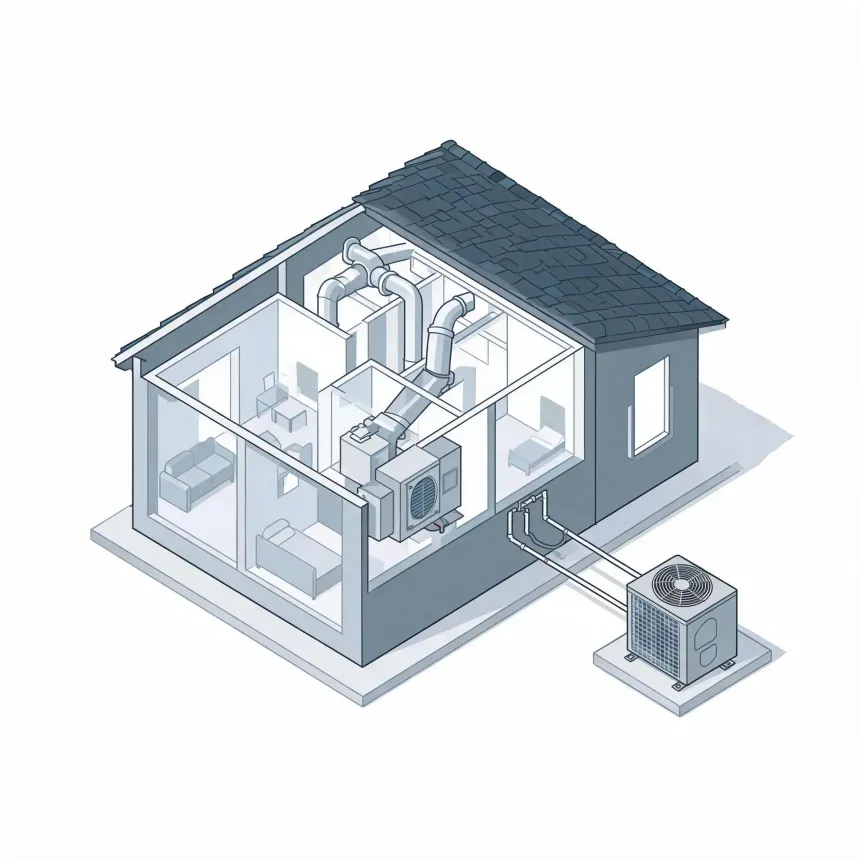
Isometric cutaway illustration of a small house showing interior rooms with furniture, an indoor air handler with ducts in the attic space, and refrigerant lines running to an outdoor condenser unit on a pad.
Your air conditioner works hardest from June through September.

NOAA nClimDiv, 1991–2020 normals

Cooling starts in May here, and it starts hard.

April is the month to get your AC looked at, before it has to run every day.

Half the homes here were built in 1992 or later, so the system is often newer than the house

Half the homes here were built by 1992
Cooling runs May through September
Summer afternoons average 90°F

White County has logged 107 severe weather events between 2015 and 2024, and damaging wind caused most of them. An outdoor unit sits outside through all of that, and wind-driven debris is what usually gets to the condenser fan or the coil fins first. Hail is already part of the picture here too. None of that means your unit has damage. It means a quick look at the cabinet, the fins and the fan before the heat sets in is worth more here than in a county that sees calmer weather.

Have it looked at before the season starts, not after

Before the long run of 90-degree afternoons starts, have the capacitor, contactor and coil checked while the system is still idle. A weak part found now is one less thing to deal with once the heat sets in for good.

Find a contractor
A man in a gray rolled-sleeve shirt and brown pants, seen from behind, carries a worn canvas tool bag up concrete steps toward a green front door of a shingle-clad house, with a potted shrub beside the entry.
A gray metal air conditioning condenser unit mounted on a concrete pad in a flat grassy field under a partly cloudy sky.

Trouble shows up as effort before it shows up as failure

An AC doesn't fail the moment a part goes bad. It fails after that part has been struggling for a while, and the struggle leaves marks before the breakdown does. A capacitor losing its charge makes the compressor and fan motor work harder to start each cycle, and that strain shows up as longer start-up times or a motor that hums before it catches. A dirty coil makes the system run longer to hit the same temperature, so cycles stretch out and the unit seems to run most of the afternoon instead of cycling normally. A low refrigerant charge shows up as ice on the coil or on the line running outside, which is the opposite of what people expect from a cooling problem. None of these show up as the system failing outright. They show up as the system working harder than it used to, for longer than it used to, to do the same job it always did.

Keep the airflow clear

Change the filter on a regular schedule, not whenever you think of it. A clogged filter starves the coil of airflow, and a coil that can't breathe starts icing up even on a hot afternoon. Outside, keep the area around the condenser clear of grass clippings, leaves and anything stacked against the cabinet. The fan needs open space on all sides to pull air through the coil.

Know what to watch for, not fix

Between visits, your job is to notice, not repair. Listen for a new rattle, a hum that wasn't there before, or the unit cycling on and off faster than usual. Watch the vents for weak airflow or air that isn't as cold as it should be. Any of that is worth a call. Opening the cabinet, handling the capacitor or working near the fan is a job for someone trained on it, not something to take on between appointments.

Overhead view of a gray outdoor AC condenser unit on a concrete pad beside a mulched garden bed and a house with vinyl siding.

Book your AC tune-up in April, before homes here start needing cooling in May.

  1. Jan
  2. Feb
  3. Mar
  4. Apr
  5. May
  6. Jun
  7. Jul
  8. Aug
  9. Sep
  10. Oct
  11. Nov
  12. Dec

A tune-up checks the refrigerant charge, cleans the coils, tests the capacitor and tightens the electrical connections.

A tune-up starts with the refrigerant charge, checked against what the system is rated for. Too little and the coil runs cold enough to ice over. Too much and the compressor works harder than it should every cycle. The capacitor gets tested under load, not just looked at. The contactor gets checked for pitting, since a pitted contactor can stick or fail to close. The condenser coil gets cleaned, because dirt on the fins holds heat in instead of letting it release outside. The blower wheel gets checked for dust buildup that throws off airflow even when the filter is clean. The drain line gets cleared too, since a clogged one backs up and shuts the system down on its own. Each part has a range it should read within, and a tech checks it against that range rather than guessing from how the system sounds.