




A low-angle view along a red brick wall with shrubs at its base, facing a mown grass lawn with a single-story light-colored house and pine trees under an overcast sky.

AC Maintenance in Russellville, AR

Tell us about the job

Takes about a minute. No obligation.

Tune-up, service, or cleaningCentral ACPope County, AR
Step 1 of 2

What ZIP code is the job in?

Pope County saw 124 severe weather events between 2015 and 2024, most of it wind and hail. Your outdoor AC unit sits right out in that path, with its coil and fan exposed to whatever blows through. Hail dents coil fins and bends them shut, and wind carries branches and grit into the cabinet. None of that announces itself until the system is working hard to keep up and can't.

5 months
May through September, your air conditioner is on duty
89°F
the average summer afternoon it cools against
35 hail events
in ten years, and hail bends the fins on outdoor coils
80 wind events
in ten years, and wind drives debris into outdoor units
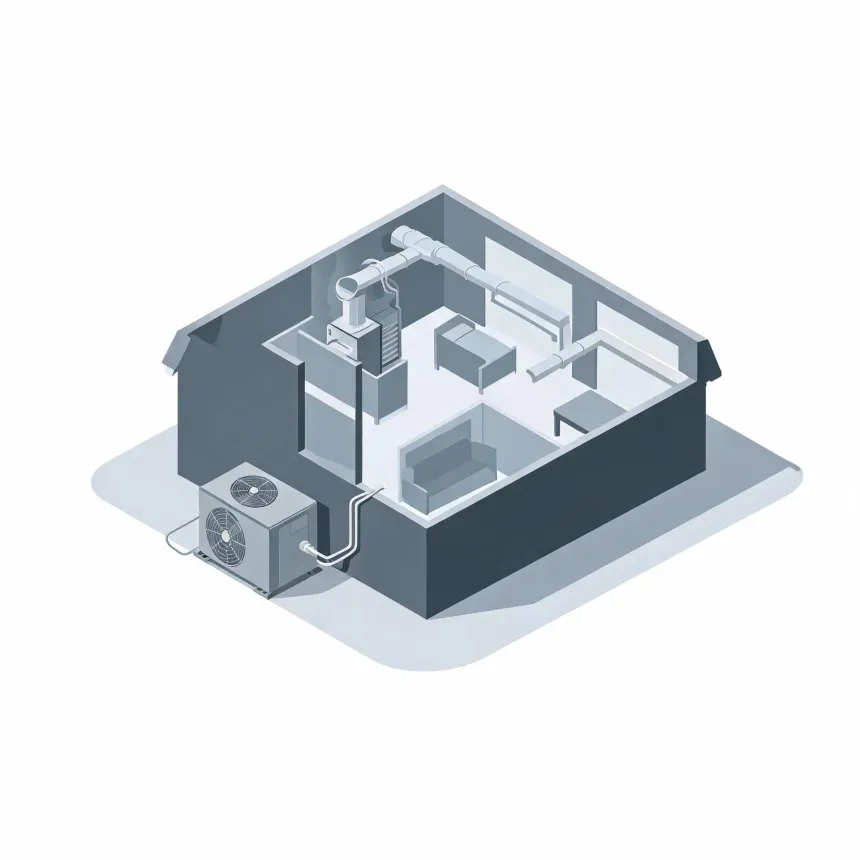
Isometric grayscale illustration of a cutaway house interior showing a furnace with ductwork, interior rooms with furniture, and an outdoor condenser unit connected by lines at the exterior wall.
Your air conditioner works hardest from June through August.

NOAA nClimDiv, 1991–2020 normals

Warm air from the vents when the thermostat is set cold means the system is losing the fight.

A check catches that early, before the compressor gives out completely.

Five months of 89 degree afternoons don't leave much room for a weak system to catch up

Cooling runs May through September
Summer afternoons average 89°F
80 damaging wind events from 2015 to 2024

Cooling here starts in May, and it starts hard, not with a few mild days to warm up on. April is when the system is sitting idle, which is the time to have it checked. A contractor can test the capacitor, check the refrigerant charge, and clear the coil while there's no heat yet to worry about. Wait until May and whatever the winter or the weather did to it gets found out on the first hot afternoon, with the house already warm.

Have this year's storm damage found before summer finds it for you

A dented coil or a cabinet full of debris doesn't show up until the unit is already straining against a hot afternoon. Get it looked at now, while the damage from this year's storms can still be caught and cleared.

Find a contractor
A man in a cap, gray T-shirt and tan work pants carries a worn leather tool bag up wooden porch steps toward a green front door.
A gray cylindrical air conditioning condenser unit mounted on a concrete pad next to a light-colored vinyl-sided house exterior.

A newer system still needs someone looking at it every year

Half the homes in Pope County were built in 1988 or later. If yours is one of them, the system that came with the house may still be well inside its working life. A yearly check is what keeps it that way. Catching a weak capacitor or a coil that's starting to clog matters more while the system still has years ahead of it, not less.

The refrigerant charge is never obvious from outside

A system low on refrigerant still blows cold air, just not cold enough, and still runs the compressor, just harder and longer than it should. Nothing about that shows up by looking at the unit or feeling the vents for a minute. A gauge set on the service ports is what tells you the charge is right or the system has been losing it slowly through a small leak.

A failing capacitor gives no warning before it gives out

The capacitor starts the compressor and the fan motor, and it can test weak for months while the system still starts fine every time, until the one afternoon it doesn't. A technician checks its capacitance against what it's rated for, not just whether the unit currently turns on, which is the only way to catch one before it strands the system mid-cycle.

An outdoor air conditioning condenser unit installed beside the exterior wall of a blue vinyl-sided house at sunset.

Book your AC tune-up in April, before homes here start needing cooling in May.

  1. Jan
  2. Feb
  3. Mar
  4. Apr
  5. May
  6. Jun
  7. Jul
  8. Aug
  9. Sep
  10. Oct
  11. Nov
  12. Dec

A tune-up checks the refrigerant charge, cleans the coils, tests the capacitor and tightens the electrical connections.

A proper tune-up starts outside at the condenser. The coil gets washed clean of the dirt and grit packed between the fins, because a blocked coil can't shed heat the way it's supposed to, and the system runs long and hard trying to make up for it. The fan motor and blades get checked for wobble or drag. Inside, the technician checks static pressure and airflow across the indoor coil, and pulls the blower access to look for dust buildup on the wheel itself, not just the filter. Electrical connections get tightened, since a loose connection runs hot and fails a part well before its time. The condensate drain gets flushed too, because a clogged one backs up and shuts the system down on its own before anything else even fails.