





Two illuminated white colonial-style houses with wrap-around porches, flanked by oak trees draped in Spanish moss, photographed at night.

AC Maintenance in Monticello, AR

Tell us about the job

Takes about a minute. No obligation.

Tune-up, service, or cleaningCentral ACDrew County, AR
Step 1 of 2

What ZIP code is the job in?

Five months of cooling a year here, May through September, with afternoon highs averaging 91 through June, July and August. That is a long stretch of the compressor and fan motor running at or near full load. A capacitor that is starting to go, or a contactor with pitted points, usually makes it through spring without a complaint. Once the heat sets in and the system runs most of the day, that same weak part is working under real strain. That is when it quits, or starts costing more to run while it still limps along.

5 months
May through September, your air conditioner is on duty
91°F
the average summer afternoon it cools against
15 hail events
in ten years, and hail bends the fins on outdoor coils
46 wind events
in ten years, and wind drives debris into outdoor units
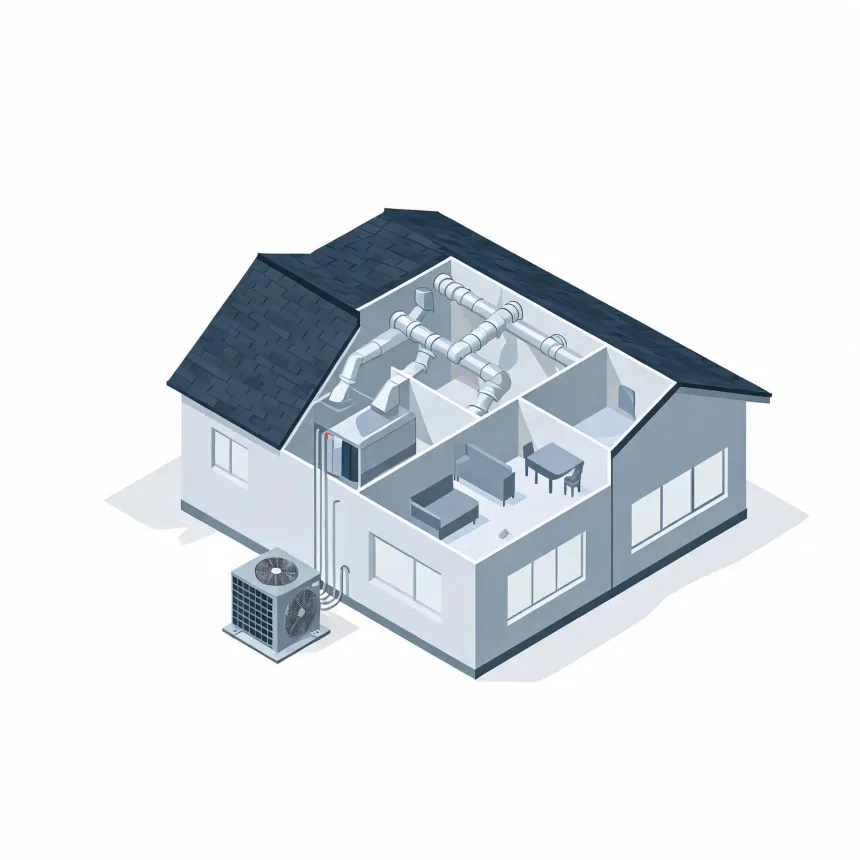
Isometric illustration of a cutaway single-story house showing attic ductwork, an indoor air handler, interior rooms with furniture, and an outdoor condenser unit connected by lines, on a white background.
Your air conditioner works hardest from June through September.

NOAA nClimDiv, 1991–2020 normals

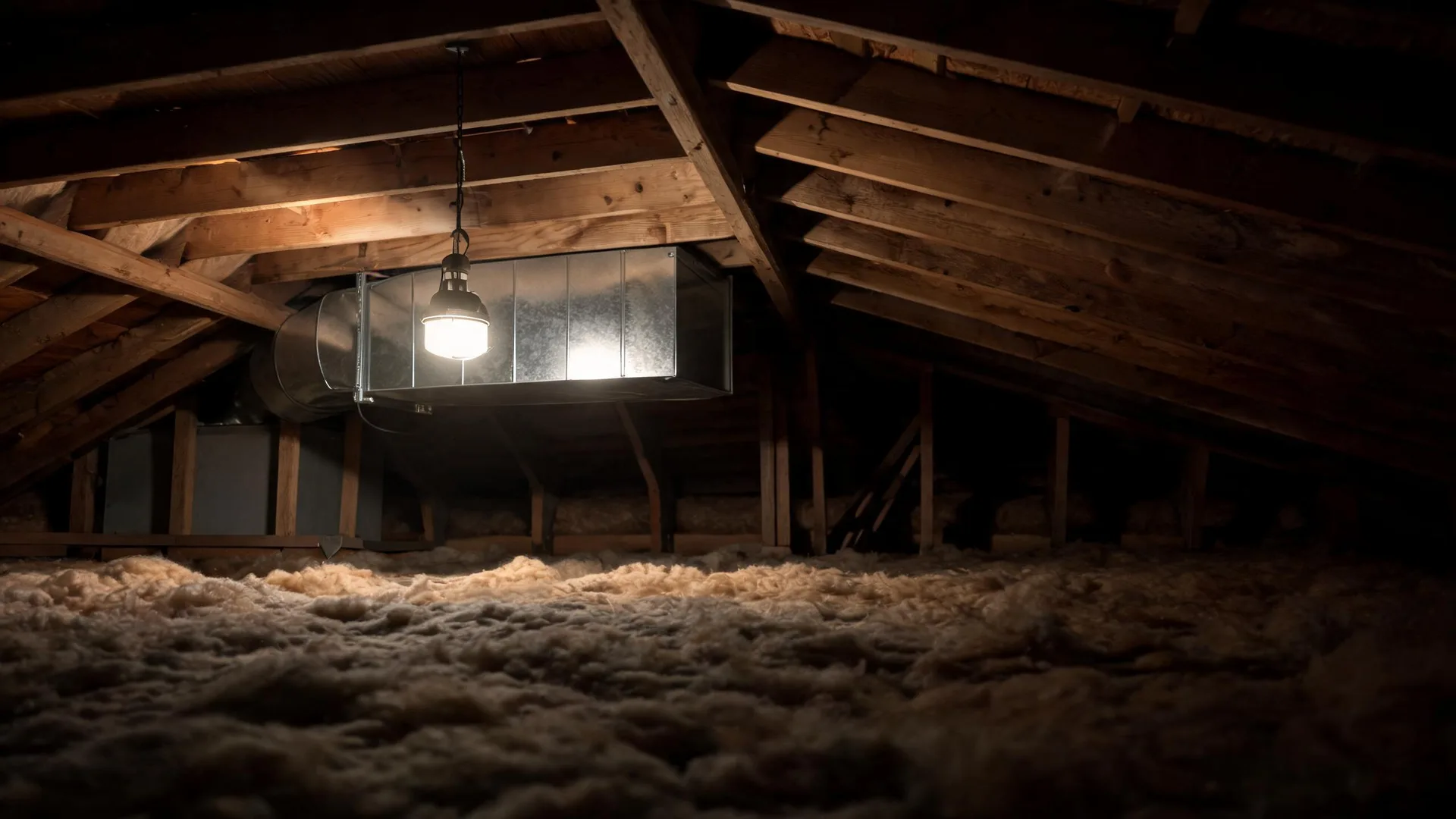
A clogged filter starves the evaporator coil of airflow, and the coil ices over.

Meltwater from an iced coil overloads the condensate drain, and a clogged drain puts water in the ceiling instead of the yard.

Wind and storms take a toll on outdoor units here

75 severe weather events from 2015 to 2024
24% of homes statewide lost power a day or more in 2024
46 damaging wind events from 2015 to 2024

One visit a year covers it, timed before the season's heat sets in. A technician checks the capacitor and contactor while they're still working fine, tightens electrical connections that loosen from months of vibration, and clears the condensate drain before it has a chance to back up. Half the homes in Drew County were built in 1985 or earlier and half later, so the system behind the wall is worth a look either way, not an assumption. Mobile homes make up close to a quarter of the housing here, and their outdoor units sit just as exposed to wind as any other. One appointment, once a year, is enough to catch what the season would otherwise find for you.

Check it before the season

It works hard here, so worn parts show up fast once the season starts. Get it checked before then.

Find a contractor
A man in a dark long-sleeved shirt and brown work pants, seen from behind, carries a worn canvas duffel bag up porch steps toward a green front door of a house with horizontal siding and a potted shrub.
A gray residential air conditioner condenser unit mounted on a concrete pad in an open grass field.

Five months of full load, starting in May

May to September is the stretch that finds the weak part. Get the check done before it, not during, and whatever's marginal gets caught while it's still an easy fix instead of a Saturday call in July.

Keep the filter clean

A dirty filter is the one thing in this whole system a homeowner can actually get to. Check it monthly during the cooling months and swap or wash it when it looks gray and matted. A filter that's choked off doesn't just make the system work harder, it starves the coil of airflow until ice builds up on it.

Keep the outdoor unit clear

The outdoor unit needs open air around it to shed heat. Keep grass clippings, leaves and mulch away from the sides, and don't let shrubs grow in close. Anything stacked against it or piled on top blocks airflow the same way a dirty filter does, just from the other end of the system.

An outdoor central air conditioning unit mounted on a concrete pad beside a blue-sided house at sunset.

Book your AC tune-up in April, before homes here start needing cooling in May.

  1. Jan
  2. Feb
  3. Mar
  4. Apr
  5. May
  6. Jun
  7. Jul
  8. Aug
  9. Sep
  10. Oct
  11. Nov
  12. Dec

A tune-up checks the refrigerant charge, cleans the coils, tests the capacitor and tightens the electrical connections.

A real tune-up starts with the refrigerant charge, checked against the pressures the system is supposed to run at, not just topped off by guess. Too little and the coil runs cold enough to ice, too much and the compressor works harder than it should every single cycle. The technician checks the temperature split between the air going into the return and the air coming out of the vents, since a weak split points to a problem before it becomes a breakdown. Electrical connections get tightened, since vibration works them loose over time and a loose connection generates heat right at the lug. The blower wheel gets looked at too. Dust and debris build up on the blades over time and throw off the airflow the whole system depends on, even when the filter upstream is clean.