






Three white clapboard houses with wraparound porches glow with warm interior and landscape lighting beneath Spanish moss-draped oak trees at dusk.

AC Maintenance in Heber Springs, AR

Tell us about the job

Takes about a minute. No obligation.

Tune-up, service, or cleaningCentral ACCleburne County, AR
Step 1 of 2

What ZIP code is the job in?

A technician checks things you'd never think to look at. The refrigerant charge, for one. Too little and the coil can freeze over, too much and the compressor works harder than it should, and you won't see either problem until something quits. The contacts on the relay switches wear down with every cycle, and a pitted contact can make the whole unit hesitate to start. The capacitor that kicks the compressor and fan motor into motion loses its strength slowly, so slowly you'd never notice until the day it can't do the job anymore. A tune-up also means pulling the panel off and looking at the wiring itself, checking for a connection that's gone loose or a spot where insulation has worn thin. None of this shows up as a symptom you'd catch from the thermostat. It shows up later as a compressor that failed well before it should have.

5 months
May through September, your air conditioner is on duty
89°F
the average summer afternoon it cools against
11 hail events
in ten years, and hail bends the fins on outdoor coils
24 wind events
in ten years, and wind drives debris into outdoor units
Isometric line illustration of a cutaway single-story house showing interior rooms, ducted air handler, ceiling ductwork, and an outdoor condenser unit connected by refrigerant lines.
Your air conditioner works hardest from June through August.

NOAA nClimDiv, 1991–2020 normals

Warm air from the vents doesn't always mean the system is low on refrigerant.

A weak capacitor can cause the same thing, and only a tech with gauges can tell you which one it is.

Half the homes here were built in 1989 or later, young enough that the AC is probably still earning its keep

Half the homes here were built by 1989
Cooling runs May through September
Summer afternoons average 89°F
Five months of cooling, May through SeptemberAfternoon highs average 89°F through June, July and August, so one tune-up before the season covers it.

A system that age doesn't need much. One yearly check before summer, so a weak capacitor or a loose connection gets caught while it's still small. Nothing about a newer home works against the AC here, no mismatched ductwork or a unit squeezed into the wrong space, so a tune-up is doing real work instead of just ruling things out. Skip it a few years running and small problems get the chance to become a compressor that quits for good.

Keep it in good shape

If your system is fairly new, a yearly check keeps it in good shape for longer.

Find a contractor
A gray residential air conditioner condenser unit mounted on a concrete pad in an open grass field.

Running without a check doesn't break it today

A dirty filter is where most of this starts. Airflow drops, the coil gets less air than it needs, and over time that coil can ice over. Once ice forms, the system is cooling less and running longer to do it, which just feeds the problem. Dirt does the same thing from the other side, settling on the outdoor coil until it cannot shed heat the way it should. A compressor working against either problem runs hotter than it was built to, and heat is what shortens its life. None of this announces itself. The system keeps running, the air coming out still feels cool enough, and the extra strain stays invisible until the day the compressor seizes or the coil splits. A yearly check catches the dirty coil and the weak airflow while they're still just dirt and airflow, not a compressor replacement.

A quick visit checks what you can see

Swap the filter, glance at the outdoor unit, take a temperature reading at the vent. That tells you the system is running, not that it's running the way it should. A failing capacitor or a coil losing its charge slowly won't show up in any of that.

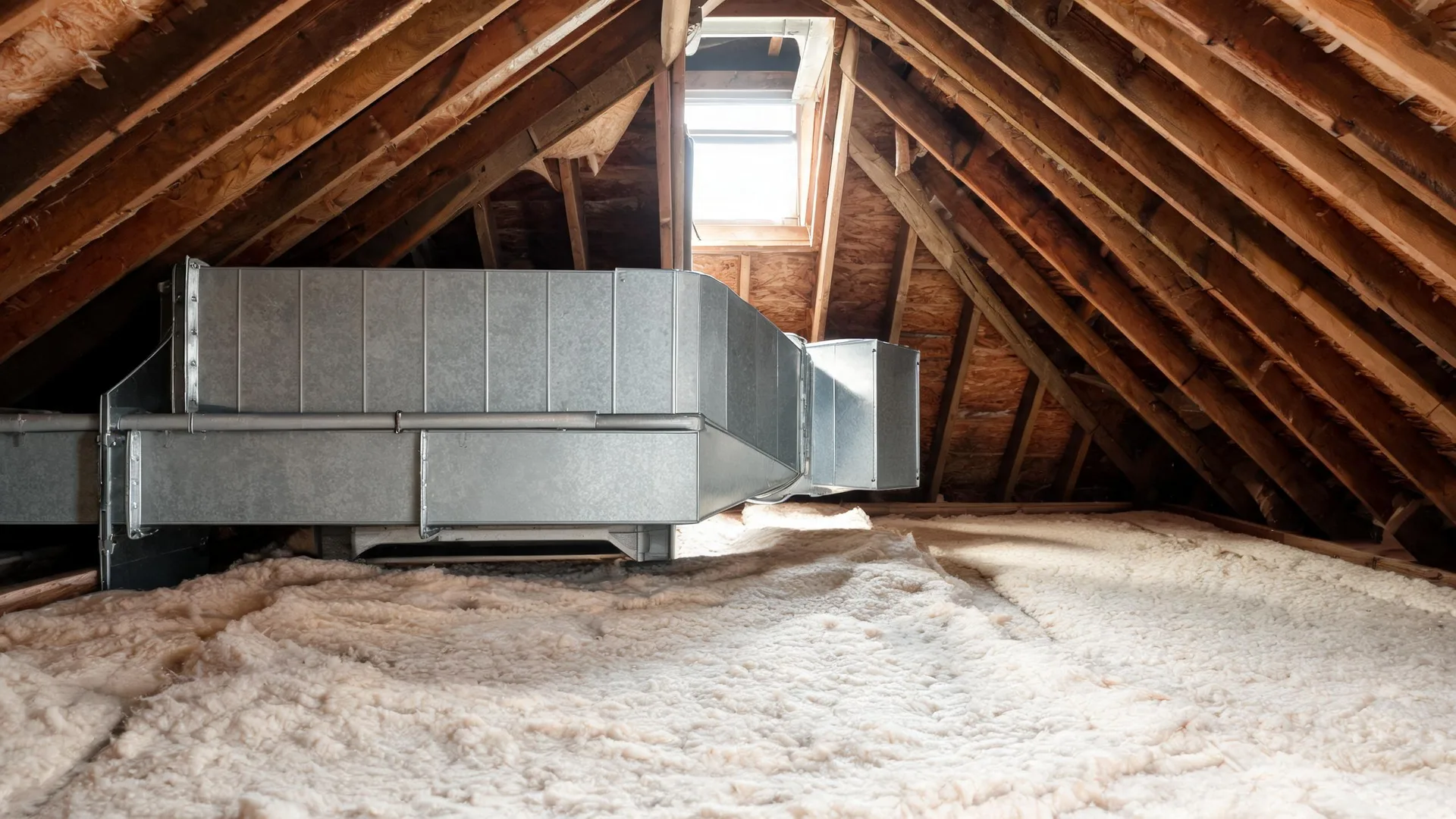
A thorough one checks what you can't

Gauges on the refrigerant line, a meter on the capacitor, a look at the contactor points and the wiring under the panel. That's the only way to catch a problem before it's the reason the compressor stops working.

An overhead view of a residential air conditioning condenser unit mounted on a concrete pad next to a house with vinyl siding.

Book your AC tune-up in April, before homes here start needing cooling in May.

  1. Jan
  2. Feb
  3. Mar
  4. Apr
  5. May
  6. Jun
  7. Jul
  8. Aug
  9. Sep
  10. Oct
  11. Nov
  12. Dec

A tune-up checks the refrigerant charge, cleans the coils, tests the capacitor and tightens the electrical connections.

A tune-up also covers the condensate drain, and it's an easy thing to skip. That line carries water away from the indoor coil, and algae or dirt can clog it over time. Once it backs up, water has nowhere to go but into the drain pan, and from there onto the floor or through the ceiling below if the unit sits in an attic. A tech clears the line and checks that the pan drains the way it's supposed to. It's a small part of the visit, but it's the difference between a dry closet and a water stain nobody expects.