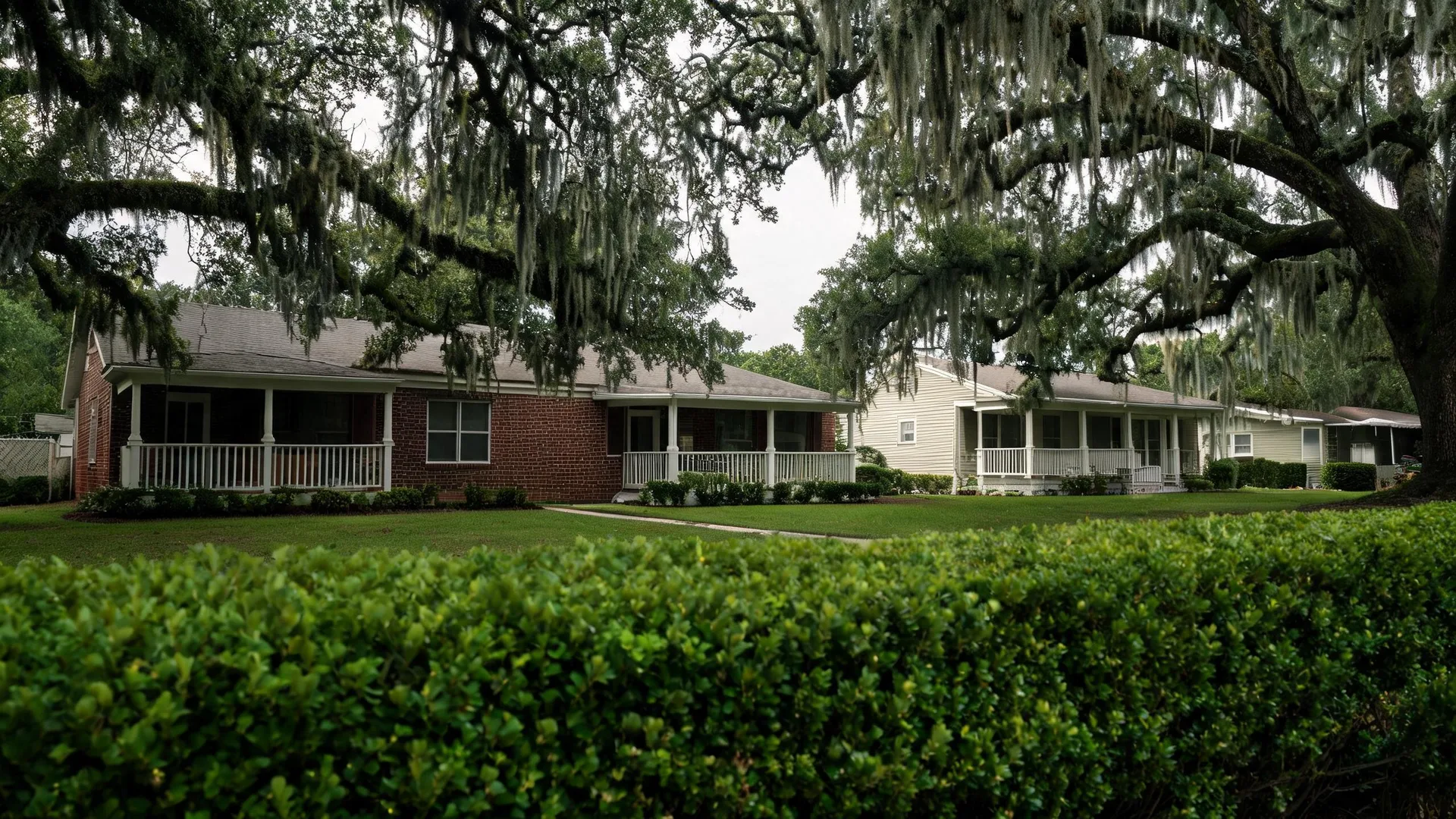
A row of single-story houses with covered porches, the nearest clad in red brick, seen behind a trimmed hedge and lawn beneath large moss-draped oak branches.

AC Maintenance in Forrest City, AR

Tell us about the job

Takes about a minute. No obligation.

Tune-up, service, or cleaningCentral ACSt. Francis County, AR
Step 1 of 2

What ZIP code is the job in?

Dirt is the quiet killer

A dirty coil cannot shed heat the way it should, so the compressor runs longer and harder to do the same job. A clogged filter starves the system of airflow, and the evaporator coil can ice over. None of this trips a breaker or throws an error. The system just keeps working harder in the background while the compressor wears down faster than it should.


A weak part fails quietly before it fails completely

A capacitor losing its charge or a blower motor losing strength does not shut the system off right away. The air coming out feels a little less cold, the run times stretch a little longer, and both are easy to live with for weeks. A seasonal check catches that part while it is still working, before the strain spreads to the compressor itself.

5 months
May through September, your air conditioner is on duty
90°F
the average summer afternoon it cools against
2 hail events
in ten years, and hail bends the fins on outdoor coils
21 wind events
in ten years, and wind drives debris into outdoor units
Isometric cutaway illustration of a single-story house showing interior rooms with ductwork and an air handler, connected by refrigerant lines to an outdoor condenser unit on the left.
Your air conditioner works hardest from June through September.

NOAA nClimDiv, 1991–2020 normals

Half the homes in St. Francis County were built in 1980 or earlier.

An older system still only needs one good check a year to catch what's wearing thin.

One tune-up a year covers a season this long

Power costs 12.32 cents a kWh statewide
Cooling runs May through September
Summer afternoons average 90°F

May through September is five months of cooling in St. Francis County, and the system runs hard from the first week. There's no easing into it the way you might see further north. That's why April is the month to get the check done, not May. A technician can test the capacitor, check the refrigerant charge and clear the coil while the system is still idle, before the first hot stretch puts load on whatever is already weak. Wait until the season's underway and you're finding out about a failing part on a day you actually need the air.

Get it checked before the season puts a load on it

Five months of 90 degree afternoons is a long stretch to run on a part that's already weak. A check now finds the weak capacitor or the dirty coil while the system is sitting idle, not in the middle of a July run.

Find a contractor
A gray residential air conditioner condenser unit mounted on a concrete pad in an open grass field.

The system won't tell you, it'll just struggle

A system can run every day and still not announce that something's wrong. Watch for runs that stretch longer than they used to, before the thermostat is satisfied. Listen for the compressor cycling on and off more often than it should, which means it's struggling to hold the temperature and giving up early. Check the vents for weak airflow, a sign the blower or the filter behind it isn't moving air the way it was built to. Warm air mixed in with cold, a smell when it first kicks on, moisture pooling near the indoor unit. None of these stop the system from running. They're just the system telling you something before it tells you by quitting.

Change the filter yourself

A dirty filter is the one thing in this whole system you're allowed to touch, and it's also the one most people forget. Check it monthly, more often if there's a pet in the house. Hold it up to a light. If light doesn't pass through it clean, swap it. A clogged filter starves the coil of airflow and that's how coils ice over.

Keep the outdoor unit clear

The condenser outside needs open space around it to shed heat. Keep grass clippings, leaves and mulch away from the sides, and don't stack anything against it. After storms, check for debris caught in the fins. A blocked condenser works harder for the same result, and that strain lands on the compressor.

Aerial view of a gray outdoor air conditioning condenser unit mounted on a concrete pad next to a house with vinyl siding.

Book your AC tune-up in April, before homes here start needing cooling in May.

  1. Jan
  2. Feb
  3. Mar
  4. Apr
  5. May
  6. Jun
  7. Jul
  8. Aug
  9. Sep
  10. Oct
  11. Nov
  12. Dec

A tune-up checks the refrigerant charge, cleans the coils, tests the capacitor and tightens the electrical connections.

A real tune-up means the system gets opened up, not just glanced at. The technician pulls the panel and checks the capacitor under load, not just by eye, because a capacitor can look fine and still be losing its charge. The refrigerant charge gets checked against what the system is supposed to carry, and the line gets checked for signs of a slow leak. The evaporator coil and condenser coil both get inspected, and cleaned if they're carrying any film, since a coil coated in dust can't shed heat the way a clean one does. The blower wheel gets checked for the same reason. Electrical connections get tightened, because a loose connection generates its own heat and that heat damages whatever it's touching. The condensate drain gets checked too, since a clogged drain backs up and the overflow switch shuts the system down on the one day you need it least.