Running quiet
This is what a mini split sounds like when it's fine: a low hum from the indoor unit and not much else. Air moves out of the vents evenly. No clicking after it shuts off, no rattle when the fan speeds up.
A mini split that's clicking, buzzing, hissing or banging is usually telling you something specific. A clicking sound when it starts or stops is often just the plastic housing or the relay switching, and it's normal. A buzzing or rattling sound points to a loose part, a fan blade hitting something inside the indoor or outdoor unit, or a failing motor. Hissing can mean refrigerant moving through the lines, but a loud or constant hiss can mean a leak. A loud bang or clank from the outdoor unit often means a compressor problem. Through a long, muggy Craighead County summer, your mini split runs close to nonstop, and that kind of runtime wears on fan motors and loose fittings faster than it would on a system that only kicks on now and then. In the cold months, a mini split still runs to heat your home, and ice buildup on the outdoor coil can cause its own grinding or whirring noise. The sound itself is a clue to where to look.
Cooling runs May through September
Your mini split carries the cooling load May through September. That's five months of near constant cycling, and noise tends to show up once a part starts wearing under that kind of use.
Heat runs October through April
Heat runs October through April here, about seven months. A mini split that's quiet in summer can start ticking or buzzing once it switches over to pushing warm air all winter.
Power here costs 8.97 cents per kilowatt-hour
Electricity runs 8.97 cents per kilowatt-hour in this county, cheap enough that most homes lean on the mini split for heat too, which means it works almost year round.
NOAA nClimDiv 1991-2020 · EIA-861 2025

Some sounds only show up under certain conditions. A rattle that only happens on a windy day might just be the outdoor unit's fan blade brushing against a leaf or a twig that got pulled in. A clatter that only happens when the unit first kicks on and fades after a minute is usually the fan blades reaching speed. Noises tied to one condition and gone the rest of the time are worth watching, not worth panicking over.

A sound that's present every time the mini split runs, at the same pitch and the same volume, points to something mechanical rather than incidental. A motor bearing wearing down hums or grinds the whole time it spins. A loose panel vibrates on every cycle, not just some of them. If the noise shows up at the start of a run and never lets up until the unit shuts off, that's the kind of pattern a contractor needs to hear described.

This is what a mini split sounds like when it's fine: a low hum from the indoor unit and not much else. Air moves out of the vents evenly. No clicking after it shuts off, no rattle when the fan speeds up.

Dust and discoloration on the casing usually mean this unit has been running a long time without the panel coming off. If it's also making noise, a worn fan bearing or a loose part inside is a reasonable guess, and it's worth having someone look before the sound changes again.
A mini split that pops, usually once or twice right after it kicks on or right before it shuts off, can sound worse than it is. You're not hearing a steady noise like a hum or a rattle, just a sharp, isolated sound at a specific point in the cycle, and that timing is actually the clue to what's making it.
The indoor and outdoor units are built from plastic panels and metal coils and tubing. When the system starts, the refrigerant lines heat up or cool down fast, and the metal expands or contracts against its mounts. The plastic housing does the same thing as the unit warms up or cools back down. That movement is what makes the pop, and it's the same reason a cooling car engine ticks as it sits in the driveway. One or two pops at startup or shutoff, with quiet running in between, is normal wear on the materials. It becomes worth a closer look if the popping turns frequent, happens mid cycle with no change in temperature, or is joined by a new rattle or hum.

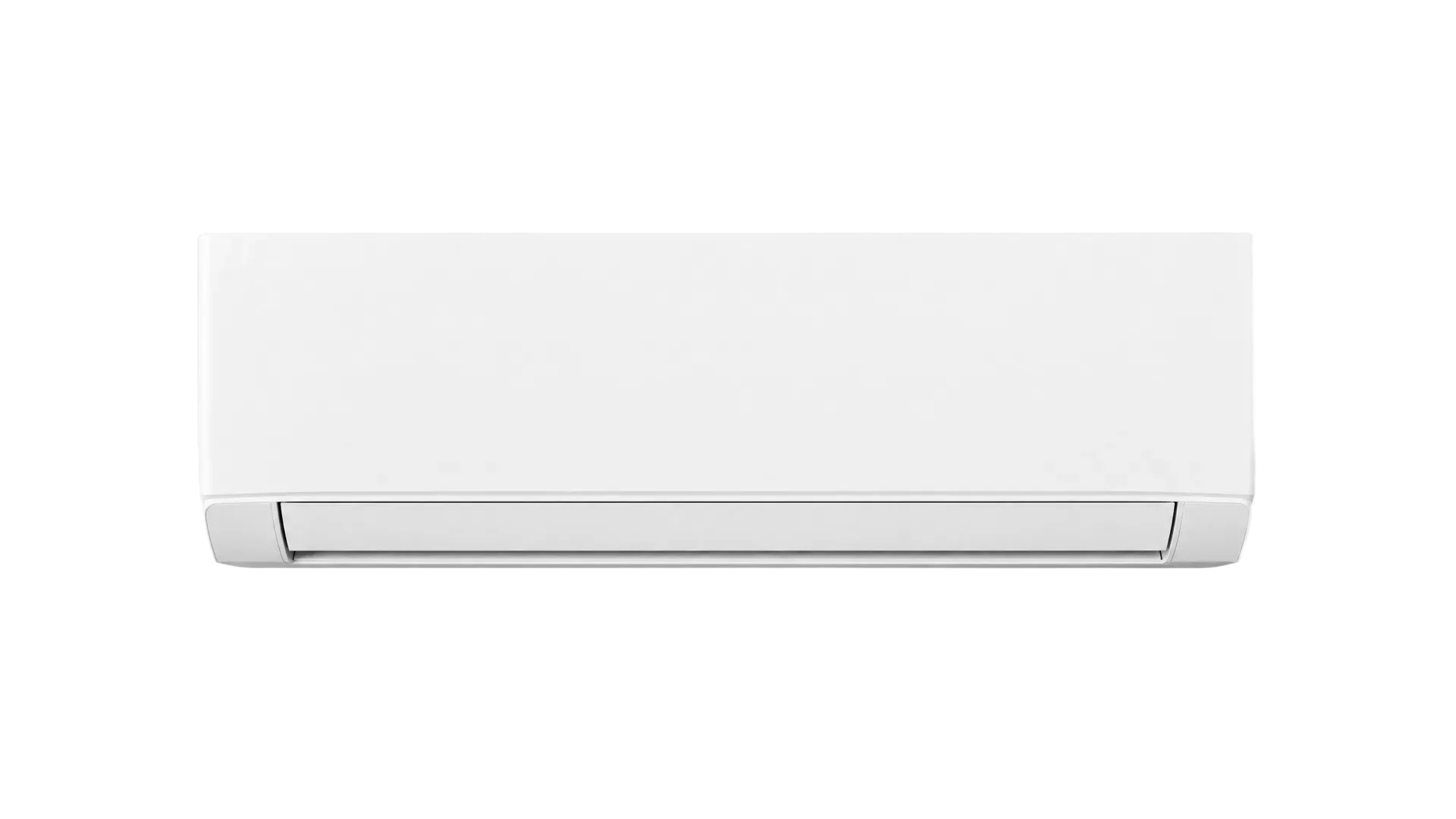
A mini split that looks like this one usually sounds fine too. The vents are open, the housing is clear, and air moves through without resistance. If yours looks this way and you're still hearing a new noise, the cause is more likely a part inside than buildup.

This is what months of skipped cleaning look like. Dust and grime coat the top panel and the vents, and that buildup makes the fan work harder to push air through. A unit in this shape often hums louder or rattles as the blades struggle against the grime.


A mini split that's gone from quiet to noisy isn't going to fix itself, and running it while a bearing or a motor mount wears down usually turns a smaller repair into a bigger one. Jonesboro summers put five straight months of near constant demand on that outdoor unit, and winter adds another stretch on top of it. There isn't much downtime for a part to be replaced without you noticing the system was off. A contractor who works on mini splits in Craighead County can tell you from the sound alone whether it's the fan motor, a loose panel, or something in the compressor, and whether it needs attention this week or can wait. Sorting that out yourself means guessing at a part you can't see. Handing it off means someone who's heard this exact noise before gets back to you about what it actually is.
Where the sound is coming from narrows down what's making it. The indoor unit holds the blower wheel and the evaporator coil, so a hum or a whistle from there usually traces back to the fan or a clog in the housing. The outdoor unit holds the compressor and the condenser fan, so a knock or a screech from outside points to one of those. Stand next to each one separately and listen before you call anyone. Telling a contractor which unit it's coming from cuts down the guesswork before they even arrive.
A phone recording of the noise tells a contractor more than a description does. Words like rattle and buzz mean different things to different people, but a recording is exact. Catch a few seconds of it along with when it happens, on startup, during a cycle, or right before shutoff. If the sound is intermittent, try to catch it more than once. Playing that recording for a contractor when they call back can point them straight to the part instead of starting from scratch.


A new sound from your mini split is information, and what you do with it decides what happens next. Keep running the unit through a Jonesboro summer with a bad bearing or a worn fan motor, and that part doesn't hold steady. It wears a little more every hour the unit runs, especially with the system cycling for months at a stretch. A loose panel or housing isn't just noise either. It's an opening, and dust works through it and settles on the coil, which cuts the airflow your system needs to cool the air properly. Once that part is working harder to move air than it should have to, the unit pulls more power to do the same job, and that shows up on your bill before it shows up as a breakdown. None of this announces itself. A rattle you can live with today is the same rattle that, left alone, turns into a seized motor or a cracked mount in August. The part that would have been a straightforward fix becomes a bigger job and a bigger bill once it fails outright. Catching it while it's still a loose mount or a failing capacitor, rather than after it's taken the rest of the system down with it, is the difference a quick repair makes. The sound is the warning. What you do before the next hot stretch is what decides whether it stays small.
Five months of nearly uninterrupted cycling is a lot to ask of one fan motor and one set of bearings. Once a part starts to wear, that stretch from May to September is when you'll hear it, not in the few weeks either side when the unit barely runs.
NOAA nClimDiv 1991-2020

A mini split that's making noise it didn't used to make is telling you something about one part: a fan motor, a bearing, loose housing, a clogged coil. Which one depends on what you're hearing and where it's coming from, and by now you have a better idea of both. That's the answer. The rest is finding the person who can open the unit and confirm it.
You don't have to be the one who sorts out which part it is. Once you send the details through, a contractor who works on mini splits in Craighead County gets them and reaches out to you directly, matched to what you're describing rather than a generic call. That's one less thing on your list, and the noise doesn't get louder while you wait on hold trying to find somebody.


Get matched with a mini split pro in Craighead County