

Mini split light blinking in Fort Smith, AR
A Sebastian County pro who repairs mini splits gets your request.
Get a mini split proA blinking light on your mini split is the unit's way of telling you what's wrong, and the pattern of the blinks is a code. Most brands use it to flag a handful of common problems: a dirty filter choking airflow, a frozen coil, a refrigerant leak, or a sensor fault inside the indoor head. Count the blinks and any pause between groups, since that sequence points to a specific fault rather than a general "something's off." Some codes clear on their own once you turn the unit off, clean the filter, and power it back on. Others, like a refrigerant issue or a bad sensor, mean the system needs a technician with a gauge set and the right parts, not a reset. Running it blind while the light keeps blinking can strain the compressor, so it's worth finding out which kind of problem you have before you keep using it through a Fort Smith summer.
Why does a blinking light cost you so much if it goes ignored?
Cooling runs May through September
Your mini split runs cooling May through September here, so a blinking light in July means it's working hard with a problem the whole time.
Heat runs November through April
Heat runs November through April in Sebastian County, which means more than half the year depends on this same unit working right.
Power here costs 12.56 cents per kilowatt-hour
Power here runs 12.56 cents per kilowatt-hour, cheap by most standards, but a mini split blinking a fault code can still run inefficiently and add up.
NOAA nClimDiv 1991-2020 · EIA-861 2025
Reading the blink code
- The blink count between pauses is the code: two blinks, then a pause, then two more, points to one fault, three points to another.
- Most indoor units pair the blinking light with a matching code on the handset or a short sequence on the wall control if you have one.
- A steady blink usually means the unit caught something minor and is still running, while a fast or continuous blink often means it shut itself down.
- The outdoor unit can also blink independently of the indoor head, which usually points to a compressor or outdoor fan problem rather than a filter or sensor issue.
- Cycling the breaker clears the code and can make the light stop, but the fault behind it is still there until a contractor reads it with a diagnostic tool.
- Some systems store the last fault in memory even after the light clears, which is what a technician checks first on arrival.
The light is not random. It is counting something out for you, the same way it would for a technician standing in your living room. Each brand wires its own meaning into the pattern, so two blinks followed by a pause means something different on a Mitsubishi than it does on a Fujitsu, but the logic is always a count-and-pause sequence that repeats until you cut power or the fault clears. Indoor heads usually show the same code on the handset, and if your system has a wall control, a shorter version shows up there too, which is worth checking before you climb up to look at the unit itself. How the light behaves tells you something on its own. A steady, slow blink often means the system found a problem it can work around for now, a dirty filter or a sensor reading out of range, and kept running. A fast or continuous blink is different. That usually means the unit shut itself off rather than keep running with whatever it found. The outdoor unit has its own light and its own codes, separate from the indoor head, and when it's the one blinking, the problem is more likely the compressor or the outdoor fan than anything inside the house. Cutting power at the breaker will often make the light go out, but that clears the code, not the fault, and most systems keep a record of it in memory for a contractor to pull up once the power comes back on.






A mini split pro near you

Send the request today and stop worrying about who to call.
There's no charge for the request.
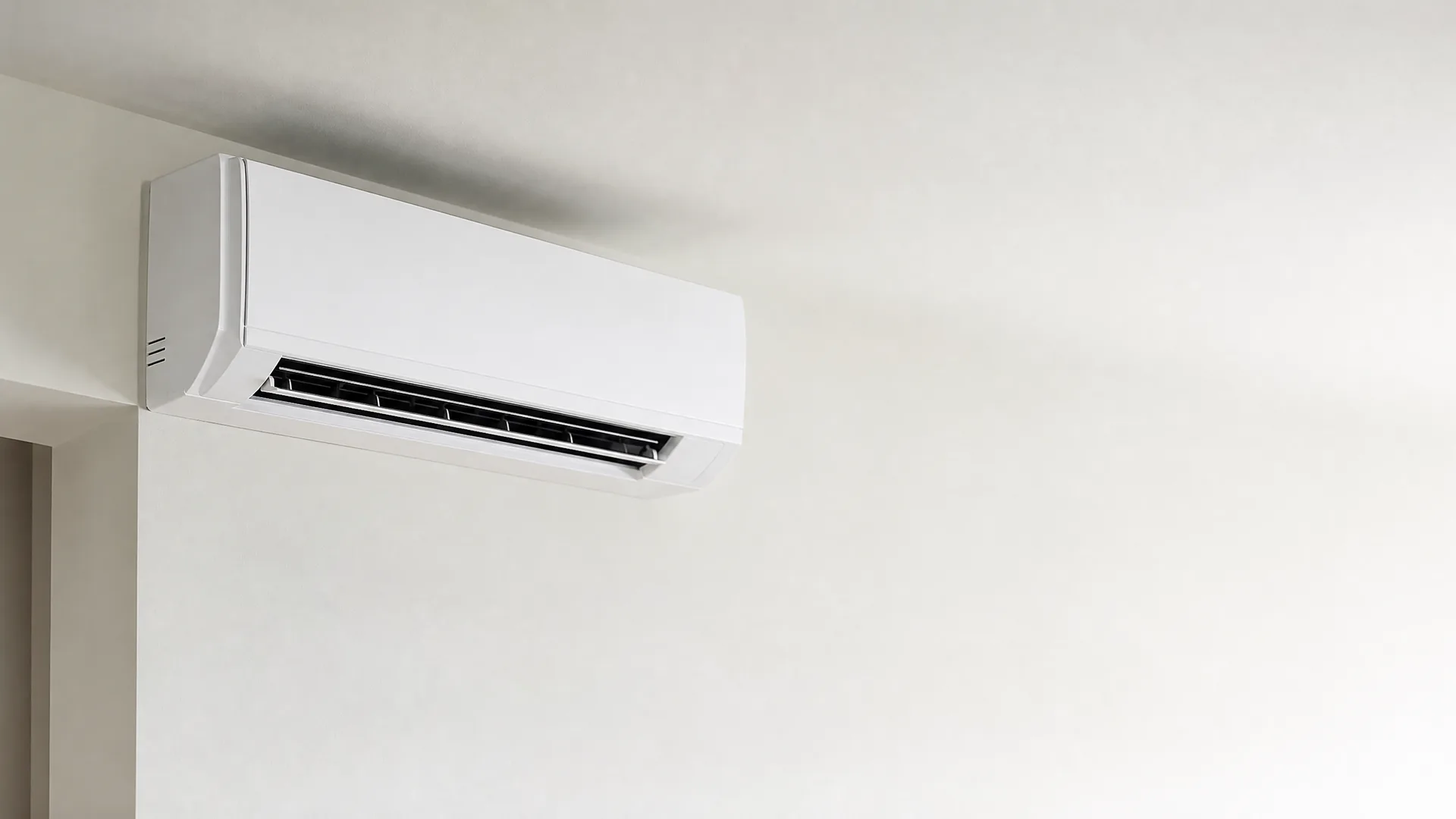
Where the light sits
The blinking light is usually on the indoor unit, near the louver or along the edge of the case. Some brands put a second light next to it that stays solid while the other blinks, and that pairing is part of the code too. If you can't find your model's blink chart, count the blinks yourself and write down the pattern before you call anyone. A tech will ask for it.
What a frozen coil does
A coil that's iced over can't pull heat out of the air, so the indoor unit blows air that barely feels cooled even as it keeps running. Left alone, the ice builds past the coil fins and onto the lines behind it, and water starts dripping from the unit once it thaws. That's often what sends someone looking for the blink code in the first place, after noticing the air isn't cold anymore.
Can I just reset my mini split instead of figuring out the code?
Cutting power to the unit and plugging it back in will usually clear the blinking light, and a lot of people try that first because it's faster than reading a code chart. It can look like it worked, since the light often stays dark for a while after a reset. Whether that's actually fixing anything depends on what caused the blink in the first place.
A reset clears the light, not the fault behind it
Resetting the unit clears the fault code from its memory, so the light goes out and the unit starts a fresh cycle. If the problem was something minor, like a sensor that tripped once, it might not come back for a while. If it's a frozen coil, a refrigerant leak, or a drain line backing up, the underlying issue is still there, and the unit will log the same code again once it runs long enough to hit the same condition. Each reset also costs you the one piece of information that tells a technician where to start looking, since some units won't display the last code once it's cleared. In Fort Smith summers, where the unit runs for months straight, a reset just buys a short delay before the same light comes back.



The sensors inside the unit check temperature and refrigerant pressure
A fault trips when a reading falls outside its normal range
The control board converts that fault into a blink count
The indoor light repeats the count in a pattern until it's cleared



The light is telling you something specific, not just that something is wrong
A blinking light on your mini split is the count that points to the fault, whether that's a dirty filter, a frozen coil, a refrigerant leak, or a bad sensor. Reading the pattern right is most of the diagnosis before anyone opens the case. Left alone through a Sebastian County summer or a cold stretch in January, the unit keeps running with that fault the whole time, and that's what drives the bill and the wear up.
You don't have to match the blink count to a chart yourself to get this fixed. A contractor who works on your brand of mini split knows the codes cold and can tell you what the light means before they're even at your house. Once you send in your information, the work of finding the right person for your system is off your plate. You'll hear from someone who handles this equipment regularly, and from there it's a straightforward fix.


Mini Split Repair
Get matched with a mini split pro in Sebastian County

- Get matched with a pro who fixes mini splits in Sebastian County.
- Describe your mini split job, and a local pro who handles it gets in touch.

- After this form, you can stop searching for a mini split pro.
- One request and the search for a pro is handled.

- One form replaces the calls you'd make to find a mini split pro.
- Describe what your mini split is doing once, in one form.

- Only one pro gets your request, so you hear from one company.
- A licensed pro who works in Sebastian County gets your request.