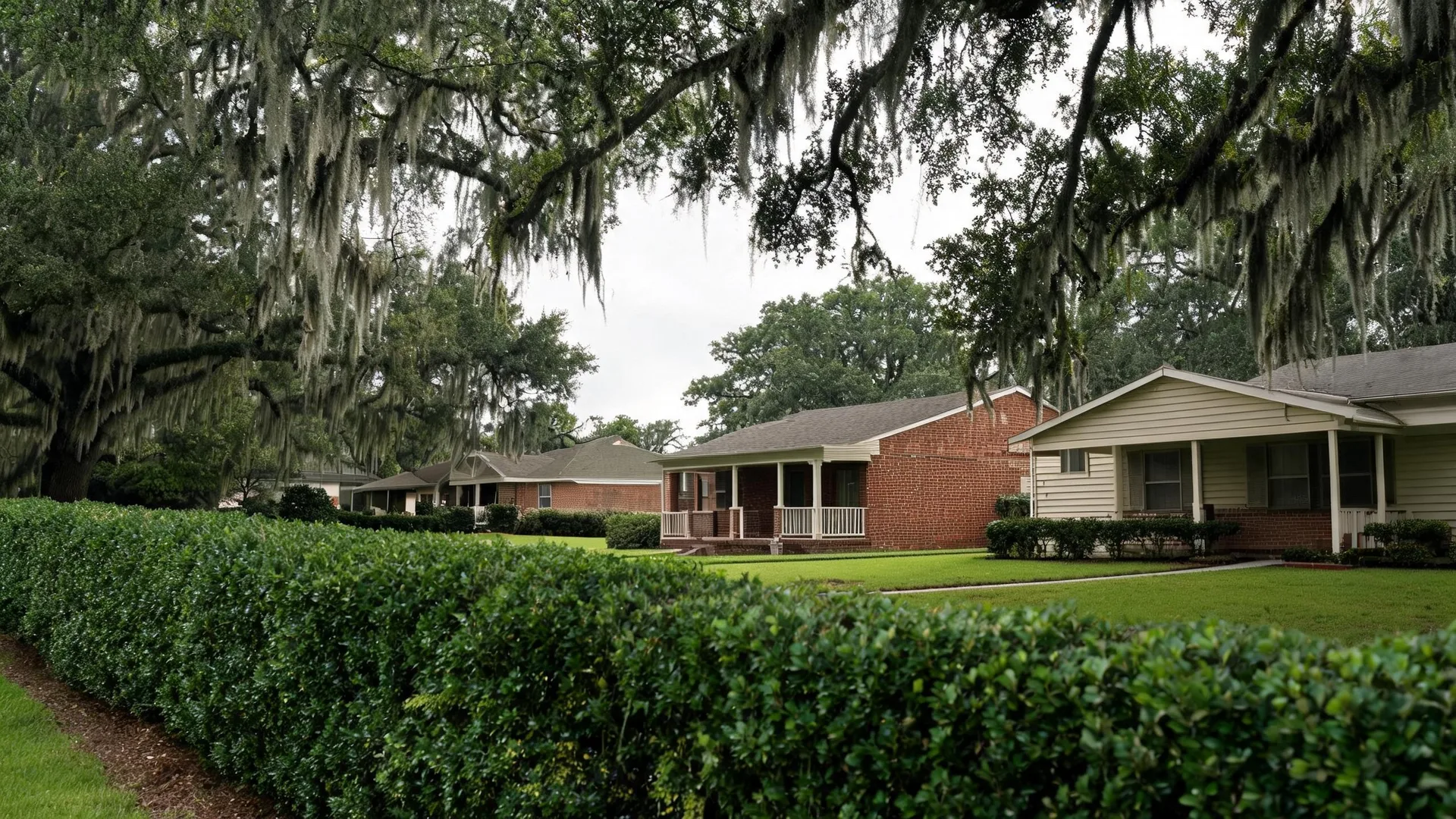
Single-story brick and siding houses with lawns behind a long trimmed hedge, framed by large oak branches draped with Spanish moss under an overcast sky.

Mini Split Installation in Van Buren, AR

Tell us about the job

Takes about a minute. No obligation.

New system or replacementMini-splitCrawford County, AR
Step 1 of 2

What ZIP code is the job in?

Weather here is hard on outdoor units

Crawford County logged 123 severe weather events between 2015 and 2024, among them damaging wind, hail and tornadoes. A mini split's outdoor unit sits outside year round, so wherever it mounts needs to be clear of falling branches and out of the direct line of wind-driven debris.

Power cuts matter more with a mini split

Nearly a quarter of Arkansas households went at least 24 hours without power in 2024. A mini split runs on electricity alone, so when the power goes, heating and cooling stop with it. Worth asking your installer about backup power options before the system goes in, not after an outage.

7 months
October through April, your system heats
5 months
May through September, it cools
30°F
the average winter night it heats against
90°F
the average summer afternoon it cools against
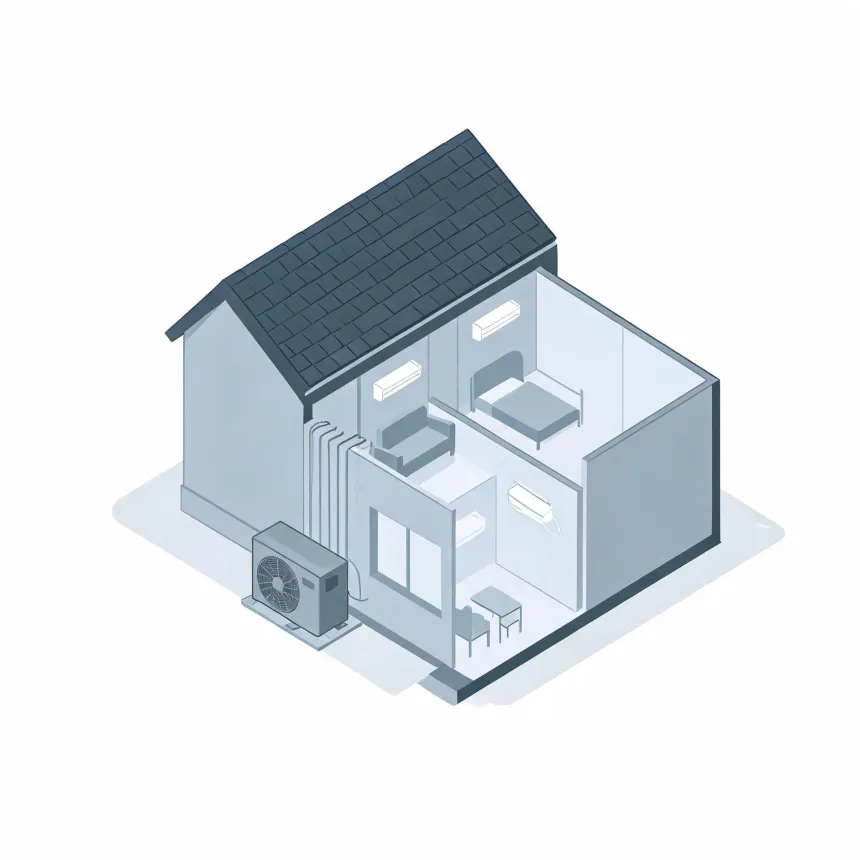
Isometric illustration of a cutaway house with a dark shingled gable roof, showing interior rooms with a bed, chairs and table, three wall-mounted mini-split indoor units connected by line sets to an outdoor condenser unit on a pad outside.
Your system heats October through April and cools May through September.

NOAA nClimDiv, 1991–2020 normals

Cooling runs five months a year here, May through September, with afternoon highs averaging 90°F all summer.

A mini split sized too small will run flat out all summer trying to keep up. Get the load calculation right before the install, not after.

Most homes here already run on electricity, so a mini split fits right in

54.7% of homes heat with electricity
Cooling runs May through September
Summer afternoons average 90°F

Crawford County sits in climate zone 3A under the 2021 energy code. Any mini split installed here has to meet the federal minimum for that class of equipment, 14.3 SEER2 for cooling and 7.5 HSPF2 for heating. That rule treats a ductless heat pump the same as any other split system. There's no separate allowance for going ductless, and no lower bar because the climate here runs warm. A unit rated below that minimum can't go in new. A system that clears it by a wide margin may also qualify for the federal tax credit, worth asking your installer which models do.

Power here is cheap, so pick the mini split that holds up, not just the one that saves the most on paper

Arkansas households paid 12.32 cents per kilowatt-hour in 2024, cheaper than most of the country. At that rate, a high-efficiency mini split takes longer to earn back the difference in cost over a standard one. That makes fit and reliability the bigger question here. Get a few quotes and ask what each contractor recommends for this place.

Find a contractor
A beige split-system air conditioner outdoor condenser unit mounted on metal wall brackets atop a stucco wall.

Get it in before May, not during it

Cooling here runs May through September, five months straight. If you're putting a mini split in before summer, April is the month to get it done. Installed then, it's running on day one of the season instead of catching up once the heat's already on. Installers book up fast once temperatures climb, so going in during April also means getting a date that works for you rather than whatever's left.

SEER2 and HSPF2 measure different jobs

SEER2 tells you how the system cools, HSPF2 tells you how it heats. A mini split does both, so you're buying a rating pair, not a single score. A unit can run strong on one side and average on the other. Ask what each number is rather than assuming a high cooling rating means the heating side keeps up just as well.

The rating comes from a lab, not your house

SEER2 and HSPF2 come from a standard test, run the same way for every unit in that class. What you actually get depends on how the installer sizes the system, where the outdoor unit sits, and how the lines between indoor and outdoor units are run. The label is good for comparing models side by side. It doesn't tell you what the install itself will deliver.

Whoever installs the mini split still has to deal with whatever is heating and cooling the place now. If it's a window unit or a wall furnace, that just gets disconnected and hauled off, no special handling needed. If it's a central system coming out, the refrigerant in those lines has to be recovered before anything gets cut apart, not vented, that's the law and any licensed installer will do it as a matter of course. Old ductwork can stay in place if nothing else is using it, or it can come out if you want it gone. Ask your installer what happens to the unit you're replacing and whether removal and disposal are part of the quote or billed separately.

Installation starts with the indoor unit and outdoor unit going in, usually the same day unless the job calls for more than one zone. The installer mounts the indoor head on the wall or ceiling, drills a small hole through to the outside, and runs the line set, the refrigerant lines, power wire and drain line bundled together, through that hole to the outdoor unit. That outdoor unit sits on a pad or bracket outside, close enough to keep the line run short. Once everything's connected, the line set gets pressure tested to check for leaks before any refrigerant goes in, then the system gets charged and run through its paces, cooling and heating both, so the installer can confirm it's holding temperature and the indoor head is reading correctly. Expect some drilling, a short time without power to that part of the house while wiring gets connected, and a walkthrough at the end on how to run it.