Most homes here run on electric heat
Electricity heats 58.3% of homes in Miller County, against 36.0% on utility gas. A mini split fits right into that pattern since it runs on electricity alone, with no gas line to tie into.
Takes about a minute. No obligation.
Electricity heats 58.3% of homes in Miller County, against 36.0% on utility gas. A mini split fits right into that pattern since it runs on electricity alone, with no gas line to tie into.
If your house already heats with electric strip heat or an electric furnace, adding a mini split doesn't mean bringing a new fuel into the house. The electrical work is the main thing to plan for, not a gas hookup.
NOAA nClimDiv, 1991–2020 normals
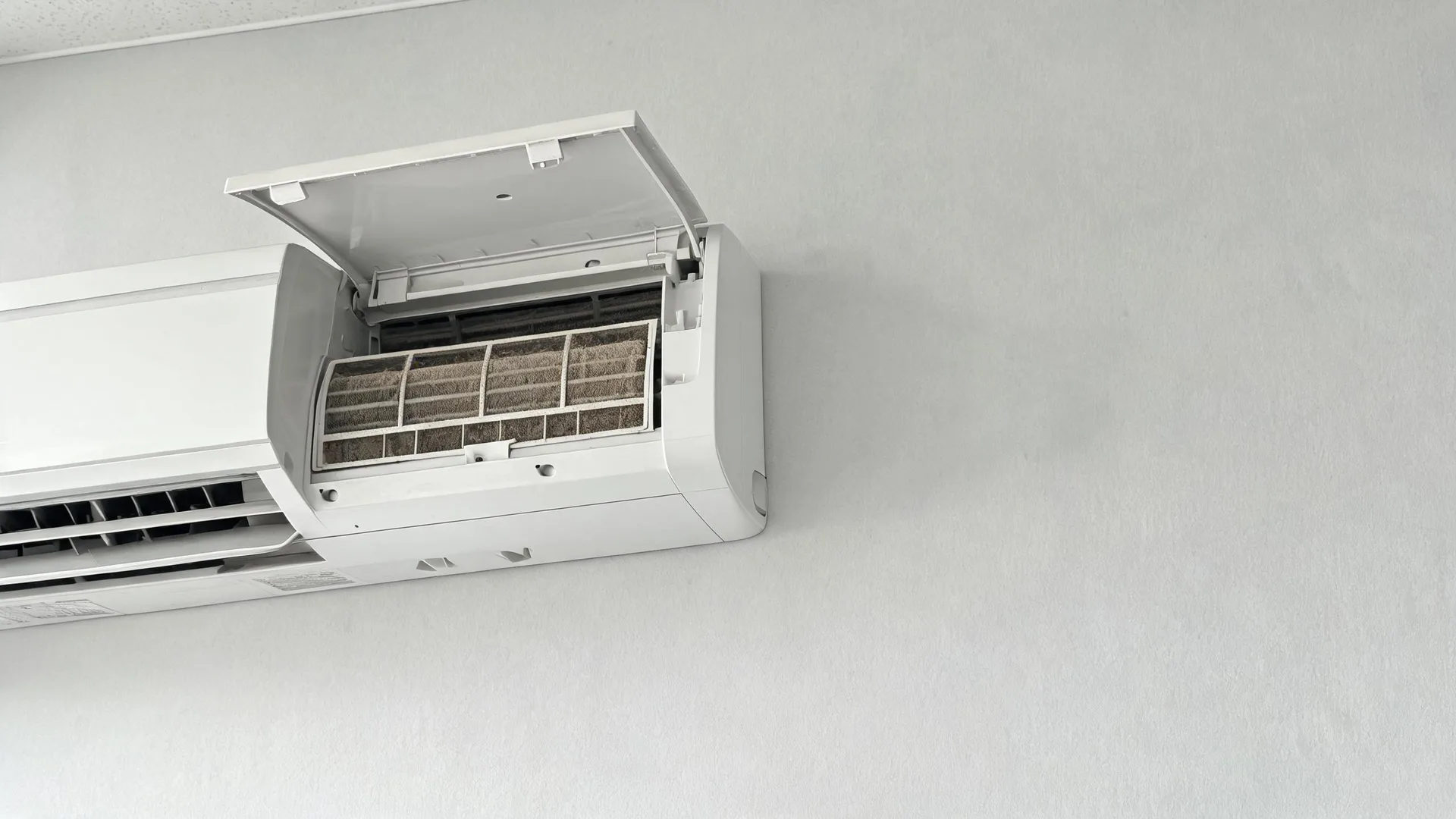
An old mini split can't just be unbolted from the wall, the refrigerant has to come out first.
A tech recovers that refrigerant before the lines come apart, so the old unit won't come down as fast as you might expect.




Cooling starts in May here, so April is the month to have a new mini split in and running. Get it installed before the first warm week and the contractor can take the time to set the line set and dial in the charge right, instead of working against a house that's already hot. Miller County only asks the system to run about five months a year, May through September, so there's a real stretch of cooler months beforehand to get it done. Waiting until the first hot day means waiting in line behind everyone else having the same idea.
Any mini split installed in Miller County now has to hit 14.3 SEER2 for cooling and 7.5 HSPF2 for heating, the minimum for split-system heat pumps nationwide. That's not a Texarkana rule, it's what's built into every qualifying unit on the market. Installing one that clears that bar can also qualify the project for the federal energy efficiency tax credit.
Find a contractor
Five months isn't long, but 92 degrees most summer afternoons adds up fast on a compressor that never gets a break. What matters most is matching the unit to the room it's cooling. An oversized mini split cycles on and off instead of running steady, and that short cycling wears the compressor faster than the heat does.
A contractor should walk the room, check the windows and insulation, and run a load calculation before quoting a number. If someone names a size before seeing the space, they're guessing. Too big and the unit short cycles. Too small and it runs flat out without ever catching up.
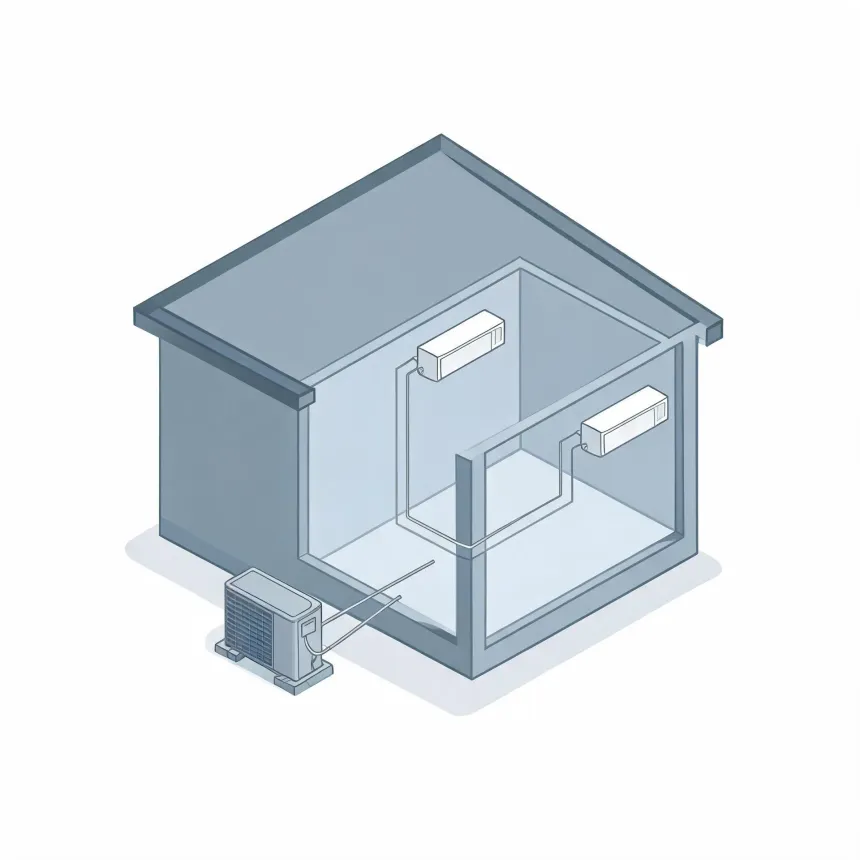
The indoor head connects to the outdoor unit through a line set, and the condensate has to drain somewhere on its own. Where those lines run, through a wall, along the siding, down to a pad, affects how the finished job looks and how easy the unit is to service later. Get this settled before the work starts, not after.
Sizing a mini split comes down to a load calculation, not a square footage chart. A contractor measures the room, checks how many windows it has and which way they face, looks at the insulation, and figures out how much heat that space gains in summer and loses in winter. Ceiling height matters too, and so does whether the room sits under an attic or next to other conditioned space. Skip that work and you end up guessing, and a guess is usually wrong in one direction or the other. Too big and the compressor shuts off almost as soon as it starts, cycling on and off all day instead of running steady. Too small and it runs nonstop on the hottest afternoons and still can't catch up. Either way the unit works harder over its life than a correctly sized one ever would.
Install day starts with the outdoor unit and the indoor head going up, but most of the time goes into what connects them. The line set has to be cut to length, run through the wall, and flared at both ends, then checked for leaks before anything gets charged with refrigerant. A contractor will pull a vacuum on the line set to clear out moisture and air, since either one left behind can damage the compressor down the road. Once that holds, the system gets charged to spec and the indoor head gets leveled and mounted so condensate drains the way it should. Expect some drilling, some time spent on the electrical hookup, and a final check where the contractor runs the unit through heating and cooling to make sure it responds the way it should before calling the job done.