





Two single-story houses, one with red brick and one with light siding, behind a trimmed hedge and lawn under large oak trees draped with Spanish moss.

Mini Split Installation in Stuttgart, AR

Tell us about the job

Takes about a minute. No obligation.

New system or replacementMini-splitArkansas County, AR
Step 1 of 2

What ZIP code is the job in?

Electricity heats 58.2% of homes in Arkansas County, more than any other fuel. A mini split fits that picture because it runs on electricity too, so there's no gas line to add or worry about. For a home with electric baseboard or an older electric furnace, a mini split does the same job more efficiently and adds cooling at the same time. Utility gas heats 32.9% of homes here, and for those households a mini split usually works alongside the furnace rather than replacing it, covering specific rooms or the months when the furnace barely needs to run.

5 months
November through March, your system heats
5 months
May through September, it cools
36°F
the average winter night it heats against
90°F
the average summer afternoon it cools against
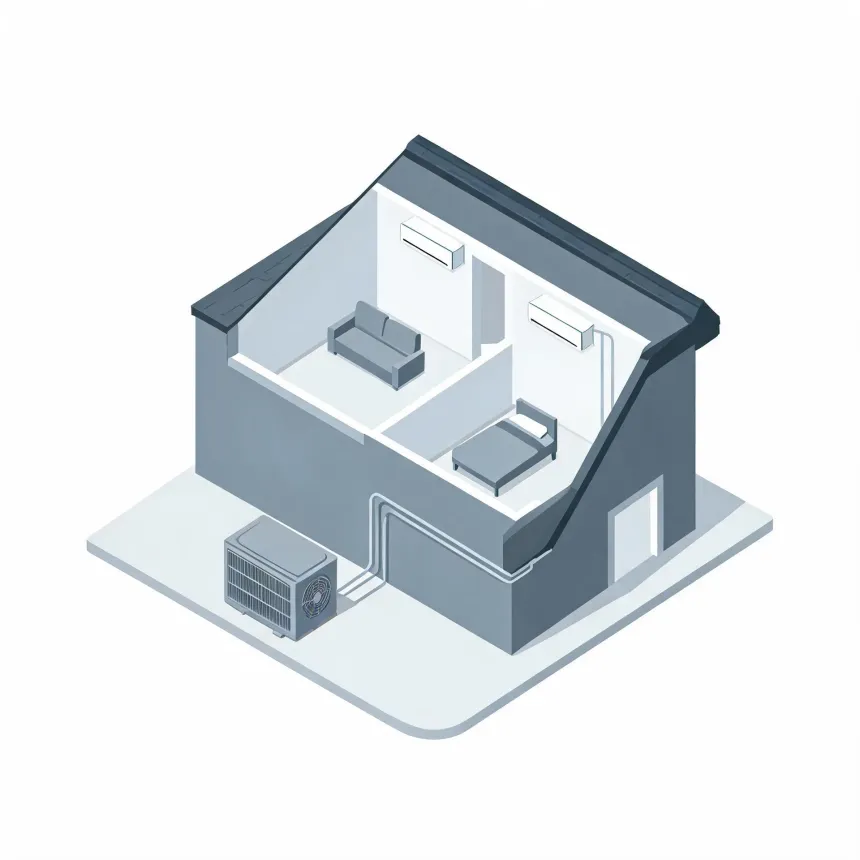
Isometric cutaway illustration of a two-room house showing two wall-mounted indoor air conditioning units connected by line sets to an outdoor condenser unit on the ground outside.
Your system heats November through March and cools May through September.

NOAA nClimDiv, 1991–2020 normals

Cooling in Stuttgart runs May through September.

April is when a mini split should go in, before the first warm week puts it to work.

Stuttgart doesn't need an oversized mini split, it needs one that works when the power doesn't

80 severe weather events from 2015 to 2024
24% of homes statewide lost power a day or more in 2024
44 damaging wind events from 2015 to 2024

A mini split for a typical bedroom or living area here doesn't need to be oversized to handle Stuttgart's summers. Arkansas homes paid 12.32 cents per kilowatthour in 2024, and a correctly sized unit is what keeps that rate from turning into a high bill. Go bigger than the room calls for and the unit short cycles, switching on and off instead of running steady, which wastes power rather than saving it. The contractor sizing the install will look at the square footage and layout of the specific room, not just pick the biggest unit on the truck. A standard efficiency rating is enough to handle the local climate without paying extra for capacity this house doesn't need.

Any new mini split here has to clear 14.3 SEER2 and 7.5 HSPF2

Stuttgart falls in zone 3A, and any split-system heat pump manufactured from 2023 on, ductless included, has to meet 14.3 SEER2 for cooling and 7.5 HSPF2 for heating. That's the floor a contractor is installing to. A federal tax credit is also available toward the cost of a qualifying system.

Find a contractor
A man in a dark long-sleeve shirt and tan work pants carries a worn tool bag up concrete steps toward a green front door of a house with siding and a potted shrub.
A beige split-system air conditioner outdoor condenser unit mounted on metal wall brackets atop a stucco wall.

A normal duty cycle for a normal county

Half the homes in Arkansas County were built in 1978 or earlier. A mini split doesn't need ductwork, so it doesn't matter whether the house has old ducts or none at all, it hangs on a wall and the line set runs through a small hole to the outdoor unit. Mobile homes make up 13.3% of the housing here, and a correctly sized mini split works for those too, since it isn't tied to a duct system that may not fit a mobile home well. Through the day and into the night, the unit will cycle on and off as the room calls for it, not run flat out the whole time. None of that calls for a bigger or stronger unit than what zone 3A already requires. A standard size, built to that standard, covers what homes here actually need.

Sizing comes from a room calculation, not a guess

The contractor measures the room. Square footage, ceiling height, window area, how many walls face outside, all of it factors into the load calculation that sets the BTU rating the unit needs to hit. Skip that step and size off instinct, and the unit is either struggling to keep up or short cycling from day one.
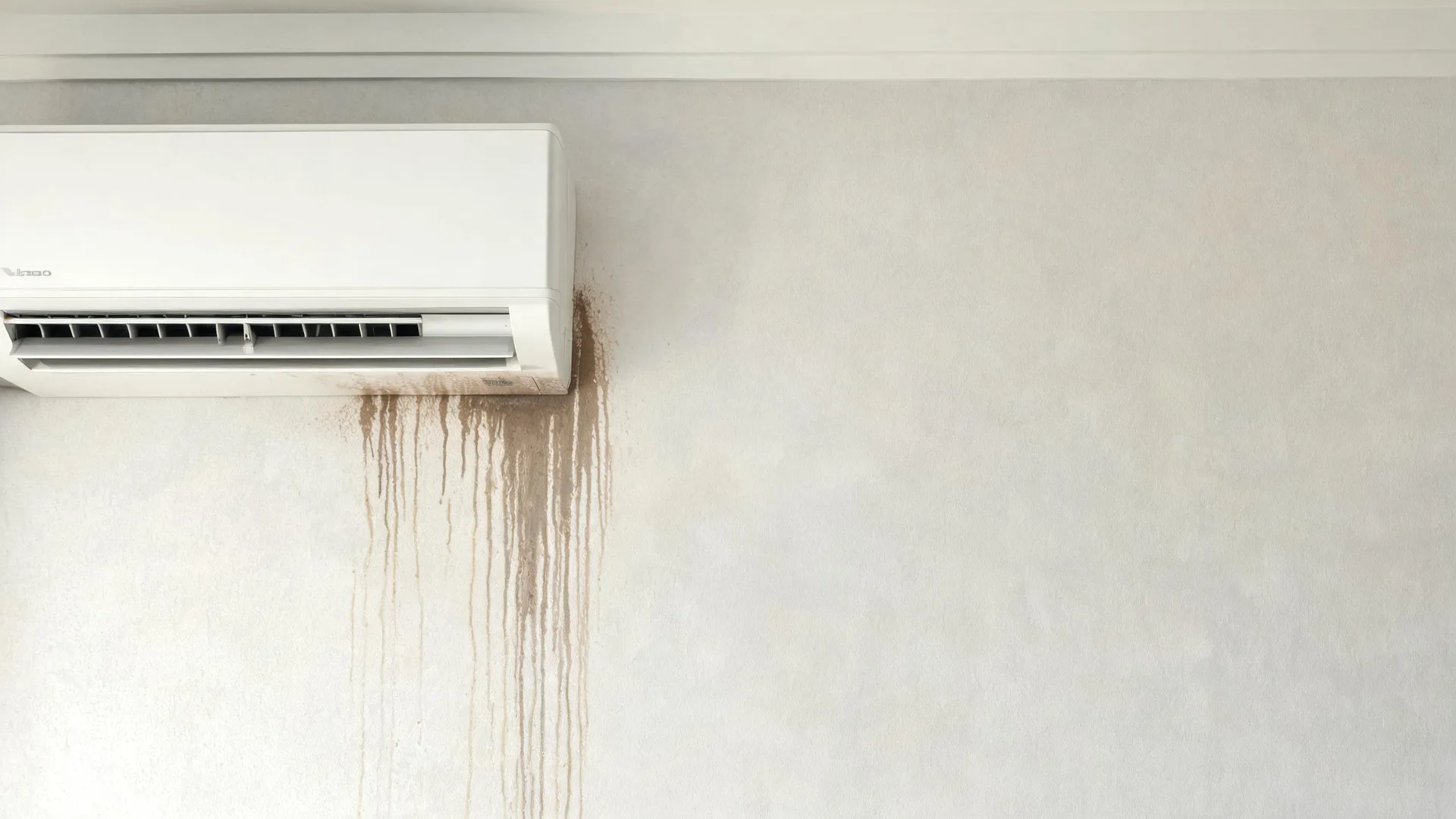
Too big fails in a different way than too small

An undersized unit just runs long and doesn't quite catch up on the hottest days. An oversized one cools the room fast, shuts off before it pulls the moisture out of the air, then kicks back on a few minutes later. That start-stop pattern leaves the room feeling clammy even though the thermostat says it hit the mark.

When you're comparing mini splits, ask about the compressor type before anything else. A single-stage compressor runs at one speed, full on or off. A variable-speed compressor ramps up and down to match what the room needs, which is quieter and holds a steadier temperature. Ask what happens if the outdoor unit ever needs a part years from now, since some manufacturers support a line for longer than others. Ask how many indoor heads the outdoor unit can run, because a system sized for one room now can sometimes take a second head later without replacing the whole setup. And ask who's doing the warranty paperwork. Most manufacturers only honor the full parts warranty when the contractor registers the install, and that step gets missed more often than you'd think.

The equipment is only part of what you're paying for. The outdoor unit and the indoor head are sized together, but the line set connecting them, the wiring, and the mounting work all depend on how far apart they end up and how clean a path the installer has to run between them. A wall that's easy to drill through costs less labor than one with brick or extra framing in the way. The condensate line also needs somewhere to drain, and if gravity won't do it, that run needs a pump added in. None of this shows up on the unit's price tag, but it's where installs of the same size end up costing differently from one house to the next.