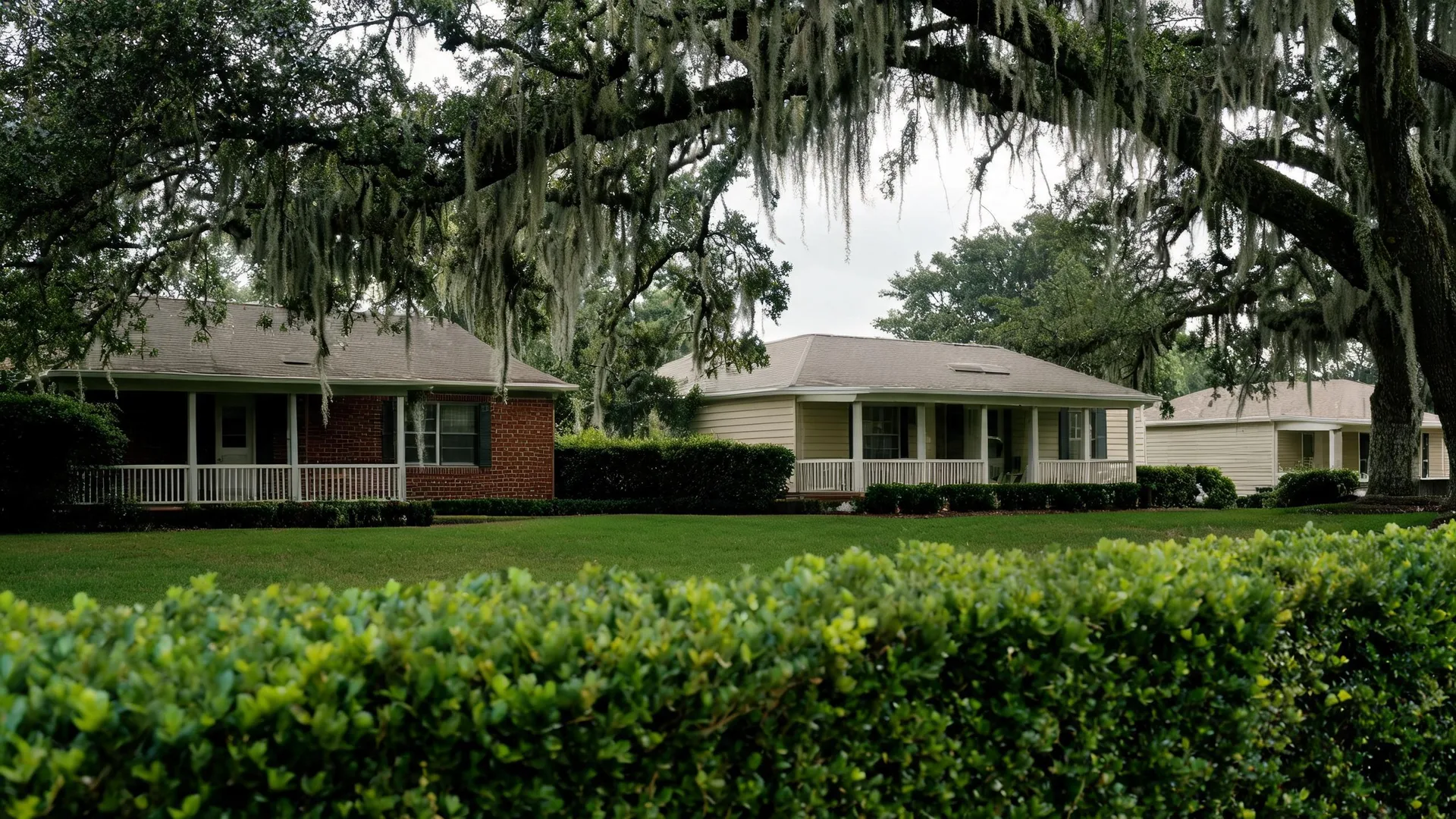





Single-story houses, one brick and one with light siding, both with covered porches, behind a mowed lawn and trimmed hedge, under large moss-draped oak branches.

Mini Split Installation in Searcy, AR

Tell us about the job

Takes about a minute. No obligation.

New system or replacementMini-splitWhite County, AR
Step 1 of 2

What ZIP code is the job in?

If you're replacing a window unit or an old wall sleeve, the installer disconnects it and hauls it away. Switching over from a central system is a bigger job. The old ductwork usually gets capped and sealed where it ties into the house, so air isn't leaking out through a connection that no longer goes anywhere. If the old system used refrigerant, that refrigerant has to be recovered, not vented, and a licensed installer handles that as a normal part of the job. Ask whoever quotes the work whether hauling away the old equipment is included, since that's not always assumed. None of this should hold up the new installation. The old unit usually comes out the same day the new one goes in.

6 months
November through April, your system heats
5 months
May through September, it cools
33°F
the average winter night it heats against
90°F
the average summer afternoon it cools against
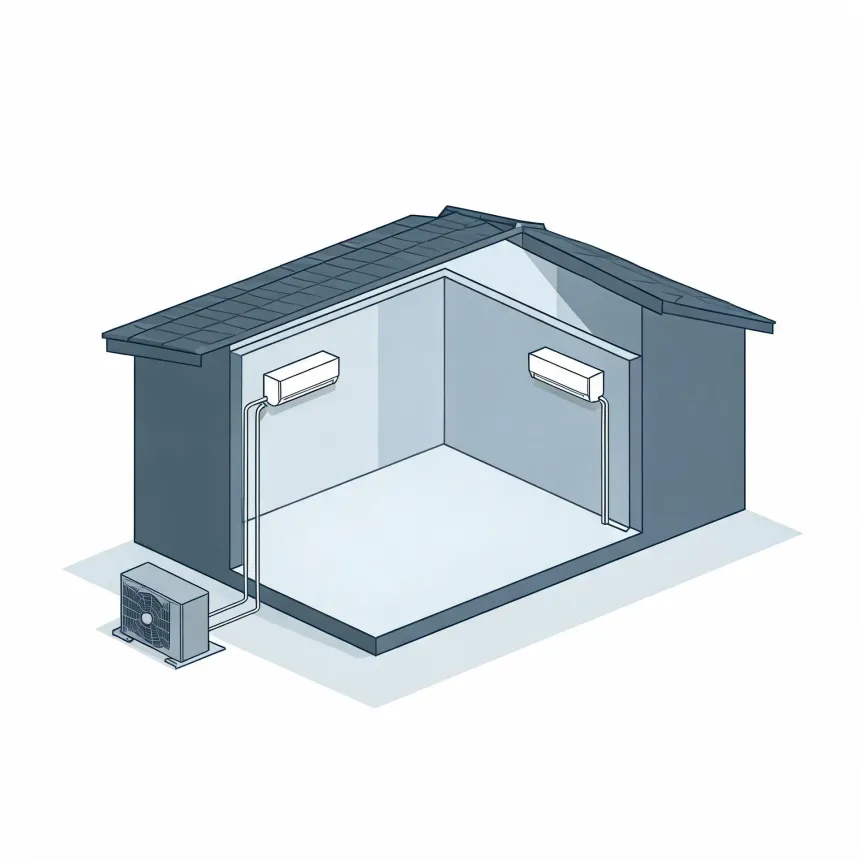
Cutaway isometric illustration of a small building interior showing two wall-mounted indoor air conditioning units connected by line sets running down to a single outdoor condenser unit on the ground outside.
Your system heats November through April and cools May through September.

NOAA nClimDiv, 1991–2020 normals

Cooling runs May through September in White County.

Get the mini split in before May and the first hot week isn't a scramble.

Five months of 90 degree afternoons, plus hail, is a lot to size a system for

Cooling runs May through September
Summer afternoons average 90°F
39 hail events from 2015 to 2024
Most of Searcy heats with electricity already63.8% of homes in White County run on electric heat, a mini split fits right into that

Electricity in Arkansas ran 12.32 cents per kilowatt-hour in 2024, cheaper than most of the country. That changes how to think about which mini split to buy. The highest-efficiency models cost more up front, and here they take longer to earn that back in lower bills. Putting that money into a unit sized right for this house, with good installation, matters more than chasing the top efficiency number on the label. A mid-efficiency system installed well will outperform a high-efficiency one that's oversized or poorly matched to the space.

Zone 3A sets the minimum efficiency here, and that narrows the field

Any mini split installed here now has to hit 14.3 SEER2 and 7.5 HSPF2, the federal minimum for split-system heat pumps. That rules out older, less efficient units some installers may still have on hand. A federal tax credit is available for qualifying equipment, worth looking into before you settle on a system.

Find a contractor
A white outdoor air conditioner condenser unit mounted on metal wall brackets against gray horizontal siding, with a blue sky and white clouds behind it.

Five months of this, every year

Count on about five months of this a year, May through September, with afternoons in the 90s. That's the load the unit has to hold up under every summer. A system sized right for this house will run steady through the worst of it. One sized wrong will short cycle or run constantly trying to keep up, and either way it wears faster. Have the installer run a load calculation on the house itself rather than matching the number off the old system.

The rating is an average, not a reading off any one afternoon

SEER2 and HSPF2 describe how the unit performs across a whole summer or winter, not what it does on the hottest or coldest day. A unit can carry a strong rating and still struggle on the worst afternoons if it's sized wrong for the space. What shows up on the power bill depends as much on the installation and the sizing as it does on the number on the sticker.
One number for cooling, another for heat

A mini split does both jobs with the same equipment, so it carries a cooling rating and a separate heating rating. A unit can be strong on one side and just average on the other. Worth asking the installer to walk through both numbers rather than just the one on the sticker, especially if the system is going to carry real heating load and not just back up a furnace.

Sizing a mini split is not about matching the old system or picking the biggest unit available. An installer works out heat loss and heat gain for the specific space, looking at square footage, ceiling height, window area, insulation, and how many walls face outside. Too big and the unit cools the air fast but shuts off before it pulls the moisture out, so the room feels cold and damp at once. Too small and it runs flat out on the worst days without ever catching up. Either mistake shows up as uneven temperatures between rooms, or a unit that cycles on and off more than it should. For a multi-zone setup, each indoor head gets sized to its own room, not just divided evenly off the total the outdoor unit can produce. A load calculation done room by room is what makes that possible.

What drives the cost on a mini split job is mostly the outdoor-to-indoor connection. Every indoor head needs a line set run to the outdoor unit, carrying refrigerant lines, a condensate drain, and electrical. The farther that run, the more it costs, and running it through brick or block costs more than running it through siding. A single-zone system with a short, simple line set is the cheapest way to install one of these. Add zones and the cost climbs with each indoor head, since each one needs its own line set back to the outdoor unit, and the outdoor unit itself has to be sized to carry all of them. Where the outdoor unit sits matters too. It needs clearance on all sides to pull air through the coil, and a mounting pad or bracket if there's no good ground space nearby. None of this shows up on the price tag of the equipment itself, only on the install.