




Single-story buildings with pale siding and one brick section with a covered porch stand behind a trimmed hedge and lawn, under a large moss-draped oak branch.

Mini Split Installation in Paragould, AR

Tell us about the job

Takes about a minute. No obligation.

New system or replacementMini-splitGreene County, AR
Step 1 of 2

What ZIP code is the job in?

About 74.7% of homes in Greene County heat with electricity. A mini split fits right into that, since it runs on electricity for both heating and cooling. There's no gas line to run and no furnace to maintain alongside it. Utility gas and LP gas heat a smaller share of homes here, but electric is what most houses in Paragould are already wired for. Adding a mini split means working with what's already there.

7 months
October through April, your system heats
5 months
May through September, it cools
31°F
the average winter night it heats against
89°F
the average summer afternoon it cools against
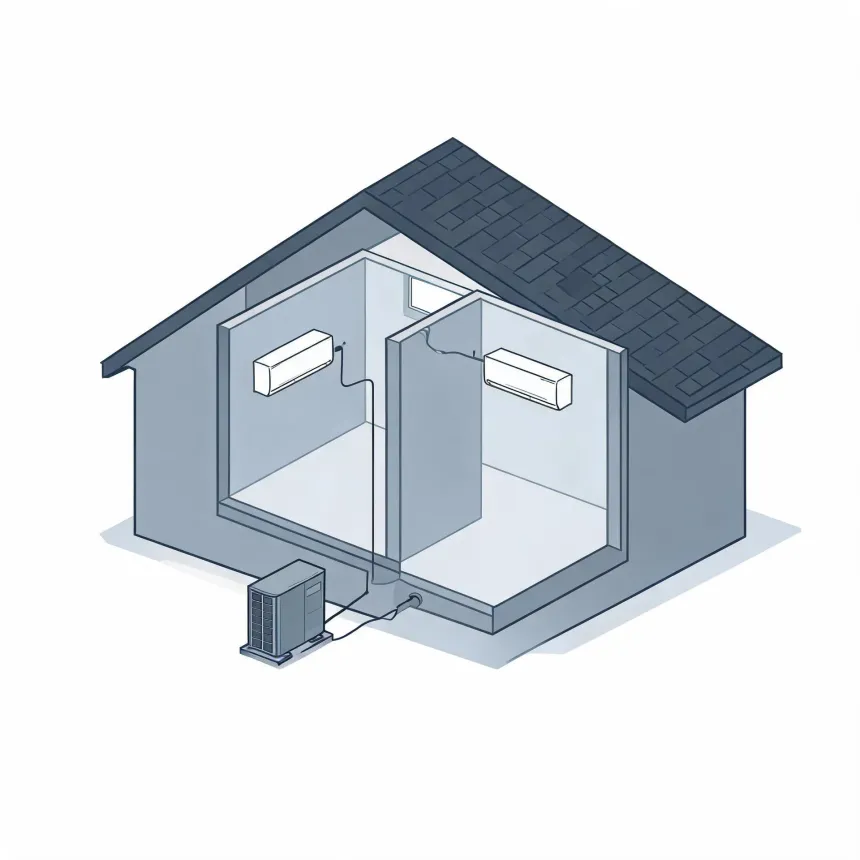
Isometric line illustration of a cutaway house with two rooms, each with a wall-mounted indoor air conditioning unit connected by lines to an outdoor condenser unit on the ground outside.
Your system heats October through April and cools May through September.

NOAA nClimDiv, 1991–2020 normals

Homes in Greene County run cooling May through September.

April is the month to get a mini split installed, before the first warm week puts it to work.

Cheap power here means payback matters less than picking the right system

Power costs 12.32 cents a kWh statewide
Cooling runs May through September
Summer afternoons average 89°F

Greene County is in climate zone 3A. Warm most of the year, with a short mild winter. Any mini split installed here falls under the same federal rule as other split-system heat pumps. Units made from 2023 on have to hit 14.3 SEER2 for cooling and 7.5 HSPF2 for heating. That floor doesn't change whether the house is in Paragould or somewhere else in the zone. A system that meets those numbers also tends to qualify for the federal energy efficiency tax credit. Worth checking the specific model against that before you buy.

Five months of 89 degree afternoons is what this system has to handle

Summers here mean five months of cooling, with afternoon highs averaging 89°F through June, July and August. A mini split sized for this place has to keep up with that heat day after day, not just a mild stretch here and there. Get the sizing right from the start.

Find a contractor
A man in a cap, olive shirt and dark pants walks up wooden porch steps toward a green door, carrying a waxed canvas tool bag.
A white mini-split air conditioner outdoor condenser unit mounted on metal brackets against a beige stucco exterior wall, with a blue sky and scattered clouds in the background.

What sits outside here takes more than heat

Hail is the other thing a new system has to survive sitting outside. Greene County saw 35 hail events between 2015 and 2024. An outdoor condenser takes that hit every time, fins exposed to whatever comes down. Ask about a unit with a sturdier coil guard before it goes in.

Bigger isn't better here

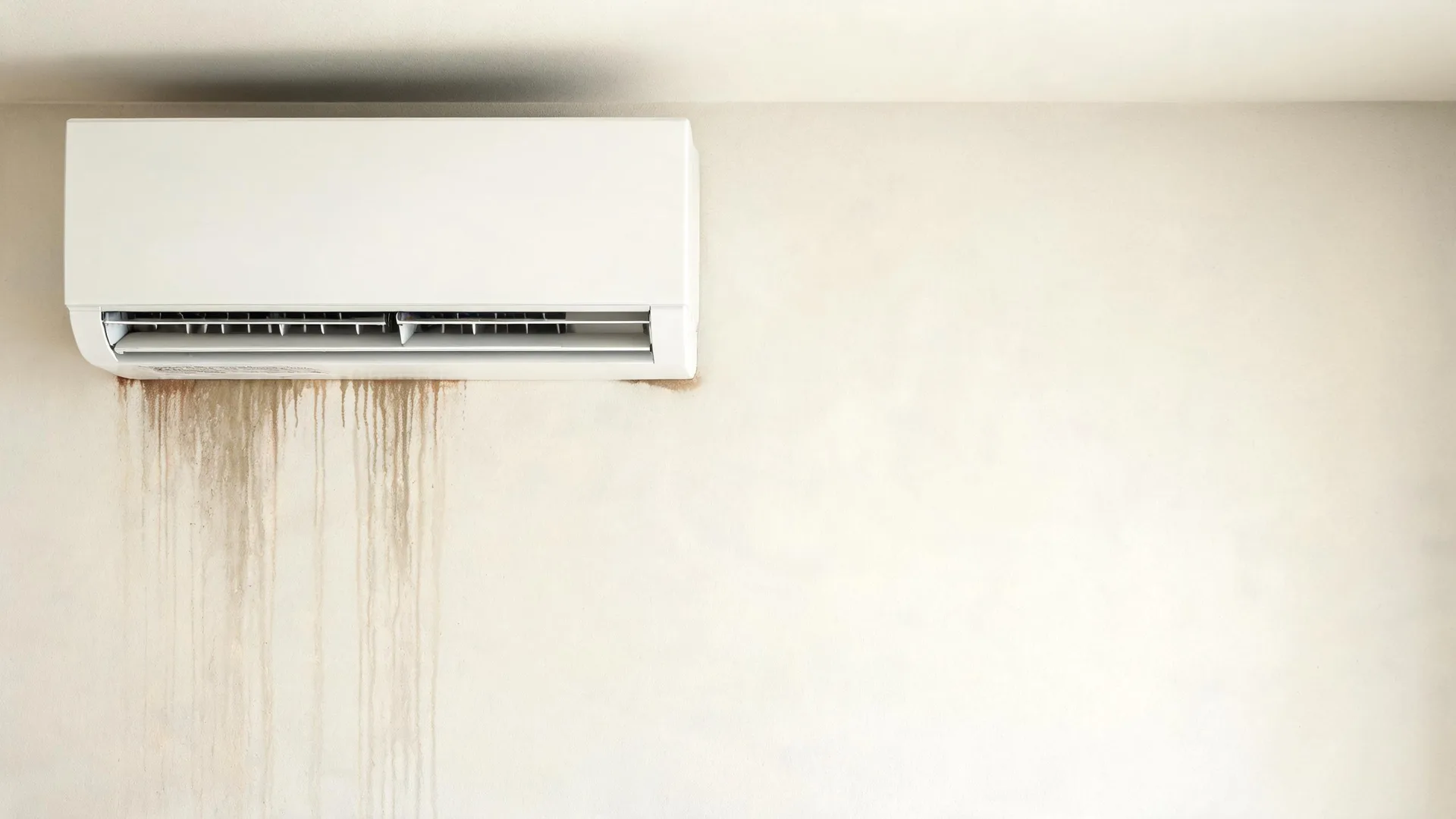
An oversized mini split cools the room fast, then shuts off before it pulls the moisture out of the air. The space ends up cold and clammy instead of comfortable. One sized too small just runs constantly on the hottest days and never quite catches up. Matching the unit to the room is what makes it work right, not just having more power than the space needs.
The math behind the number

A contractor works out the size with a room by room load calculation, not a rule of thumb based on square footage alone. Window placement, insulation, ceiling height and how many walls face outside all change how much heat a room gains or loses. Rooms that look alike on paper can need different sized units once those factors are weighed in.

The SEER2 and HSPF2 numbers on the label tell you how much cooling or heating a mini split produces for the electricity it uses, not how powerful it is. A higher number means less power consumed to do the same job. That rating is measured for the whole system working together, the indoor head and the outdoor condenser as a pair. Mixing a high efficiency indoor unit with a mismatched outdoor one won't get you that number. The rating also assumes correct sizing and a clean installation. A unit that's too big or too small for the room won't perform to its label no matter how it's rated.

The equipment itself is only part of what you're paying for. A mini split needs a line set run between the outdoor condenser and each indoor head, carrying refrigerant lines, a drain line and electrical wiring, and how far that run is and what it has to pass through changes the labor involved. A wall sleeve or a path through an attic is a different job than punching through brick or running line hidden inside a finished wall. Each indoor head also needs its own circuit and its own spot on the outdoor unit's capacity, so a multi-zone system costs more to install than a single head, not just more to buy. Where the condenser sits matters too. It needs clearance to pull in air and drain condensation, and a mounting pad or bracket adds to the job depending on the ground or wall it sits against. None of this shows up on the price tag of the unit alone.