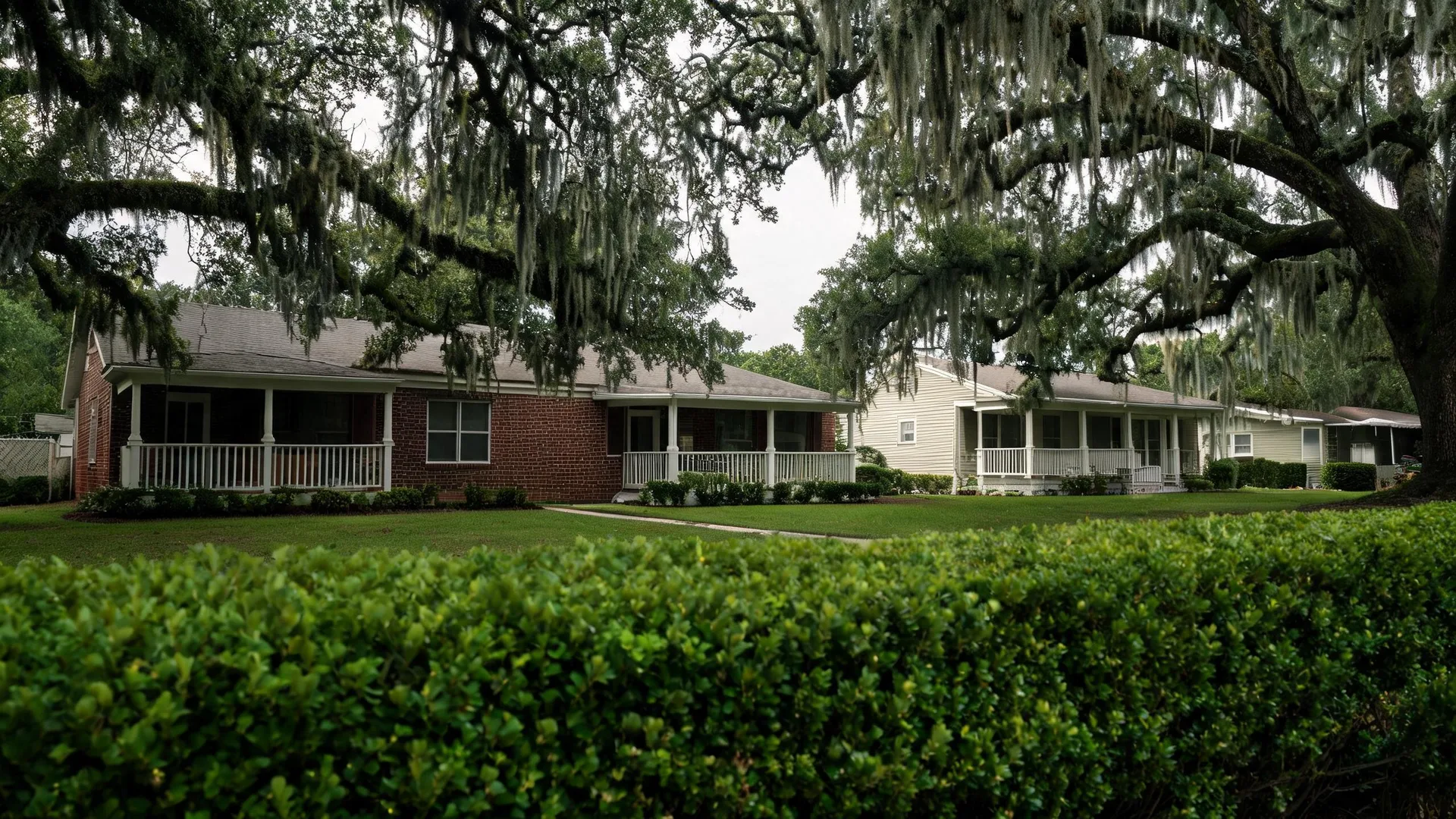






A row of single-story houses with covered porches, the nearest clad in red brick, seen behind a trimmed hedge and lawn beneath large moss-draped oak branches.

Mini Split Installation in Magnolia, AR

Tell us about the job

Takes about a minute. No obligation.

New system or replacementMini-splitColumbia County, AR
Step 1 of 2

What ZIP code is the job in?

Most homes in Columbia County heat with electricity, 55 percent of them, and gas reaches another 37.5 percent through the utility line. A mini split fits the electric side of that without any conversion. It runs on a standard circuit the way electric resistance heat does now, but it moves heat instead of generating it, so a given amount of power goes further. For a home that already heats with electricity, swapping in a mini split or adding one to a room that needs it is a straightforward match to how the house is already set up.

5 months
November through March, your system heats
5 months
May through September, it cools
35°F
the average winter night it heats against
91°F
the average summer afternoon it cools against
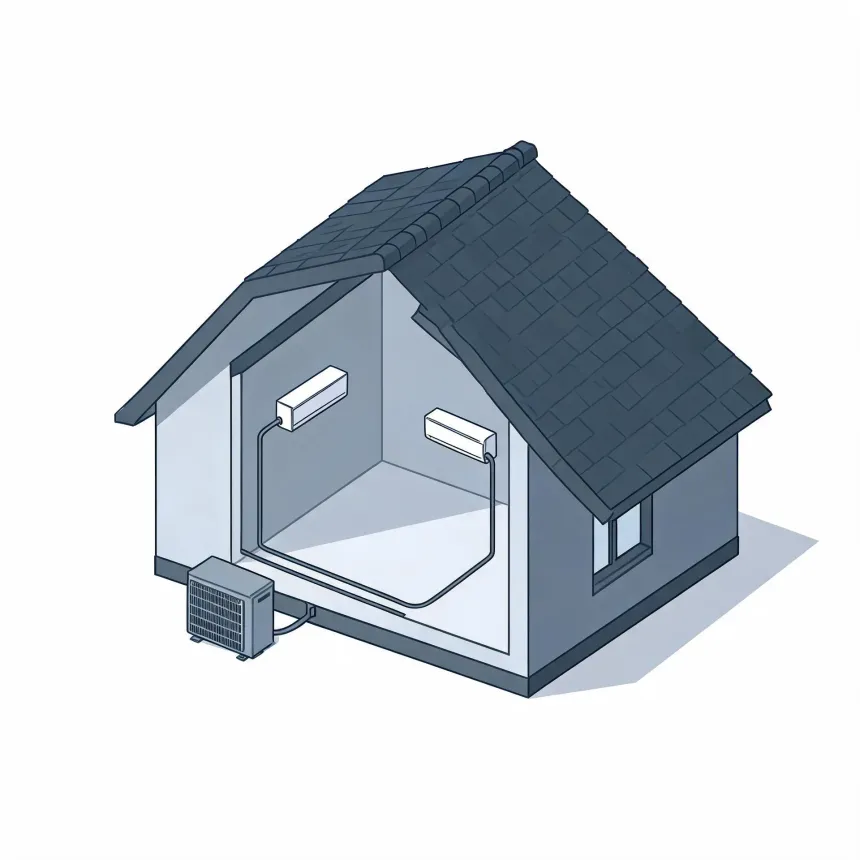
Isometric cutaway illustration of a small house with a shingled gable roof, showing two wall-mounted indoor air conditioning units connected by refrigerant lines to an outdoor condenser unit on the ground outside.
Your system heats November through March and cools May through September.

NOAA nClimDiv, 1991–2020 normals

A mini split sized too big cools the room fast, then shuts off before it pulls the moisture out of the air.

Getting the size right means measuring the room and the windows, not matching the number on the old unit.

Columbia County sees its share of rough weather, but that doesn't change what size mini split this room needs

79 severe weather events from 2015 to 2024
24% of homes statewide lost power a day or more in 2024
48 damaging wind events from 2015 to 2024
A mini split that fits this houseHalf the homes in Columbia County were built in 1981 or earlier, half later. Either way, sizing comes from the room, not the decade.

Columbia County is zone 3A under the 2021 energy code, with a long run of hot months and a short mild winter on the humid side. Any mini split installed here has to meet the federal minimum for that setup. That means 14.3 SEER2 for cooling and 7.5 HSPF2 for heating. A ductless system counts as a split-system heat pump under that standard, so there is no separate, looser bar for mini splits. A unit that clears those numbers can also qualify for the federal tax credit, worth checking against the paperwork when comparing models. The rating does not tell you what size unit the room needs, that question comes next, but it does narrow which models are legal to install in this county at all.

The right size, not the biggest one, is what this room needs

A standard mini split, sized to the room and rated at the zone 3A minimum, is what this job calls for. Arkansas homes paid 12.32 cents per kilowatthour in 2024, and a right-sized unit is what makes that rate work in your favor.

Find a contractor
A man in a dark long-sleeve shirt and olive cargo pants, seen from behind, carries a waxed canvas tool bag up porch steps toward a green front door of a gray clapboard house.
A beige split-system air conditioner outdoor condenser unit mounted on metal wall brackets atop a stucco wall.

Put it in during April, before the season sets the schedule

Cooling here runs May through September, five months of the year. April is what you've got before that load starts. Put the install in April and whoever sets the charge and checks the line set can do it without a heat wave pushing them to hurry. Wait until the house is already hot and that same work gets done under pressure, on a schedule the weather sets instead of you.

The old unit doesn't come out first

Whoever installs the mini split sets the new indoor and outdoor units, runs the line set, and gets the system charged and running before anything old is disconnected. That keeps the room from going without heat or cooling partway through the job.
What happens to what's removed

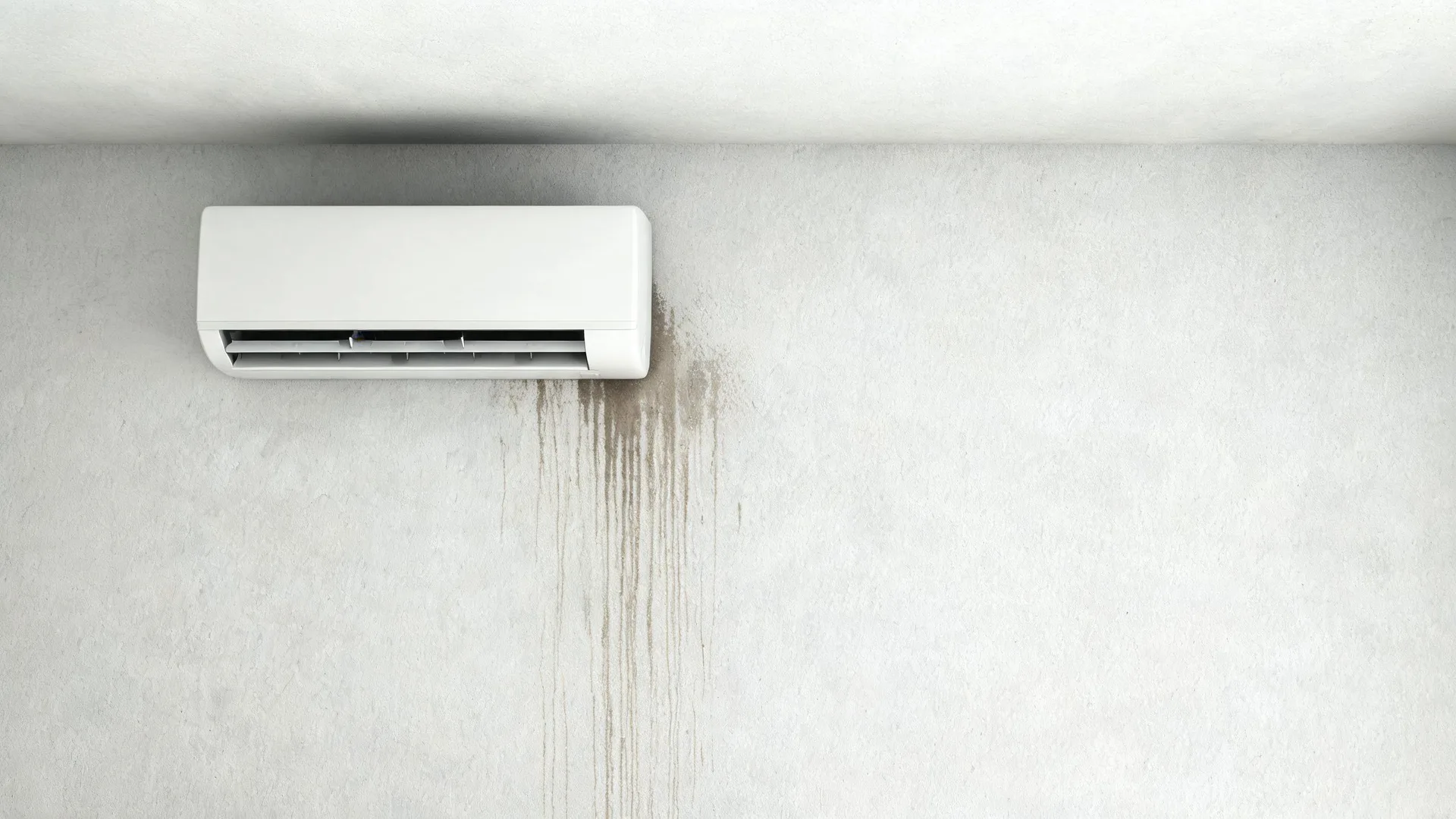
A window unit or old ductless system gets hauled off once the new one is tested and holding. Any refrigerant left in the old lines has to be recovered properly rather than vented, since that's true of any system with refrigerant in it, not just this one.

What moves the price on a mini split job is mostly the line set and the wall. A single zone with the outdoor unit placed close to the indoor head, straight through one exterior wall, is the simplest version of this install. Add distance between the units and the line set gets longer, which means more refrigerant line, more mounting, more wall to seal when it's done. Add zones and you're adding indoor heads, line sets, and a bigger outdoor unit to drive all of them, plus the time to set and charge each one. Where the outdoor unit sits matters too. A pad on grade is less work than a mount bracketed to the wall or set up on a roof. Electrical matters as well. If the circuit and disconnect are already there for a unit like this, that's one thing. If a new circuit has to be run from the panel, that's another trade's time added to the job.

Installation day starts with the outdoor unit going on its pad or bracket and the indoor head going up on the wall. The wall plate gets leveled before anything is mounted to it. From there comes the line set. Refrigerant lines, a drain line, and the control wiring all run through one small hole cored through the wall, then get connected at both ends. Before any refrigerant moves, the system gets pulled into a vacuum. That drives out the air and moisture that would otherwise sit in the lines and cause problems later. Once that vacuum holds, the line gets opened and the charge is set to match the length of the run. The last step is power on, a test cycle in both cooling and heating if the unit does both, and a check that the head is actually pulling the temperature where it should before anyone calls the job done.