





Three white clapboard houses with wraparound porches glow with warm interior and landscape lighting beneath Spanish moss-draped oak trees at dusk.

Mini Split Installation in Jonesboro, AR

Tell us about the job

Takes about a minute. No obligation.

New system or replacementMini-splitCraighead County, AR
Step 1 of 2

What ZIP code is the job in?

Most homes in Craighead County heat with electricity, close to six in ten. Gas reaches about a third of homes, and a small share runs on bottled or LP gas. A mini split fits an electric home without any new gas line or venting to plan around. It heats and cools from the same unit, which matters here when storms knock out power and a furnace or AC might sit idle until the grid and gas both come back. For a home already wired for electric heat, adding or replacing with a mini split is mostly a matter of where the indoor and outdoor units go.

7 months
October through April, your system heats
5 months
May through September, it cools
32°F
the average winter night it heats against
89°F
the average summer afternoon it cools against
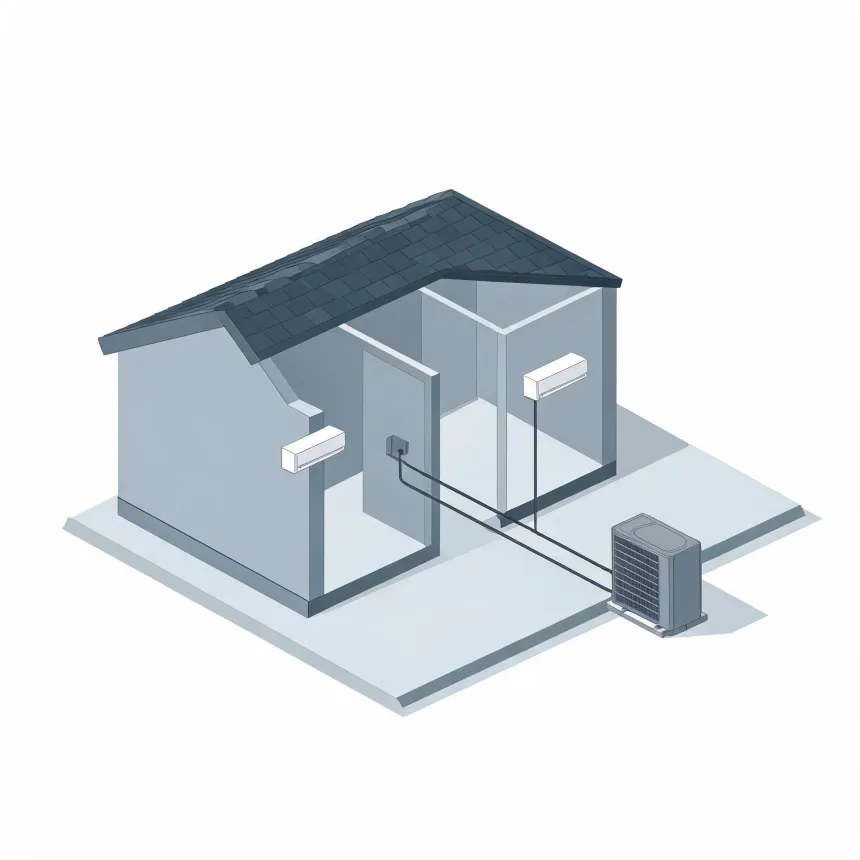
Isometric illustration of a cutaway gray house with a dark shingled roof, showing two wall-mounted indoor air handlers connected by line sets to an outdoor condenser unit on a pad outside.
Your system heats October through April and cools May through September.

NOAA nClimDiv, 1991–2020 normals

Cooling runs May through September here.

A mini split installed in April gets tested and ready before that first hot week.

Cheap power here means the payback is in reliability, not the electric bill

Power costs 12.32 cents a kWh statewide
Cooling runs May through September
Summer afternoons average 89°F

A mini split here runs hard for five months straight, May through September, holding the house against afternoon highs near 89 degrees. That's a long stretch of steady load on the compressor, not an occasional burst. The outdoor unit also has to survive what sits outside with it. Craighead County has logged dozens of damaging wind events and dozens of hail events over the past ten years. A unit sized too small will run flat out all summer trying to keep up. One built light has less margin left over when a storm comes through. Size it for what this place actually does to it, not for an average county somewhere else.

A new mini split here has to clear a set efficiency floor, and a federal credit can offset part of it

Craighead County falls in climate zone 3A, and any mini split installed here, ductless or not, has to meet 14.3 SEER2 for cooling and 7.5 HSPF2 for heating. That floor is already built into new units. A federal tax credit is available on top of it for systems that qualify.

Find a contractor
A man in a cap, gray T-shirt and tan work pants carries a worn leather tool bag up wooden porch steps toward a green front door.
A white outdoor air conditioner condenser unit mounted on metal wall brackets against gray horizontal siding, with a blue sky and white clouds behind it.

Ask how they sized it, not just what it includes

Five months of steady load a year adds up over the life of the unit. Ask for a load calculation done on this house, not a rule of thumb based on square footage alone. A good installer can walk through why they landed on that size, and what the outdoor unit has to hold up against here, the wind and hail along with the heat. The line set length and the mounting points for the outdoor unit should be in the quote, not worked out after the fact.

The old furnace or AC doesn't just get left behind

Whoever installs the mini split should plan to disconnect the old equipment, cap any gas line feeding a furnace, and pull the electrical whip or disconnect box that fed the old unit. A furnace or AC left in place but unhooked is still taking up space in a closet or a side yard for nothing.
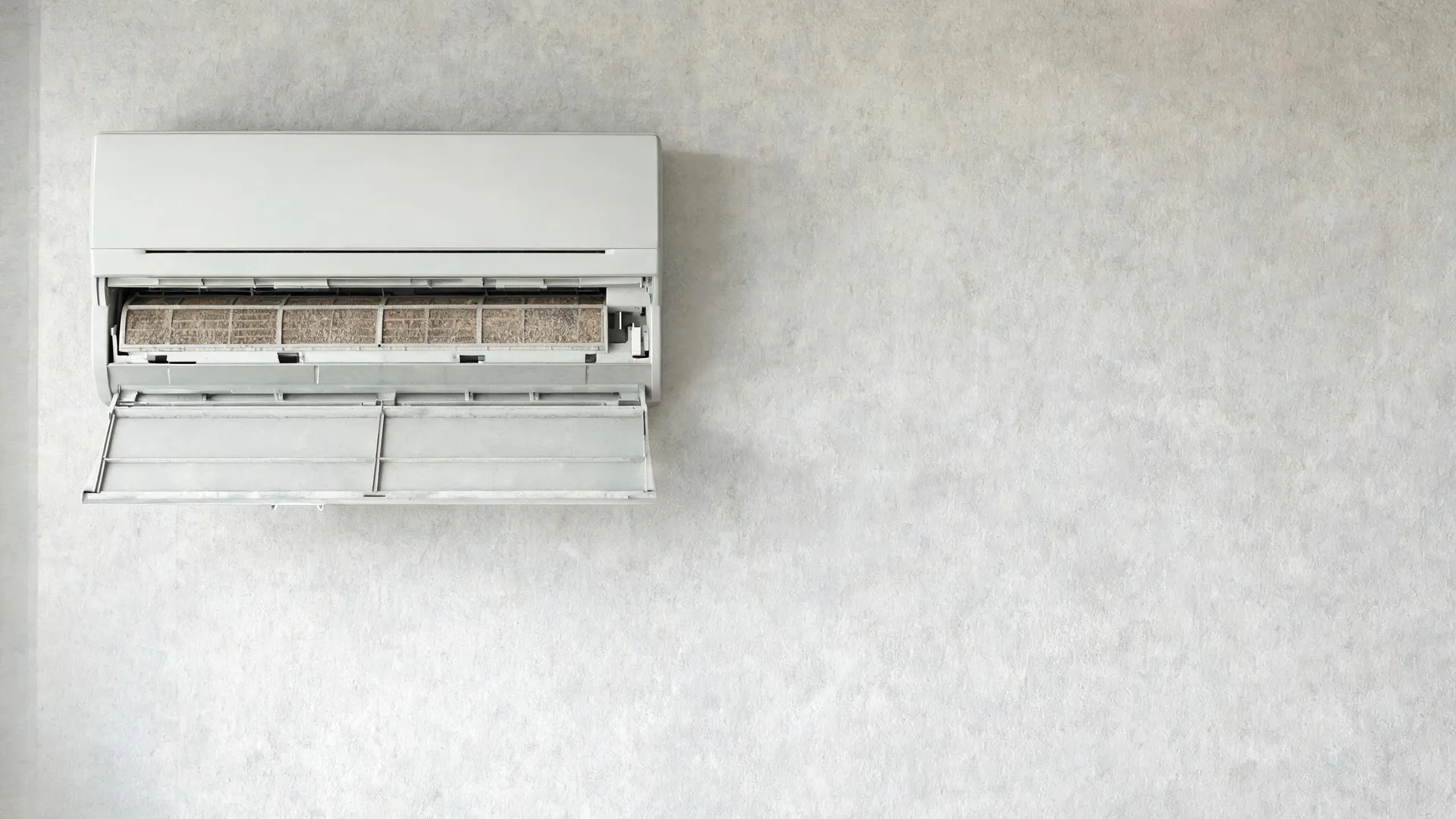
Removal is a separate line, not an afterthought

Hauling out an old furnace, air handler or outdoor condenser is its own job, and disposal of the refrigerant in that old AC has to follow EPA rules, it can't just be vented. Ask whether removal and haul away are part of the quote or billed separately, so the number being compared against other bids actually covers the same work.

Sizing a mini split comes down to a room by room heat load calculation, not a square footage chart. The installer measures each room, checks window area and orientation, and adds up how much heat that space gains in summer and loses in winter. That total decides how many indoor heads the system needs and how much capacity each one carries. Go too big and the compressor short cycles, switching on and off instead of running a steady stretch, which wears parts faster and leaves the room clammy because it never runs long enough to pull moisture out of the air. Go too small and it runs flat out without ever catching up on the hottest or coldest days. The right size is the one matched to the rooms it actually has to condition, not rounded up for a safety margin that isn't needed.

Installation day starts with the outdoor unit and the line set path, since everything else follows from where those go. The installer mounts the outdoor unit on a pad or brackets, then runs the line set, the pair of copper lines that carry refrigerant, through a hole drilled into the wall behind each indoor head. Those lines get connected, then pulled down to a vacuum to clear out air and moisture before any refrigerant moves through them. Skip that step and moisture left in the lines turns to acid over time and eats at the compressor from the inside. Once the system holds vacuum, the lines get charged, the indoor heads get mounted and leveled, and the whole system gets tested in both heating and cooling before anyone calls it done. A condensate line also gets run from each indoor head, usually out through that same wall penetration, so the water the unit pulls out of the air has somewhere to go. None of this touches ductwork, because there isn't any to tie into.