Electric heat is the norm here
Close to half of Boone County homes heat with electricity, more than any other fuel. A mini split fits right into that setup, since it runs on electricity too.
Takes about a minute. No obligation.
Close to half of Boone County homes heat with electricity, more than any other fuel. A mini split fits right into that setup, since it runs on electricity too.
Under a third of homes in the county heat with gas. If yours is one of the electric homes, installation doesn't have to account for an existing gas furnace or venting, which keeps the job simpler.
NOAA nClimDiv, 1991–2020 normals
The efficiency rating on a mini split is a ratio, not a fixed output.
A higher rated system uses less electricity to move the same amount of heat, so it costs less to run than the number on the label might suggest by itself.



Cooling in Boone County runs June through September, which makes May the month to get a mini split installed. Do it then and the system is in place before the first hot stretch, not in the middle of it. Contractors tend to fill up once the weather turns, so scheduling in May gives you more say over when the work gets done. It also means the system gets run and checked under real conditions soon after installation, rather than sitting through winter untested.
Electricity in Arkansas runs 12.32 cents per kilowatthour, below the national average. That changes the math on a mini split. A high efficiency model still costs less to run than a low one, but the gap in your power bill won't be as large as it would be somewhere with pricier electricity. With power this cheap, picking the system that fits your space and holds up matters more than chasing the highest rating on the label.
Find a contractor
What a mini split costs to put in comes down to how many zones you're running and how far the lines have to travel. One indoor head talking to one outdoor unit is the simplest job there is. Add a second or third zone and you add line sets, another indoor head, another spot on the wall or ceiling that has to make sense for airflow. The length of that line set matters too. A short, straight run between indoor and outdoor units takes less refrigerant and less time than one that has to snake through a wall cavity or run up multiple floors. Where the outdoor unit can sit plays in as well. It needs clearance on all sides and a path for the line set and condensate drain that doesn't fight the layout of the house. A mounting spot that's easy to reach costs less labor than one that requires extra bracing or a longer electrical run back to the panel. The condition of your electrical panel is part of it too. A mini split needs its own dedicated circuit, and if the panel has room and capacity to spare, that's a quick addition. If it doesn't, upgrading the panel itself becomes part of the job.
A contractor measures each room, checks window area, insulation and ceiling height, and adds it up to a heat load number. That number, not the square footage of the house, decides which unit and how many zones you need. Skip this step and the sizing is just a guess.
A unit that's too big cools the room fast and shuts off before it pulls the moisture out of the air. That leaves the room feeling cold and clammy at once. It also means the compressor is starting and stopping more often, which wears on it faster than running a properly sized system through a longer, steady cycle.
If you're replacing a furnace or a window unit, that old equipment doesn't need to stick around for the mini split to go in, but how it comes out depends on what it is. A window or through-wall AC unit just gets pulled. A furnace or central system means disconnecting ductwork, and if there's a gas line feeding it, that line has to be capped off by someone qualified to do it, not left for later. Refrigerant in an old AC or heat pump can't just be vented into the air. It has to be recovered first, which is standard practice for anyone pulling the equipment. None of this adds much time to the job, but it does mean the old system should come out as part of the same visit rather than sitting there waiting on a second trip.
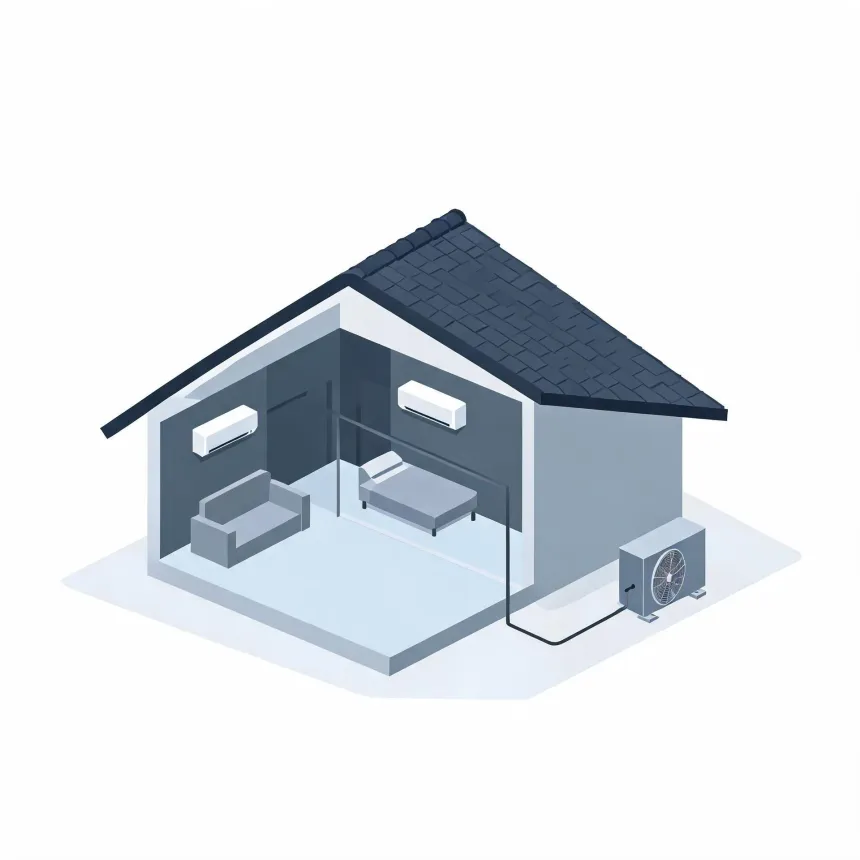
Installation day itself starts with the outdoor unit. It gets mounted on brackets or a pad, leveled, and set where the line set can reach the indoor heads without unnecessary bends. From there the installer runs the line set, a small bundle carrying refrigerant lines, a condensate drain and electrical wiring, through a hole drilled in the wall. That hole gets sealed afterward so no air or water finds its way in around it. Once the indoor heads are mounted and everything is connected, the system gets charged with refrigerant and pressure tested before it's allowed to run. The last step is powering it on and checking that each zone is actually heating or cooling the space it's supposed to, not just blowing air.