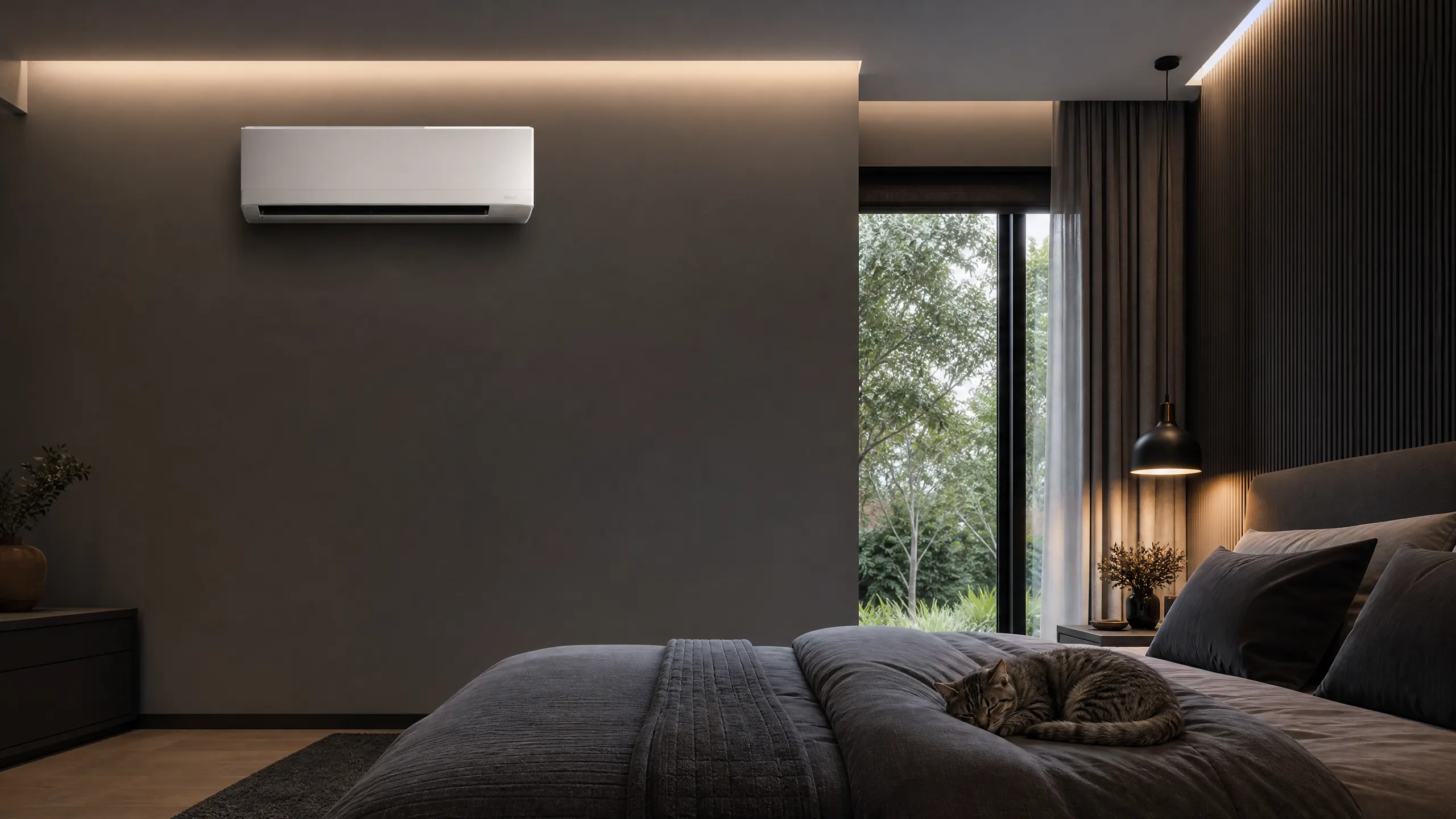





A tabby cat sleeps curled up on a dark grey bed in a modern bedroom equipped with a wall-mounted air conditioning unit.

Mini Split Installation in Forrest City, AR

Tell us about the job

Takes about a minute. No obligation.

New system or replacementMini-splitSt. Francis County, AR
Step 1 of 2

What ZIP code is the job in?

A mini split sized by square footage alone is a guess, and guesses run wrong in both directions. An oversized unit cools the air fast and shuts off before it pulls the moisture out, so the room feels cold and damp at once. An undersized one runs constantly, chasing a setpoint it can't hold, and wears out faster for the work it's doing. The right call comes from a load calculation, where a contractor looks at the room's square footage, but also the windows, the insulation, the ceiling height, and which way the walls face the sun. Rooms that look alike on a floor plan can need different size units once you account for that. It's worth asking any contractor whether they ran this calculation or just matched a number to the room.

5 months
November through March, your system heats
5 months
May through September, it cools
34°F
the average winter night it heats against
90°F
the average summer afternoon it cools against
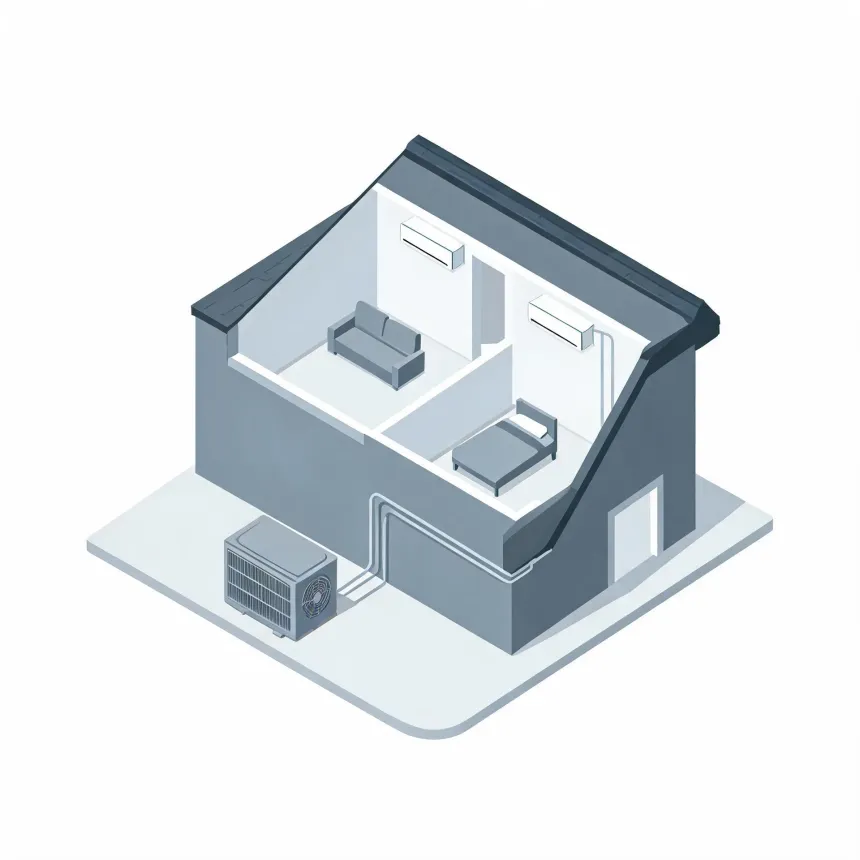
Isometric cutaway illustration of a two-room house showing two wall-mounted indoor air conditioning units connected by line sets to an outdoor condenser unit on the ground outside.
Your system heats November through March and cools May through September.

NOAA nClimDiv, 1991–2020 normals

Every quote should say how many zones it covers and what size the outdoor unit is.

A bigger outdoor unit than the job calls for still costs more to run, even if it cools fine.

Nothing about Forrest City pushes a mini split bigger than the room needs

Power costs 12.32 cents a kWh statewide
Cooling runs May through September
Summer afternoons average 90°F
What a mini split has to fit hereHalf the homes here were built in 1980 or earlier, half in 1980 or later

Cooling runs May through September here, so April is the month to get a mini split installed. A contractor doing the load calculation in April has the time to size it right, room by room, instead of rushing between emergency calls. Wait until the heat sets in and you're competing with everyone else whose old system just quit. Getting it done before May also means it's running on day one of the season, not day ten.

A new mini split here has to meet zone 3A's efficiency minimum

Any mini split installed in St. Francis County now has to hit 14.3 SEER2 for cooling and 7.5 HSPF2 for heating, the federal minimum for split systems since January 2023. That's true whether it's one zone or several. A federal tax credit is available for qualifying equipment, worth asking your contractor about when you compare quotes.

Find a contractor
A beige split-system air conditioner outdoor condenser unit mounted on metal wall brackets atop a stucco wall.

Five months of 90 degree afternoons, every year

Five months of cooling a year here, and the afternoon high through June, July and August averages 90°F. That's the stretch the outdoor unit has to work against, day after day, not just a hot spell here and there. A mini split sized right for that load will cycle on and off as it should. One sized wrong runs long and hard every one of those afternoons, and the strain shows up sooner in the compressor.

A higher number costs less to run, not more to buy

SEER2 and HSPF2 tell you how much cooling and heating a unit gets out of the power it uses. A higher rated unit moves the same heat with less electricity, month after month, for as long as it runs. The rating says nothing about how big the unit is or how many zones it covers. Systems carrying the same rating can still be sized completely differently for the job.
The rating only pays off if the size is right

A high efficiency unit that's oversized for the room still short cycles, shutting off before it pulls the moisture out of the air. An undersized one still runs flat out trying to hold the setpoint, rating or no rating. The number on the label describes how the equipment performs in a lab test. Whether it performs that way in this house comes down to the load calculation, not the sticker.

If the old system is central air with ducts, those ducts stay. A mini split doesn't use them, so they're either left alone for a backup system or capped off if the switch is complete. If it's an old window unit or a ducted system getting replaced outright, the equipment itself gets hauled off, the refrigerant in it recovered rather than vented, since it's against the law to release it into the air. Any electrical or disconnect box dedicated to the old unit either gets reused if it's rated for the new load or swapped out if it isn't. None of that is difficult work, but it's worth asking who handles the removal and whether disposal is included in the quote, because that's a separate job from mounting the new unit on the wall.

Installation starts with the outdoor unit and where it sits, since it needs clearance on all sides to pull air through the coil and drain condensation away from the foundation. Each indoor head gets mounted high on an interior wall, over a spot where the line set can run through to the outside without bending sharp around corners. That line set carries refrigerant lines, a drain line, and electrical wiring together through a single hole in the wall, so the hole gets drilled and sealed before anything else goes up. Once the lines are run and connected, the system gets evacuated with a vacuum pump to pull out air and moisture, because either one left in the lines ruins the refrigerant charge. Only after the vacuum holds does the refrigerant get released to charge the system. The last step is checking the charge against what the manufacturer specifies for that line length, not just turning it on and feeling for cold air.